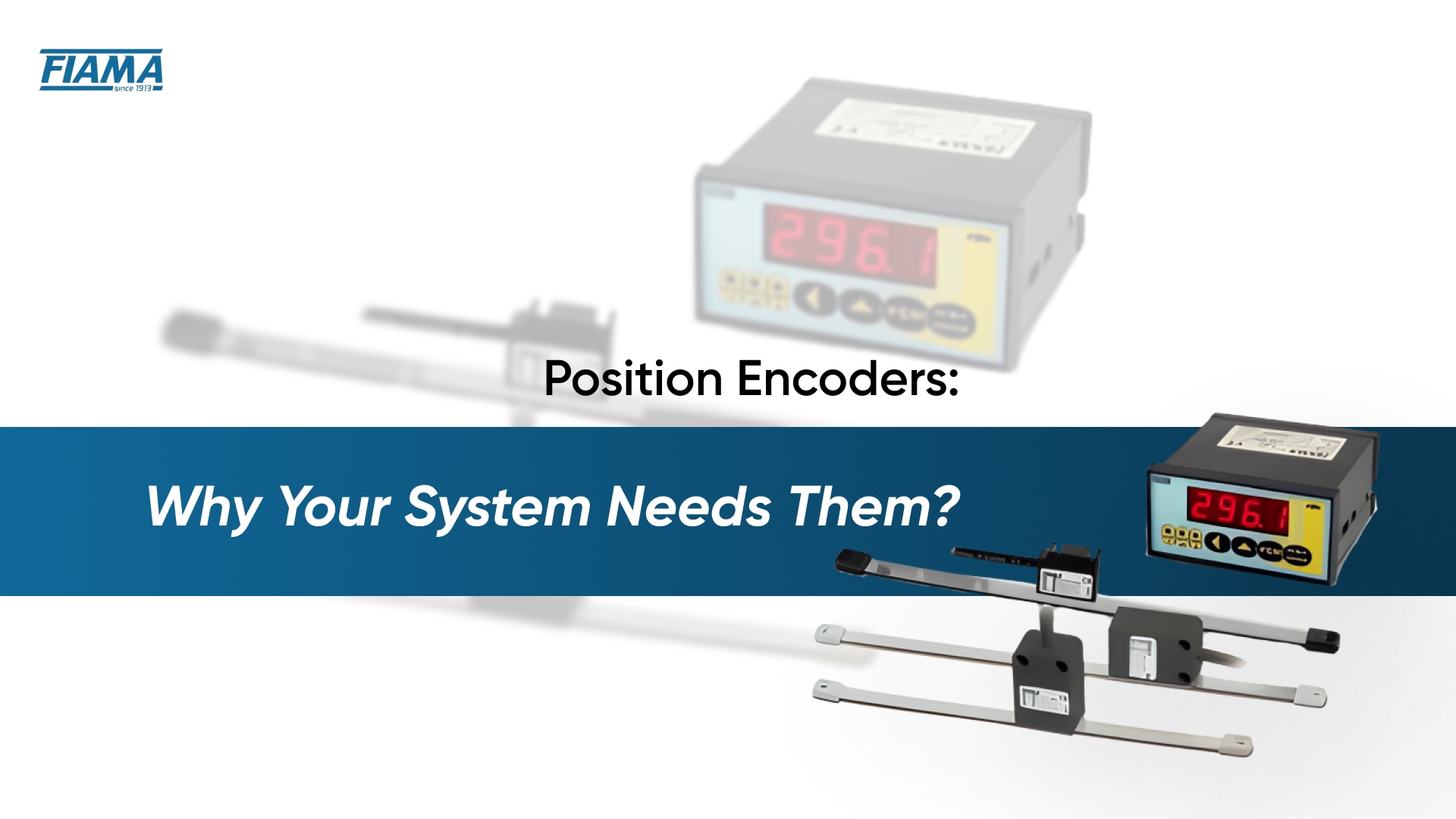
In motion control systems, position encoders are integral components that ensure precision and accuracy. Whether it’s for industrial machinery, robotics, or automation systems, the encoder you choose directly impacts the performance, uptime, and cost-efficiency of your operations. But the real question isn’t “What is a position encoder?” Most of you already know that. The crucial question is: Why do you need to buy the right one for your system now, and what should you look for to ensure you get the most out of your investment?
This guide aims to break down the key factors you should consider when purchasing a position encoder, especially for those who understand the technicalities but need help determining which encoder meets their operational requirements.
Key Takeaways
Precision and Accuracy: Position encoders ensure precise motion control, enhancing product quality and reducing defects in applications like CNC machining and robotics.
Reduced Maintenance Costs: High-quality encoders are more reliable, requiring less recalibration and reducing maintenance costs and downtime.
Better Long-Term Value: Investing in high-quality encoders reduces the need for replacements and repairs, offering better long-term efficiency and cost savings.
Key Selection Criteria: Consider factors like encoder type (incremental vs. absolute), resolution, and environmental suitability when selecting the right encoder for your system.
Why Your System Needs a High-Quality Position Encoder?
Choosing the right position encoder depends on your application’s specific needs, such as motion type, required precision, and environmental conditions. Whether you need incremental or absolute feedback, linear or rotary motion, selecting the appropriate encoder ensures optimal performance and longevity for your system.
Let's explore when to choose each encoder type and how to match it to your unique application requirements.
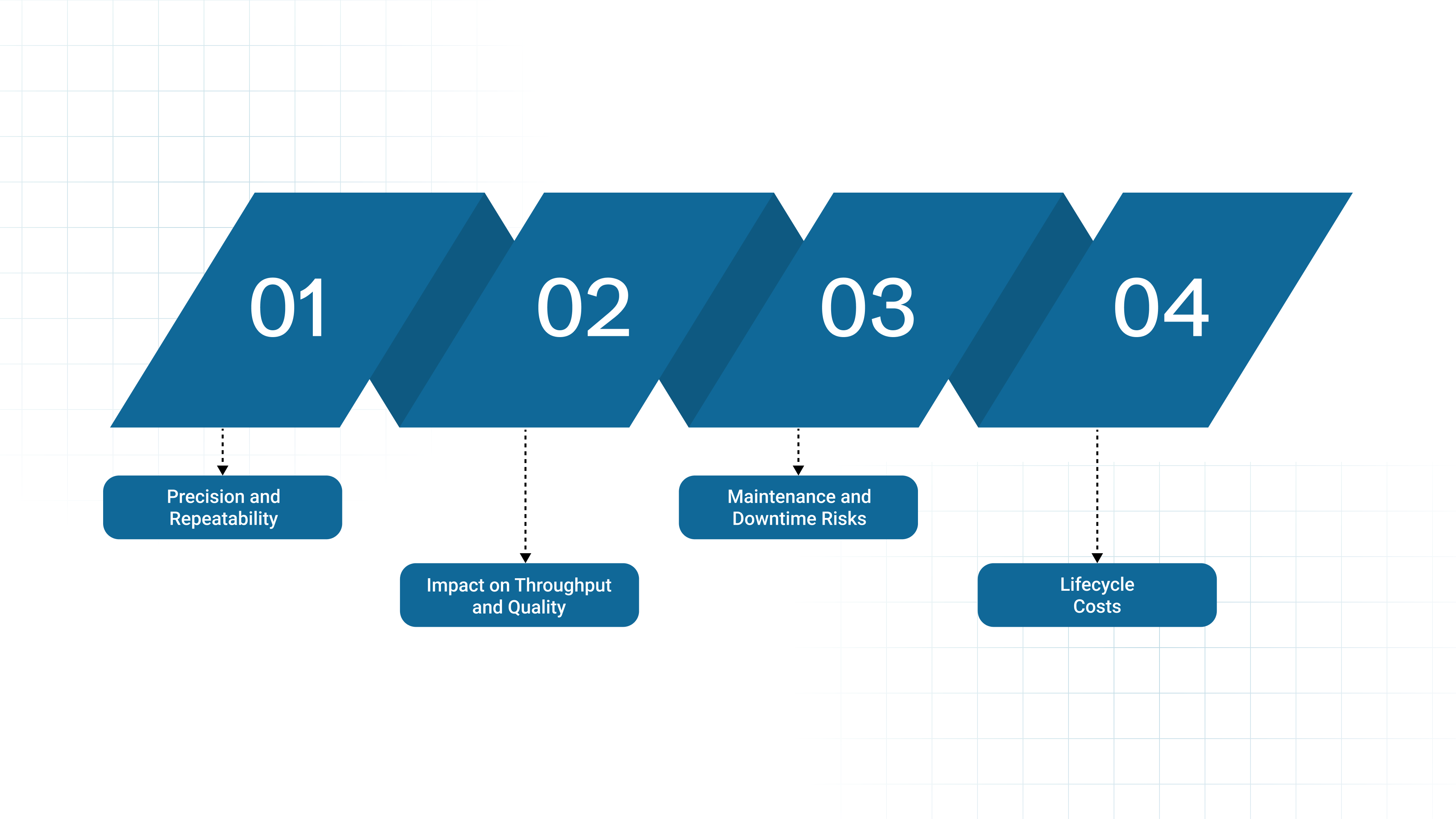
1. Precision and Repeatability
Position encoders are designed to provide feedback on the exact position of a moving part. In a manufacturing or automation environment, this feedback is essential for controlling the motion and positioning of machines with high precision. If the encoder is inaccurate, even by the smallest margin, it can lead to significant errors in your system.
For example, in applications like CNC machining or robotics, a slight discrepancy in positioning can result in defective products or misalignment, causing material waste and reducing production efficiency.
The result?
Increased accuracy in the system.
Reduced risk of defects.
Higher product quality.
2. Impact on Throughput and Quality
The main benefit of high-performance position encoders is their ability to enhance throughput and quality. In fast-paced environments like automotive manufacturing or packaging, downtime and inefficiency can be costly. If your encoder fails to provide consistent feedback, even for a short time, it could lead to slowdowns or errors that reduce output.
For instance, with precise encoder feedback, assembly lines can run faster, and equipment like motors and actuators can operate with greater precision.
The result?
Higher throughput.
Fewer errors and rework.
Optimized manufacturing processes.
3. Maintenance and Downtime Risks
Low-quality or improperly selected position encoders are more likely to fail, resulting in machine downtime. This downtime can be costly, especially when production lines are halted due to encoder malfunctions or misalignments. Moreover, if the encoder’s feedback becomes unreliable over time, it can lead to maintenance costs as machines need to be recalibrated more frequently.
On the other hand, a high-quality encoder is less prone to failure, offers better durability, and requires less frequent recalibration, reducing maintenance time and costs.
The result?
Reduced maintenance frequency.
Lower risk of costly downtime.
Increased system longevity.
4. Lifecycle Costs
The true cost of a position encoder isn’t just the price you pay upfront—it’s the total cost of ownership (TCO) over its lifecycle. While low-cost encoders may seem attractive, they often come with trade-offs in terms of reliability, accuracy, and lifespan. In the long run, their failure to deliver precise feedback can result in higher costs, including repairs, replacements, and system downtime.
Investing in a more expensive encoder initially can pay off by providing reliable performance for years, reducing maintenance needs, and preventing costly failures. In short, paying more for a high-quality encoder now can save you significantly more in the long run by improving efficiency and reducing operational disruptions.
The result?
Better value over time.
Fewer unforeseen costs.
Improved operational efficiency.
Key Buying Criteria When Selecting a Position Encoder
When selecting a position encoder, consider factors like the type (incremental vs. absolute), technology (magnetic, optical, or inductive), resolution, accuracy, and mounting style.
Each of these criteria affects performance, reliability, and integration with your system, ensuring optimal functionality.
Types of Position Encoders
There are two main types of position encoders:
Incremental Encoders:
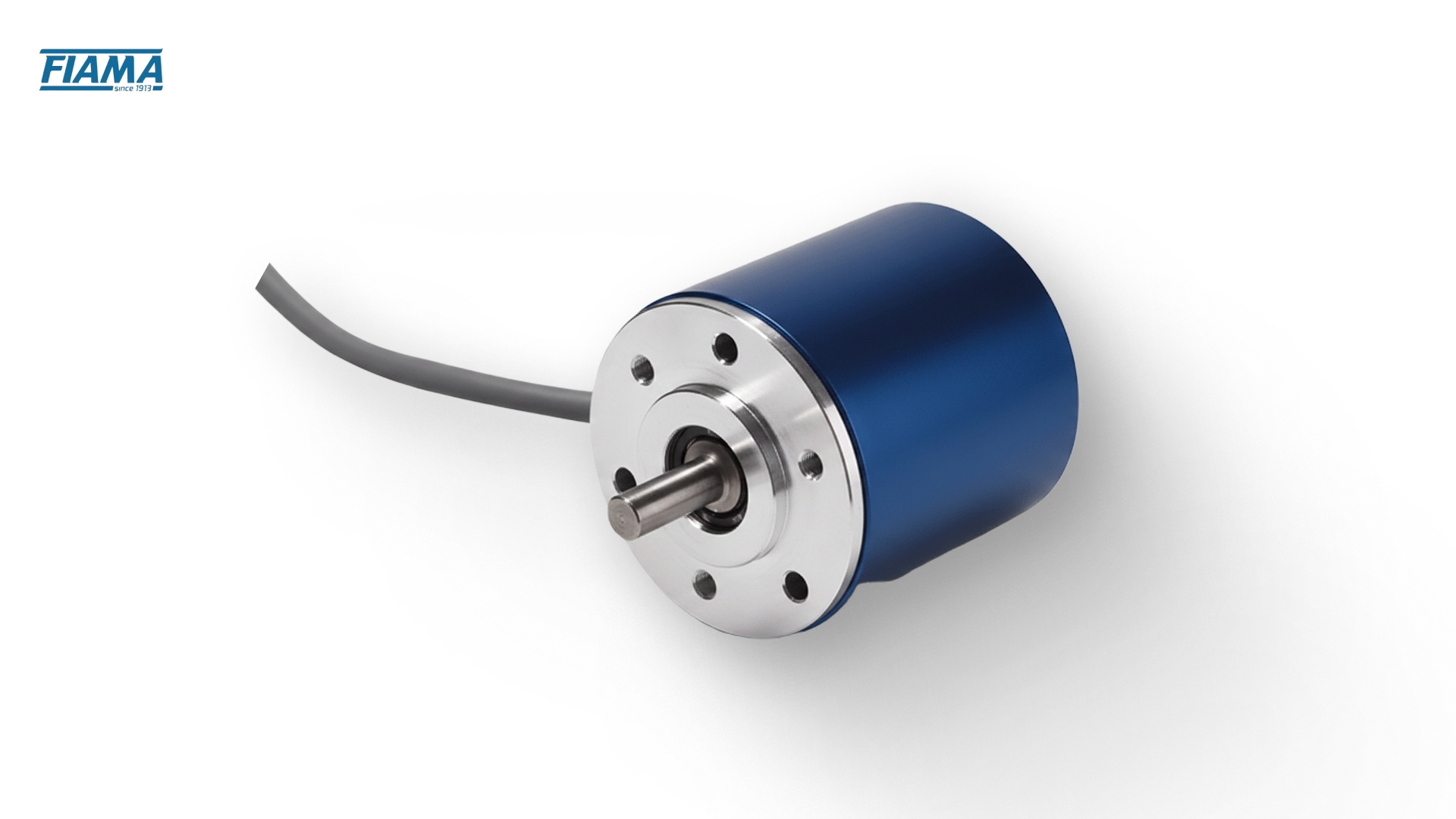
Ideal for applications where relative position matters more than the absolute position. They track changes in position but lose data after a power loss.
Absolute Encoders
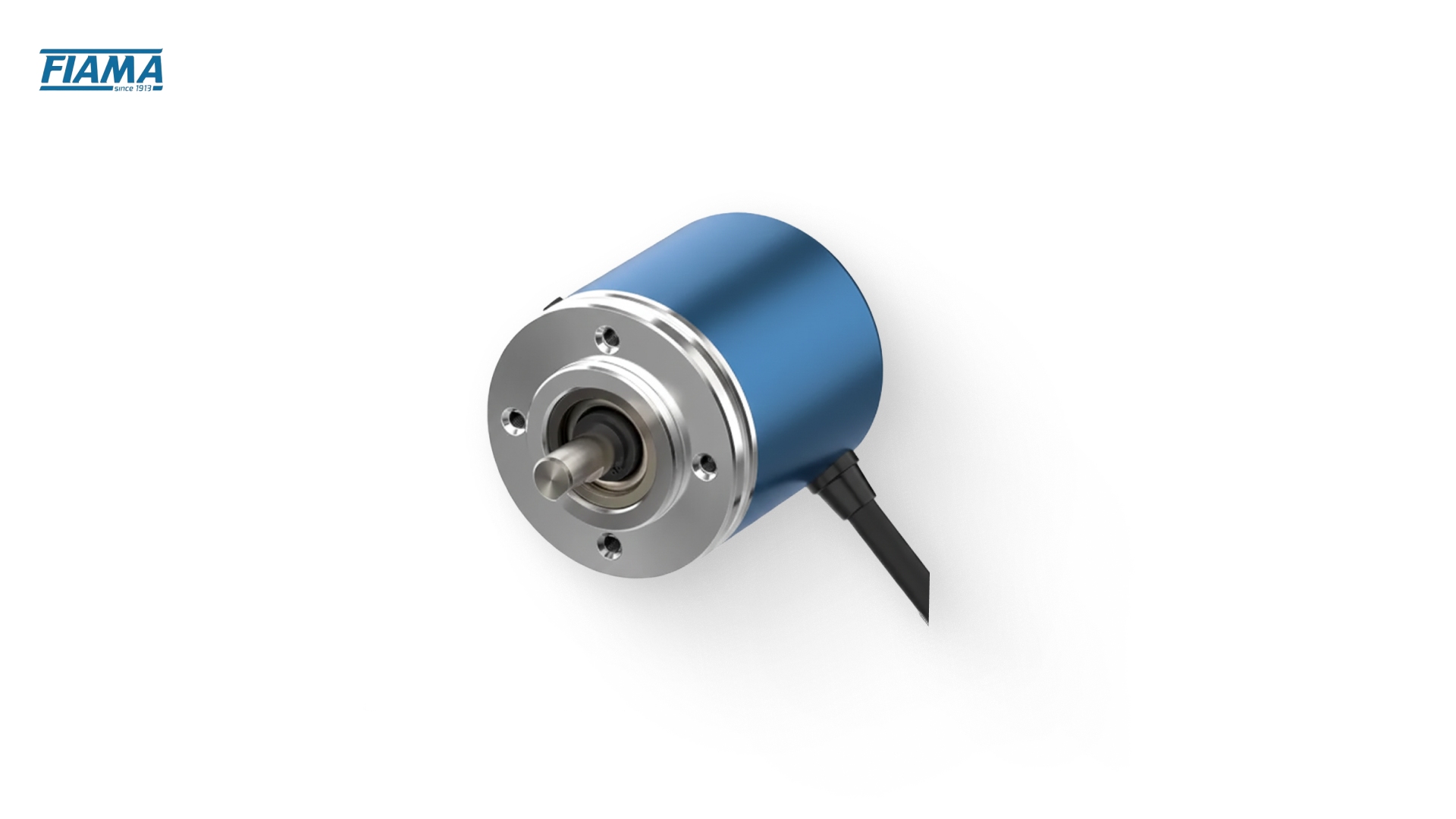
: Crucial for systems that need to maintain the exact position even after power cycles, making them perfect for mission-critical applications.
For most industrial applications, absolute encoders are preferred due to their reliability and precision.
Technology: Magnetic, Optical, or Inductive?
Magnetic Encoders: Best for harsh environments with high vibration or temperature extremes.
Optical Encoders: Offer high accuracy and resolution but are sensitive to contamination; suited for clean environments.
Inductive Encoders: Reliable in dirty, dusty environments, making them ideal for heavy industrial use.
Choose the technology based on environmental conditions and precision needs.
Resolution and Accuracy
Resolution is the smallest measurable position change. While higher resolution offers better accuracy, excessive resolution can slow system performance. Consider your application’s needs: high-resolution encoders are essential for high-speed applications like CNC, while lower resolution may suffice for less demanding systems like conveyors.
Form Factor and Mounting
Encoders come in various form factors (shaft-mounted, hollow-shaft, or direct-mount). Select the one that fits your system's design and installation requirements. For tight spaces, a hollow-shaft encoder may be ideal, as it fits directly over the motor shaft without extra hardware. Ensure compatibility with your system’s mounting style for easy integration.
Matching Encoder Selection to Your Application
Factors like motion type (linear or rotary), required precision, and environmental conditions all play an important role in selecting the right encoder. Matching the encoder to your specific needs helps avoid costly inefficiencies, downtime, and subpar performance.
Let's look at the details:
When to Choose Incremental Encoders
Incremental encoders are ideal for applications where feedback on relative position is required, but retaining position information after power loss is not necessary. They are often used in applications where speed, direction, and motion control are important, but absolute positioning isn’t.
Examples of use cases:
Simple conveyor systems
Basic robotic arms
Packaging machines
When to Choose Absolute Encoders
Absolute encoders are necessary for applications where it is crucial to maintain the exact position even after a power failure. They are used in systems where reliability and accuracy are critical, and where the encoder feedback must be immediately available after power cycles.
Examples of use cases:
CNC machines
Robotics in aerospace or automotive manufacturing
High-precision laboratory equipment
Linear vs. Rotary Encoders
The choice between linear and rotary encoders depends on the type of motion in your system. Linear encoders are used when motion occurs along a straight path, while rotary encoders are for systems with rotational movement. If your application involves linear motion (e.g., actuators, gantries), a linear encoder is a must-have. For rotational systems (e.g., motors, drives), a rotary encoder is necessary.
ROI and Business Case for the Purchase
When purchasing a position encoder, it’s essential to think about the return on investment (ROI). While high-quality encoders may seem more expensive at first, their performance and longevity justify the price.
Consider the following:
Cost Savings from Reduced Downtime
High-quality encoders improve system uptime, as they provide precise feedback that helps prevent failures. By selecting the right encoder for your application, you can significantly reduce the time your machines are offline for repairs or maintenance.
Increased Throughput
A reliable encoder ensures consistent and accurate positioning, which helps improve throughput. In automated systems, faster and more reliable performance leads to higher production rates and fewer delays.
Long-Term Savings
The initial investment in a high-quality encoder will pay off over time by minimizing the need for replacements and recalibrations. It will also reduce the overall costs associated with operational inefficiencies and downtime.
Vendor and Implementation Checklist
Choosing the right vendor is just as important as selecting the right encoder. Here’s what to consider when evaluating potential suppliers:
Data Sheets and Technical Support: Ensure that the vendor provides complete data sheets and technical support.
Field Performance: Ask for real-world performance data or customer case studies to verify the encoder’s reliability in your application.
Warranty and Service: Look for vendors offering long-term warranties and solid post-purchase service.
Testing and Calibration: Ensure the encoder comes with a clear testing and calibration process to ensure it meets your system’s requirements.
How Fiama Can Help You Choose the Right Position Encoder?
When it comes to selecting the ideal position encoder for your system, Fiama’s expertise and high-quality products ensure you make the best decision for your application. With years of experience in the field of industrial automation, Fiama offers tailored encoder solutions that prioritize reliability, precision, and efficiency.
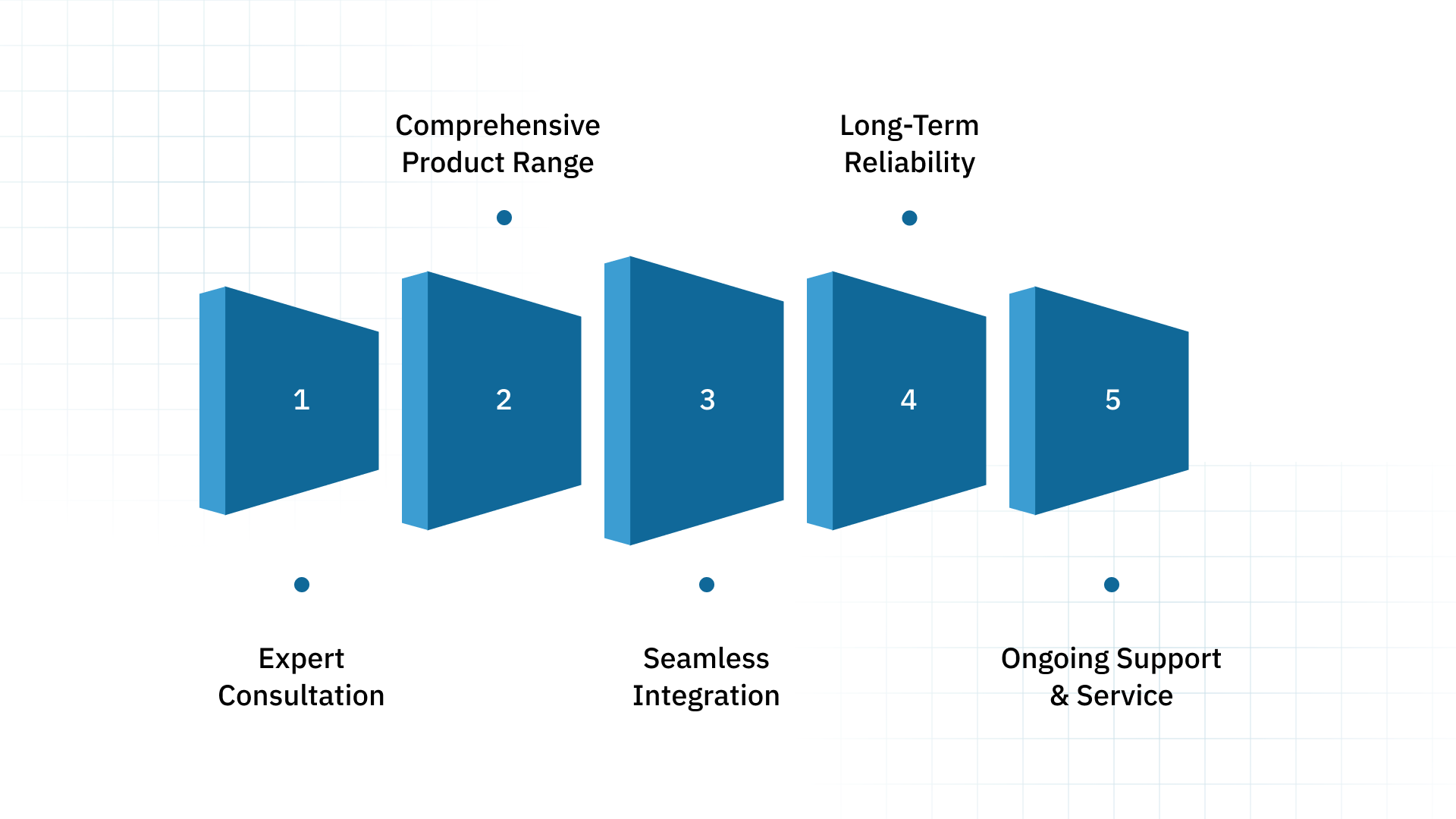
Here's how Fiama can assist you:
Expert Consultation
Fiama's team of experts works closely with you to understand your specific system requirements, whether you need incremental or absolute encoders, linear or rotary motion feedback, or specialized environmental solutions.Comprehensive Product Range
Fiama offers a diverse range of encoders, including magnetic, optical, and inductive technologies, so you can choose the right type based on your environment, application precision, and budget. Our products are designed to meet the highest industry standards for performance and durability.Seamless Integration
Our encoders are built for easy integration into your existing systems. Whether it’s for a robotics line, CNC machine, or automated assembly, Fiama encoders ensure smooth compatibility with your hardware and software, reducing setup time and minimizing disruptions during installation.Long-Term Reliability
Fiama encoders are built to last. Our high-quality products are tested to withstand extreme conditions, such as temperature fluctuations, vibrations, and dust. With our encoders, you reduce maintenance downtime and extend the lifespan of your system, saving you on costly repairs and replacements.Ongoing Support and Service
Fiama provides exceptional after-sales support, including troubleshooting, recalibration, and regular maintenance options. Our technical team is always available to ensure your system continues to run at optimal performance, helping you avoid unexpected downtime and improve overall productivity.
Summing Up
Position encoders are more than just a small component in your machinery. They are the key to achieving precise motion control, improving system uptime, and enhancing the overall performance of your automation systems. By carefully considering the factors outlined above, you can ensure that you make a purchase that not only meets your needs but also delivers long-term value for your business.
Investing in the right position encoder is an investment in your system’s efficiency, reliability, and cost-effectiveness. If you're unsure which encoder fits your system, it’s always wise to consult an expert vendor who can guide you through the selection process.
Need help choosing the right encoder for your setup? We’re here to guide you every step of the way. Get in touch with us today.
FAQs
How do you determine whether to choose an incremental or absolute position encoder for a specific application?
The choice depends on whether your system needs to retain the exact position after power loss. Incremental encoders are ideal for relative positioning, while absolute encoders are essential for precise, uninterrupted feedback, especially in systems like robotics or CNC machines.What are the key environmental factors that affect the performance of position encoders?
Environmental conditions such as temperature, vibration, dust, and moisture can influence encoder reliability. Optical encoders work best in clean, controlled environments, while magnetic and inductive encoders are more suited for harsh, industrial settings with high vibration or contaminants.How does encoder resolution impact system performance and efficiency?
Higher resolution provides greater positional accuracy but can result in increased data processing requirements, slowing down the system. For precision-critical systems like CNC machines, high resolution is necessary, whereas lower resolution may suffice for simpler applications like conveyors or packaging systems.Why is mounting type important when selecting a position encoder?
The encoder’s mounting style (shaft-mounted, hollow-shaft, or direct-mount) affects ease of installation and integration into your system. Hollow-shaft encoders are ideal for tight spaces and reduce installation complexity, while shaft-mounted encoders are suitable for more traditional setups with plenty of space.What are the most common mistakes when selecting a position encoder for industrial applications?
One common mistake is selecting an encoder without considering environmental conditions or future maintenance needs. Another is opting for a higher resolution than necessary, which can slow down performance.