Understanding wind speed is essential for safety, operational efficiency, and environmental monitoring. Across industries, precise wind data helps prevent hazards, optimize equipment performance, and support reliable decision-making. Wind speed indicators convert invisible air movement into usable information, allowing buyers to maintain control in unpredictable conditions.
Before diving into technical details, here are the core factors that make wind-speed measurement indispensable:
Wind speed indicators translate airflow into measurable values that equipment, operators, and control systems can use.
Critical applications include weather monitoring, HVAC and ventilation, industrial safety, wind energy, aviation, research, outdoor operations, and any environment where wind affects performance or safety.
Purpose of this guide: to help buyers choose the right wind-speed instrument based on application requirements, environmental factors, precision needs, and long-term performance expectations.
In this article, buyers will learn how to choose the right wind-speed instrument based on application requirements, environmental conditions, precision needs, and long-term performance expectations.
Key Takeaways
Wind-speed sensors differ drastically by technology; each suits specific environments, precision levels, and airflow ranges.
Mechanical, thermal, pressure-based, ultrasonic, and Doppler instruments offer unique strengths and limitations.
Matching sensor type to application is critical to avoid inaccuracies, downtime, or overspecifying.
Environmental conditions (dust, temperature, turbulence, humidity) directly impact sensor performance and lifespan.
Long-term cost, calibration needs, and data-output compatibility matter as much as accuracy when evaluating devices.
Fundamentals: How Wind-Speed Instruments Work?
Wind-speed indicators use a variety of sensing principles to transform moving air into accurate, readable data. Each technology offers different strengths, whether it’s mechanical simplicity, high-precision measurement, or long-term durability with no moving parts.
For buyers, understanding how these instruments work is essential to choosing a device that delivers the right balance of accuracy, responsiveness, reliability, and environmental compatibility. A clear grasp of the measurement principle helps ensure the selected wind-speed sensor performs consistently in the conditions it will face, from gentle indoor airflow to harsh outdoor environments.
Here’s a breakdown of fundamental concepts every buyer should know:
What Is an Anemometer/Wind-Speed Sensor?
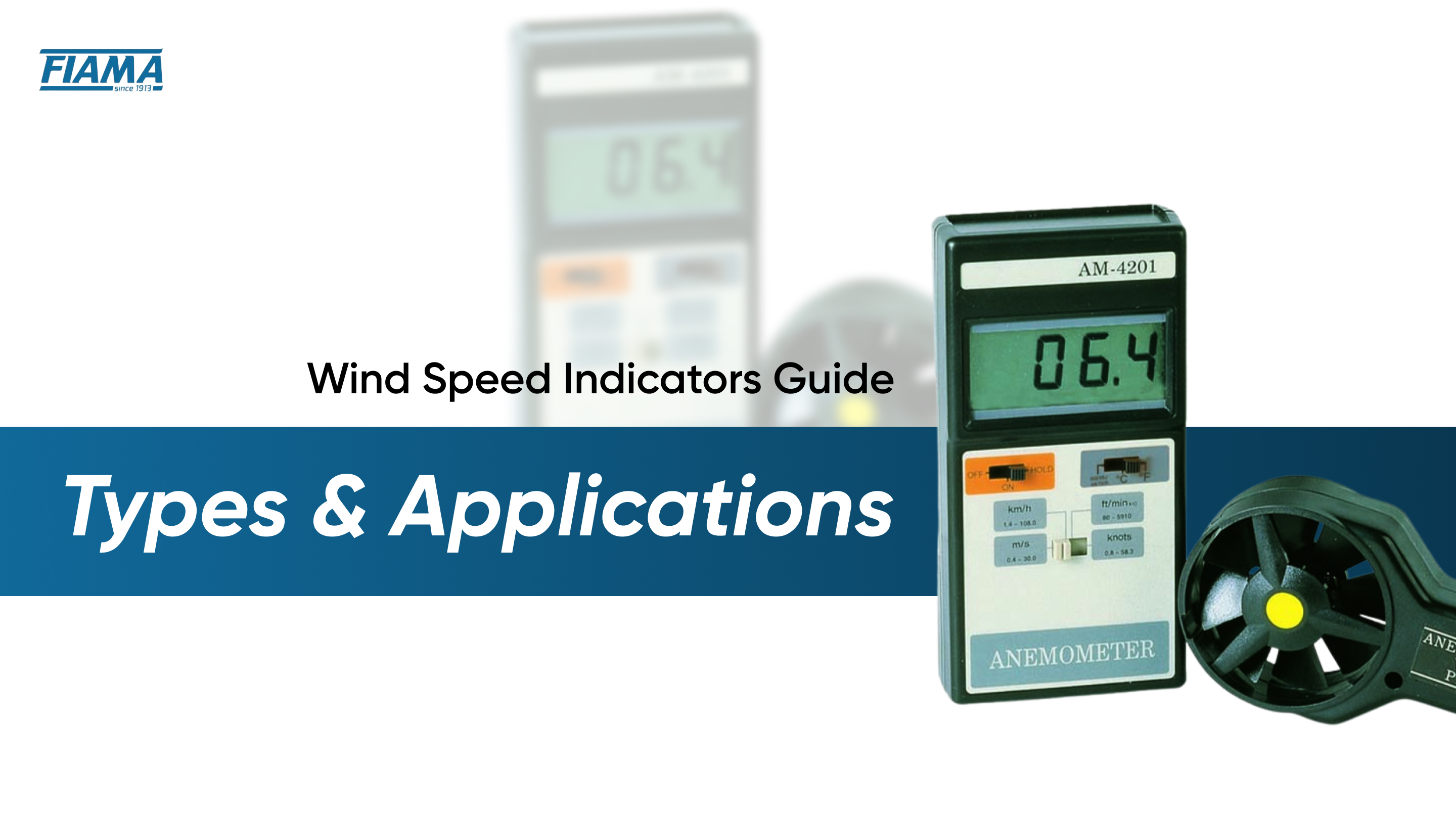
An anemometer is an instrument designed to measure wind or airflow speed. Depending on the technology, it detects motion, pressure changes, cooling effect, or sound-wave disturbances. Wind speed is typically measured in m/s, km/h, mph, or knots, depending on regional and industry standards.
Classification by Measurement Principle/Technology
Wind-speed indicators are built on different sensing principles, and each technology behaves differently in real-world conditions. Some rely on mechanical rotation, others use thermal changes, pressure differences, or advanced electronic methods like ultrasonic or Doppler measurement. Understanding these categories helps buyers compare performance, maintenance needs, environmental suitability, and long-term reliability. This ensures the selected device matches both the operating environment and the precision required for the application.
Rotating (Mechanical) Sensors
Cup and propeller/vane anemometers use moving parts to translate wind force into rotational speed. They are simple, reliable, and widely used for general outdoor measurements.
Thermal (Hot-Wire) Sensors
A heated wire cools as airflow increases; the cooling rate is used to calculate wind speed. These sensors are highly sensitive to indoor airflow or research environments.
Pressure-Based Sensors (Pitot Tube / Differential Pressure)
Wind pressure entering a tube creates a measurable pressure difference, ideal for high-speed or controlled airflow environments such as aviation, wind tunnels, or industrial ducts.
Ultrasonic/Sonic Sensors
Ultrasonic transducers send sound pulses across fixed paths. Changes in transit time reveal wind speed and direction. They have no moving parts, making them durable and low-maintenance.
Advanced/Research-Grade Instruments
Laser Doppler and acoustic Doppler systems measure wind through light or acoustic reflections. These are used in advanced research, aerodynamic studies, and wind-energy profiling.
Pros & Cons of Each Type of Indicators
Each wind-speed technology has specific advantages and limitations, and understanding these differences is essential for buyers aiming to select the right instrument. Factors such as environmental conditions, required accuracy, maintenance expectations, device lifespan, and budget all influence the decision.
By evaluating how each sensor type performs in real-world scenarios, whether in harsh outdoor environments, controlled indoor spaces, or high-precision research settings, buyers can ensure they choose a wind-speed indicator that delivers reliable, consistent performance over time.
Here is a quick comparative evaluation:
Sensor Type | Strengths/When It Excels | Limitations/When to Avoid |
Cup/Propeller (Mechanical) | Simple, reliable, cost-effective; ideal for general weather monitoring and wind-energy surveys. | Moving parts require maintenance; they are less accurate in turbulence or very low airflow. |
Hot-Wire (Thermal) | Highly sensitive at low airflow speeds; good for indoor testing, HVAC, and labs. | Requires calibration; affected by temperature changes; not ideal outdoors. |
Pressure-Based (Pitot) | Excellent for high-speed flows, aviation, ducts, and wind tunnels. | Ineffective at low winds; needs stable flow; requires calibration. |
Ultrasonic/Sonic | No moving parts, low maintenance, reliable outdoors; measures speed + direction. | Higher cost; sensitive in heavy particulate or turbulent environments without proper housing. |
Advanced Doppler/Laser | High precision, profiling at different heights, used in research and energy assessment. | Expensive and complex; unnecessary for basic monitoring. |
Application Patterns: Matching Indicator Type to Use Case
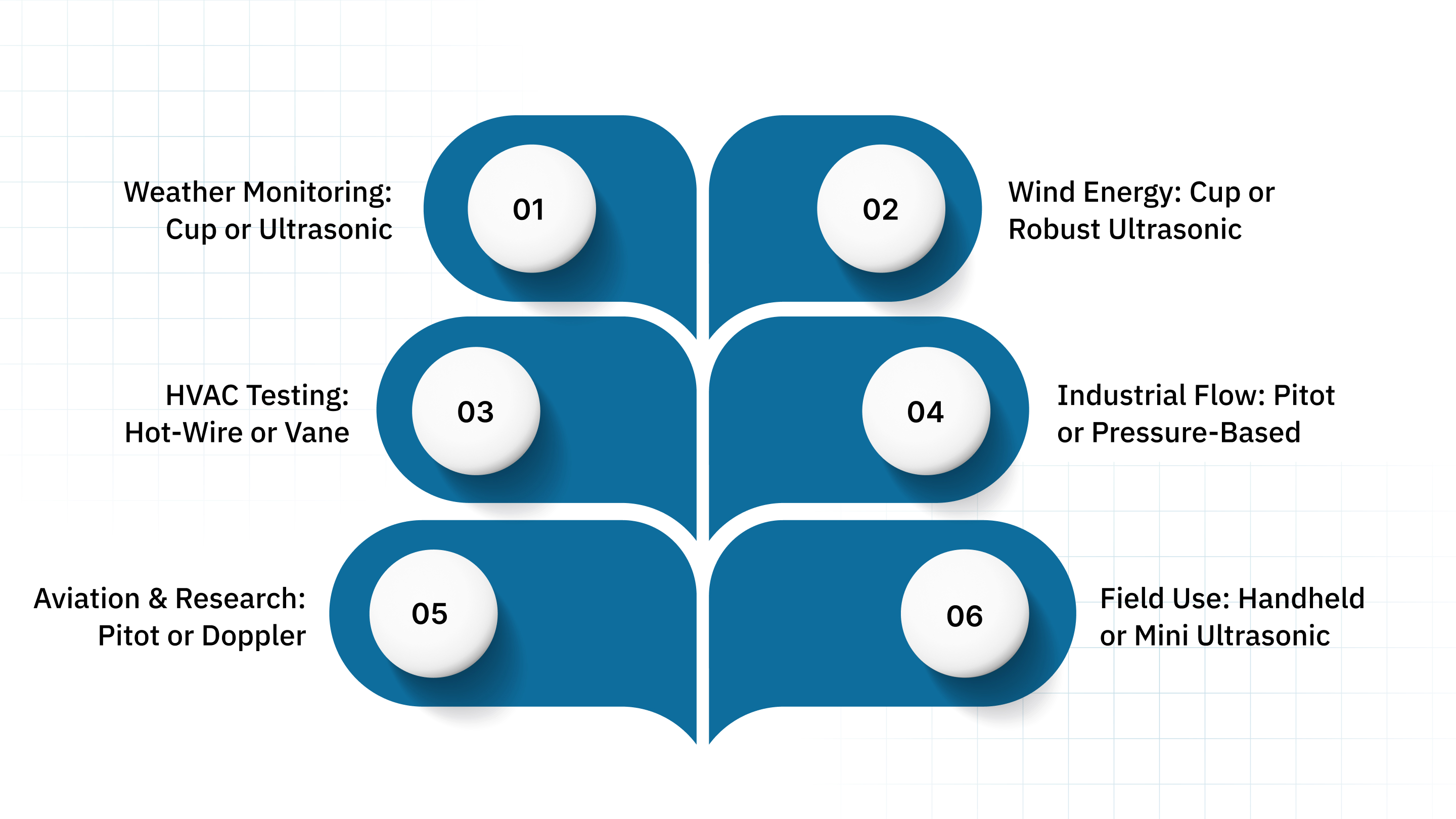
Different industries demand specific measurement ranges, durability standards, and data output capabilities to operate safely and efficiently. Selecting a wind-speed indicator that aligns with the application ensures accurate readings, reduces downtime, improves safety, and prevents overspending on features or technologies that are unnecessary for the intended environment.
Here’s what industry buyers typically choose:
Weather monitoring/environmental stations: Cup or ultrasonic
Cup anemometers offer dependable long-term outdoor performance, while ultrasonic models deliver higher accuracy with no moving parts. Both are reliable choices for continuous weather and environmental data collection.Wind-energy site assessment/turbine installations: Cup or robust ultrasonic
Wind-energy projects require precise, high-stability measurements. Cup anemometers are widely used for wind-resource assessments, while rugged ultrasonic sensors provide long-term accuracy and reduced maintenance near turbines.HVAC/indoor ventilation testing: Hot-wire or vane, sometimes compact ultrasonic
Hot-wire sensors excel at detecting low airflow speeds inside ducts and ventilation systems. Vane anemometers are practical for general HVAC testing, while small ultrasonic units offer advanced measurement without mechanical wear.Industrial duct flow/pipelines/clean rooms: Pitot tube, pressure-based, or hot-wire
Pitot tubes and pressure-differential sensors are ideal for stable, high-speed airflow in industrial ducts. Hot-wire sensors are preferred when low-speed precision is required, especially in controlled environments like clean rooms.Aviation/aerospace /research labs: Pitot, laser Doppler, or acoustic Doppler
Aviation and research applications demand high accuracy and fast response. Pitot tubes are standard for airspeed measurement, while Doppler-based instruments provide advanced airflow profiling and precision for experimental or aerodynamic studies.Portable field work/construction/agriculture /outdoor activities: Handheld units, vane, cup, or small ultrasonic sensors
Handheld and compact sensors are perfect for on-site measurements. Vane, cup, or mini ultrasonic devices give reliable readings for quick assessments in changing outdoor conditions, making them suitable for safety checks, surveys, and field operations.
Need help choosing the right wind-speed indicator or gearbox for your application? Fiama will guide you to a solution built for performance, reliability, and long-term value from our wide range of products.
What Buyers Should Evaluate When Selecting a Wind-Speed Indicator?
Selecting the right wind-speed instrument involves evaluating technical performance, environmental demands, and long-term operating costs. A well-chosen sensor improves data reliability, minimizes maintenance, and prevents operational issues. Reviewing key factors such as accuracy, durability, installation needs, and data compatibility ensures the device performs effectively in real-world conditions.
Key criteria to review include:
1. Measurement range and sensitivity
Choose a sensor capable of accurately capturing the specific wind conditions, whether very low indoor airflow or extreme outdoor gusts. Some technologies excel at detecting tiny changes (hot-wire), while others handle high-speed winds better (cup, ultrasonic).
2. Environment and durability
Sensors must match the operating environment. Dusty, humid, icy, or corrosive conditions may damage some technologies. Outdoor installations require weatherproofing, while industrial settings may need rugged housings or temperature-resistant materials.
3. Required precision/accuracy
Simple weather monitoring may accept moderate accuracy, but energy production, turbulence studies, or aerodynamic testing require high precision. Selecting a device with appropriate accuracy prevents unnecessary costs or unreliable data.
4. Need for direction data
Some applications need only wind speed, but others, such as turbine yaw control or meteorological stations, also require wind direction. This may influence whether you choose a cup anemometer, a vane anemometer, or a combined ultrasonic sensor.
5. Maintenance and lifespan
Mechanical sensors (cup, vane) wear over time and need cleaning or bearing replacement. Ultrasonic and pressure-based sensors have no moving parts, offer longer life, and reduce downtime, but may cost more upfront.
6. Mounting and installation
Consider whether the device will be permanently fixed, handheld, pole-mounted, or integrated into a system. Space constraints, power availability, and cable routing all influence the best design.
7. Budget considerations
Avoid overpaying for unnecessary features. Mechanical devices are cheaper but require maintenance; advanced ultrasonic or Doppler systems cost more but offer longer life and better accuracy in harsh environments.
8. Data output/integration
Ensure the instrument supports the needed output type—analog signals, digital protocols (Modbus, RS485), wireless connectivity, or direct logging. Compatibility with existing controllers or monitoring software is essential for smooth integration.
Practical Buying/Specifying Checklist: Step-by-Step
A systematic buying process helps ensure your wind-speed device matches real-world conditions, performance expectations, and long-term operational demands. By evaluating application needs, environmental factors, sensor technology, installation constraints, and total lifecycle cost, buyers can confidently select an instrument that delivers accuracy, durability, and dependable data over time.
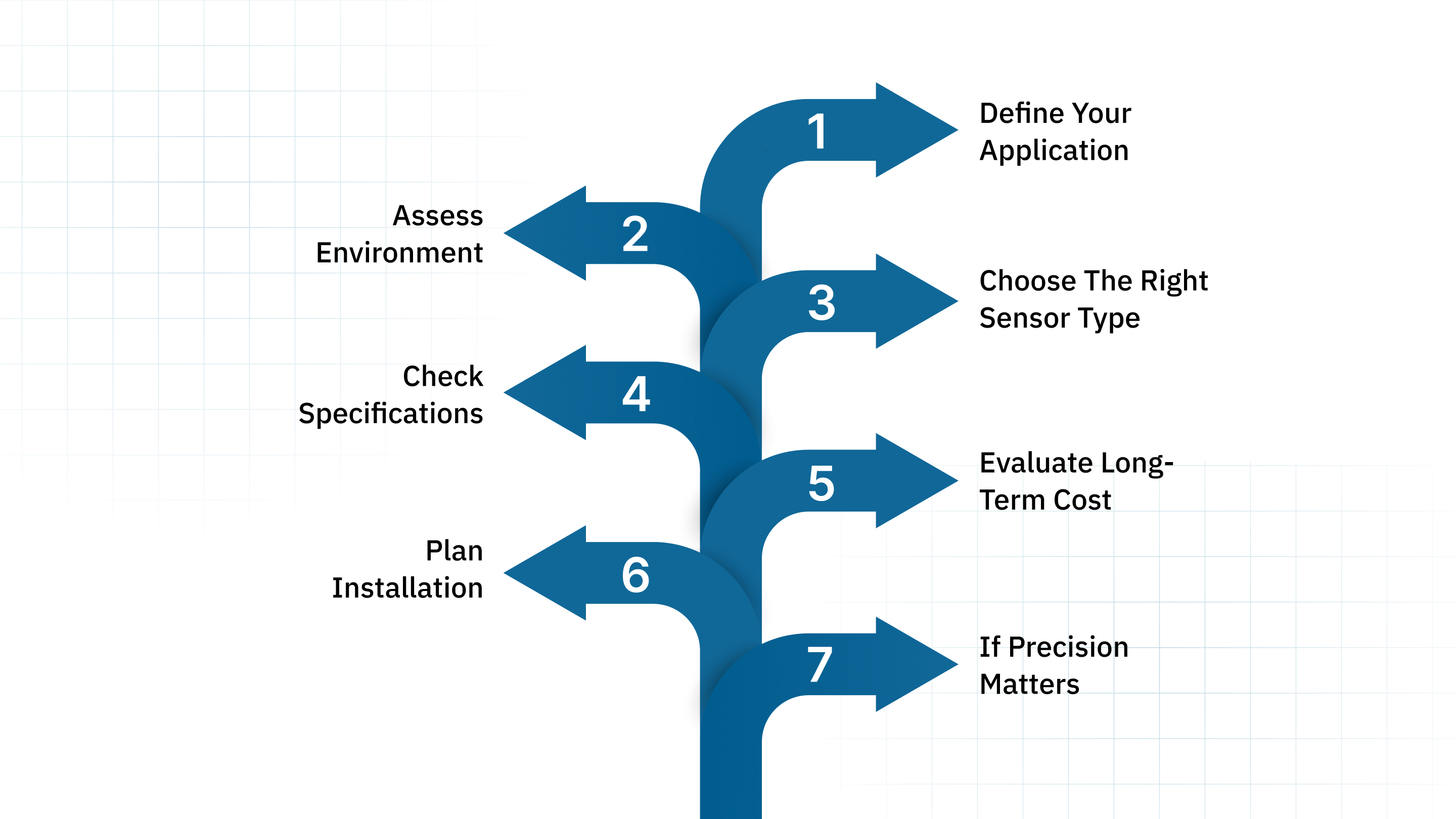
Follow this step-by-step approach:
1. Define your application
Start by clarifying whether the sensor will be used indoors or outdoors, the typical airflow or wind-speed range, whether direction data is required, and how much accuracy your operations depend on. This sets the foundation for all further decisions.
2. Assess environment
Dust, moisture, precipitation, temperature swings, vibration, and turbulent airflow all influence sensor performance. Harsh conditions may require sealed, rugged, or non-mechanical sensors, while controlled environments allow more delicate, high-precision instruments.
3. Choose the right sensor type
Select the appropriate technology cup, ultrasonic, hot-wire, vane, or pitot based on your operating conditions, expected reliability, and measurement precision. Each technology excels in specific environments, so matching the two is essential.
4. Check specifications
Review technical details, including measurement range, accuracy, response time, and sensitivity. Also, confirm the output format, analog, digital, pulse, or serial, to ensure compatibility with existing systems or displays.
5. Evaluate long-term cost
Consider more than the upfront price. Mechanical sensors may cost less initially but require more maintenance, while ultrasonic devices have higher purchase costs but lower long-term upkeep and longer lifespans.
6. Plan installation
Decide how and where the device will be mounted: fixed, portable, or integrated into equipment. Confirm access for maintenance, cable routing, power supply, and whether data will connect to a logger, display, PLC, or wireless system.
7. If precision matters
For applications requiring high accuracy, such as research or turbine control, prioritize sensors with robust construction, traceable calibration, redundancy options, and stable long-term performance.
Wrapping Up
A well-chosen wind-speed indicator provides dependable, high-quality data that strengthens safety, improves operational performance, and supports informed decision-making across industries.
When buyers understand the underlying technologies, applications, and selection criteria, they gain the confidence to choose instruments that truly meet their real-world requirements without over-specifying or compromising reliability.
For expert guidance or to choose the right wind-speed indicator for your application, contact Fiama today.
FAQs
Do I always need an ultrasonic sensor?
Not necessarily. Simple cup anemometers work well for general monitoring, while ultrasonic sensors are better for harsh environments or when direction data is required.
Can a wind-speed indicator measure direction too?
Some can, such as ultrasonic or vane systems. Cup anemometers measure speed only unless paired with a wind vane.
Which instrument is best for low-speed airflow in HVAC systems?
Hot-wire or vane anemometers deliver excellent sensitivity and precision for indoor air-flow measurement.
Are handheld wind meters reliable for industrial tasks?
Yes, handheld meters are reliable for field checks, inspections, and temporary monitoring, but they should not replace permanent installations in critical applications.
How often should a wind-speed sensor be calibrated?
Mechanical and pressure-based sensors need periodic calibration; ultrasonic units require less frequent adjustment but should still be verified annually.