Industrial systems rely on precise valve control to keep processes stable, safe, and predictable. When a valve’s position is unclear, operators lose visibility into flow conditions, equipment runs outside set parameters, and production becomes vulnerable to avoidable downtime. These issues become more visible as plants move toward automated workflows, interconnected systems, and higher traceability expectations.
Accurate valve position monitoring drives better control, helps avoid costly errors, and supports automated, data-driven operations. The growing reliance on such systems is increasing, with the global valve position market expected to reach USD 3.24 billion by 2032, expanding at a CAGR of 5.23%.
Valve position indicators deliver real-time feedback, enabling smarter decision-making, reducing manual checks, and increasing uptime. In this blog, we’ll explore what valve position indicators are, how they work, and why they’re so valuable and how to choose the right indicator for your plant.
A quick overview:
Deliver real-time valve visibility that improves safety, prevents misalignment, and keeps industrial operations stable and predictable.
Minimise downtime and scrap by ensuring accurate flow control, early fault detection, and consistent process quality.
Offer versatile options, from mechanical to digital indicators, suited for different environments, accuracy needs, and automation levels.
Support better system performance by guiding plants to choose indicators based on compatibility, conditions, monitoring needs, and control system integration.
What Are Valve Position Indicators?
Valve position indicators provide real-time feedback on a valve’s status, whether it’s fully open, fully closed, or somewhere in between. They help operators and control systems verify the actual valve position, reducing reliance on assumptions and improving process safety, reliability, and efficiency.
How Valve Position Indicators Work?
Valve position indicators attach directly to the valve stem or actuator. Their operation involves detecting movement and converting it into visible or electronic signals. The process typically involves the following steps:
Attachment to the valve or actuator: The indicator is mechanically linked or magnetically aligned with the valve stem or actuator to sense its movement accurately.
Detection of valve movement: Depending on the design, the indicator uses mechanical linkages, magnetic sensors, limit switches, or encoders to monitor the rotation or linear travel of the valve.
Position feedback generation: The movement is converted into a readable format, which may be:
A local visual display, such as a pointer or dial
Electrical signals for PLCs or control panels
Digital communication for SCADA or automated monitoring systems
Signal interpretation and action: Control systems or operators interpret these signals to verify whether the valve is fully open, closed, or partially actuated. This enables timely interventions, automated interlocks, or maintenance actions.
Continuous monitoring: In automated or critical processes, the indicator provides continuous position feedback to ensure the valve remains in the correct state throughout operation, supporting safety and throughput stability.
By following these steps, valve position indicators provide precise, unambiguous feedback that supports both safety and efficiency in industrial operations. Next, et’s examine the specific benefits they bring in terms of safety, reliability, and process efficiency.
Why Are Valve Position Indicators Beneficial in Industrial Systems?
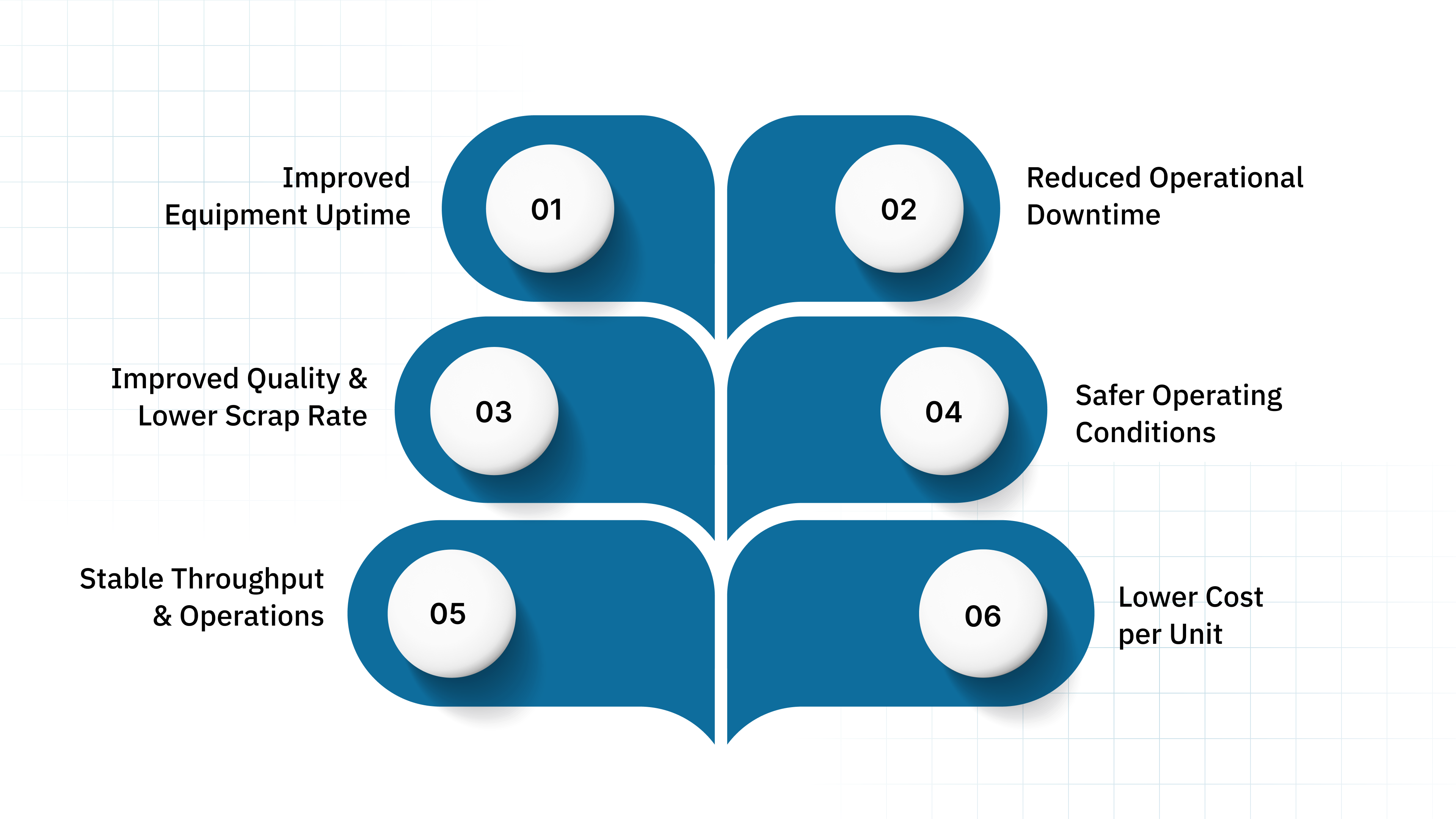
Valve position indicators play a key role in keeping industrial processes consistent and controlled. Without clear feedback, valves may operate incorrectly, creating disruptions and safety risks. Indicators help plants reduce unexpected stoppages and maintain stable flows during production.
Here are some benefits of using valve position indicators in industrial applications:
Improved Equipment Uptime
Reliable valve feedback prevents equipment from running under incorrect conditions, reducing stoppages and avoiding unnecessary mechanical stress. This helps teams plan maintenance more predictably and extends equipment life.
Prevents premature wear: Valves fully aligned with the process reduce stress on pumps and actuators, extending service life.
Supports scheduled operations: Operators verify valve positions before starting equipment, minimizing unexpected shutdowns.
Enables proactive intervention: Early detection of misaligned valves enables maintenance teams to address issues before overload occurs.
Accurate valve feedback stabilizes equipment performance and supports long-term uptime.
Reduced Operational Downtime
Unplanned downtime is costly in industrial operations. Valve position indicators identify faults early and provide actionable feedback, helping avoid interruptions and keeping production lines consistent.
Early fault detection: Electrical or digital feedback alerts operators to stuck or partially actuated valves.
Safe Process Interruption: Systems can halt operations safely when valve issues are detected, avoiding equipment damage.
Faster Recovery: Operators can quickly identify the source of downtime, reducing the time needed to resume production.
By monitoring valve status proactively, plants minimize downtime and maintain continuous operations.
Enhanced Process Quality and Reduced Scrap Rate
Maintaining precise valve positions keeps flow rates consistent and ensures proper mixing. This directly improves product quality and reduces material waste across industrial processes.
Accurate flow control: Real-time feedback ensures correct quantities are delivered through each stage of the process.
Reduces contamination risk: Verifying valve positions prevents cross-contamination in food, pharma, or chemical lines.
Enhances batch consistency: Stable valve operation leads to predictable production outcomes and less waste.
Valve position indicators strengthen overall product quality and support cost-efficient operations.
Safer Operating Conditions
Valve errors can create hazardous situations, including leaks, overpressure, or unintended flow paths. Position indicators provide the visibility needed to maintain safe plant operations.
Verified Isolation: Operators can confirm valves are closed before maintenance, supporting lockout-tagout procedures.
Flow Direction Control: Ensures hazardous or reactive materials are routed correctly, reducing the risk of leaks or backflow.
Pressure and Overload Prevention: Accurate valve data protects pumps, compressors, and other equipment from operating under unsafe conditions.
By providing clear feedback, valve position indicators enhance operator safety and equipment protection.
Stable Throughput and Predictable Operations
Automation and high-speed production depend on precise valve operation. Position indicators deliver reliable feedback that maintains consistent cycle times and throughput across shifts.
Automation Integration: PLCs and SCADA systems can coordinate processes accurately with real-time valve data.
Cycle Time Consistency: Correct valve positions prevent delays in filling, mixing, or transport operations.
Reduced Bottlenecks: Early detection of misaligned valves prevents slowdowns or line interruptions.
Accurate valve monitoring ensures predictable process flow, supporting high productivity and operational efficiency.
Lower Cost per Unit
By maintaining process consistency, reducing downtime, and minimizing scrap, valve position indicators directly contribute to lower production costs per unit.
Fewer Stoppages: Minimizing unplanned downtime reduces lost production and maintenance expenses.
Material Efficiency: Accurate valve control ensures optimal use of raw materials and resources.
Operational Stability: Reduced emergency interventions and smoother process cycles decrease overall production costs.
Investing in reliable valve position feedback supports cost-efficient production and maximises return on industrial operations.
Overall, valve position indicators deliver measurable benefits across safety, quality, efficiency, and cost metrics. In the next section, let's explore the different types of indicators available, as each type serves specific operational requirements.
Types of Valve Position Indicators
Valve position indicators come in several designs depending on the type of valve, degree of automation, and accuracy required. Selecting the right type ensures performance across different environmental and operational conditions.
Below are the types of valve position indicators used in industrial systems:
Mechanical Valve Position Indicators
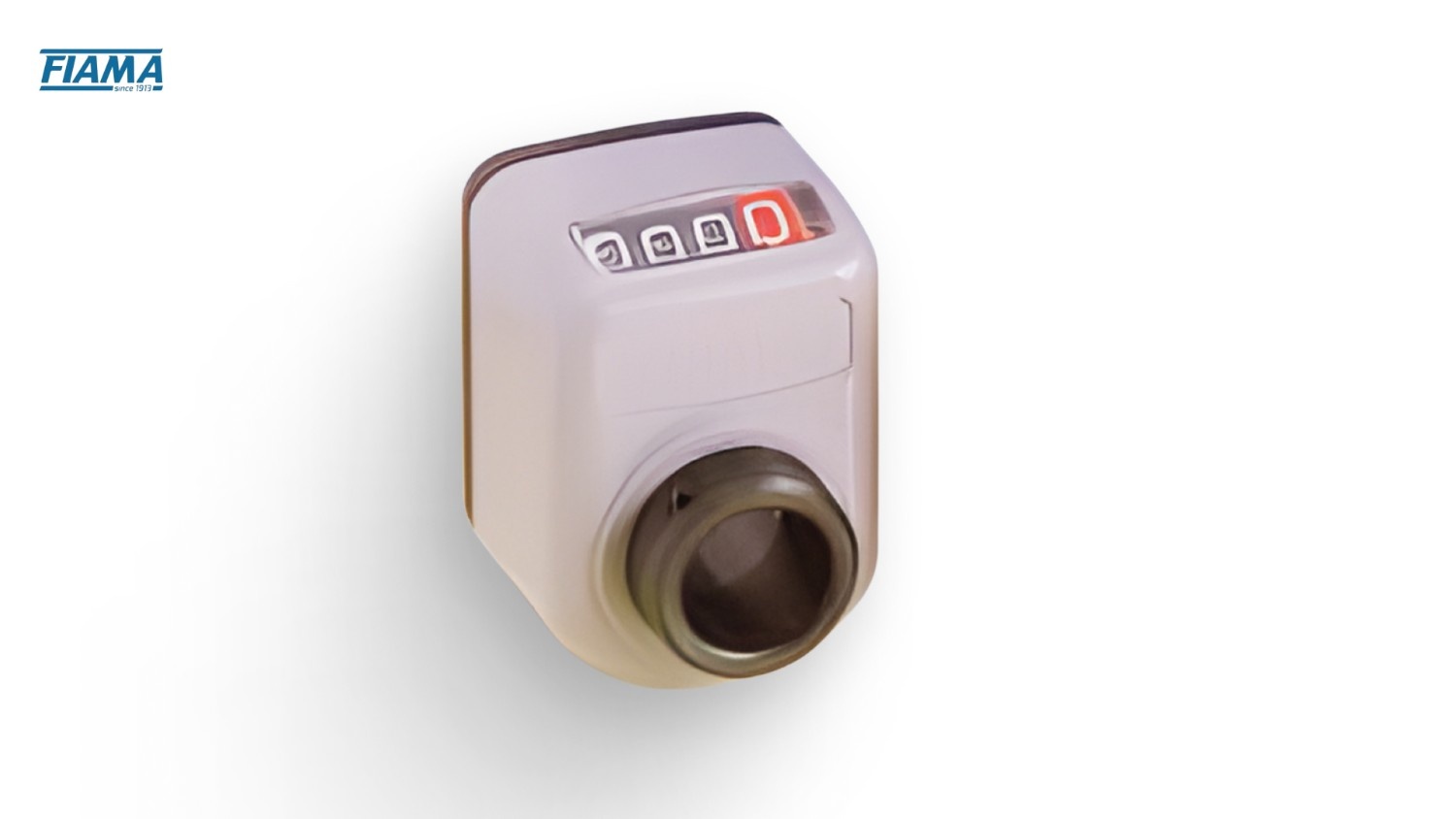
Mechanical indicators display valve position using visual markers, flags, or rotary pointers. They are simple, robust, and require no power source.
Ideal use-case scenario: Manual valves where operators need quick visual confirmation.
Avoid when: Automation integration or remote feedback is required.
Fiama’s Hollow Shaft Position Indicators offer multiple bore options (6mm to 35mm) with optional stainless-steel parts, providing rugged reliability for industrial setups.
Electrical Valve Position Indicators
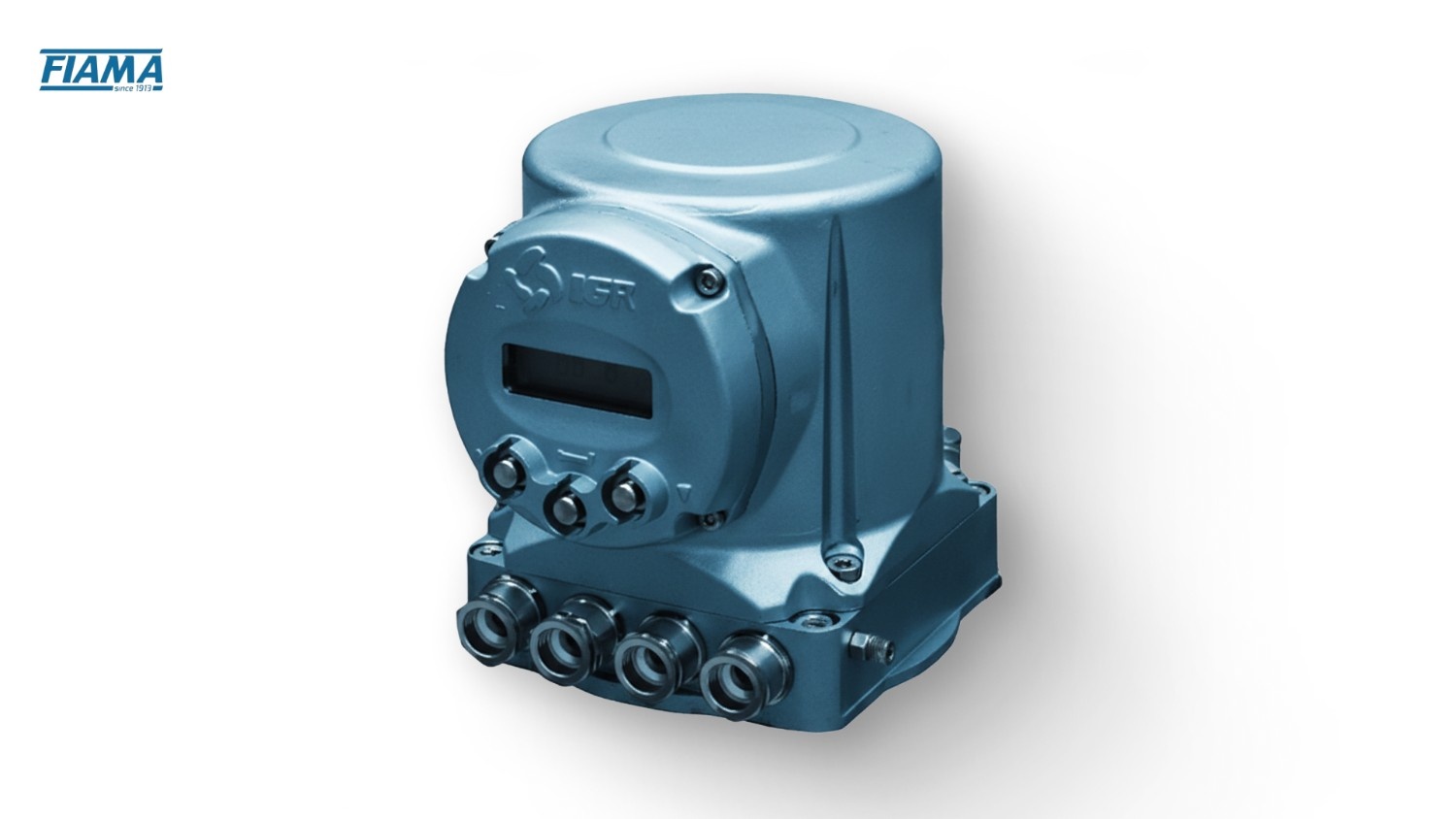
These indicators use limit switches or microswitches to communicate open/closed states to control systems or PLCs. They are ideal for basic automated processes.
Ideal use-case scenario: Simple automation systems needing open/close confirmation signals.
Avoid when: Continuous position monitoring or multi-step feedback is required.
Proximity and Sensor-Based Indicators
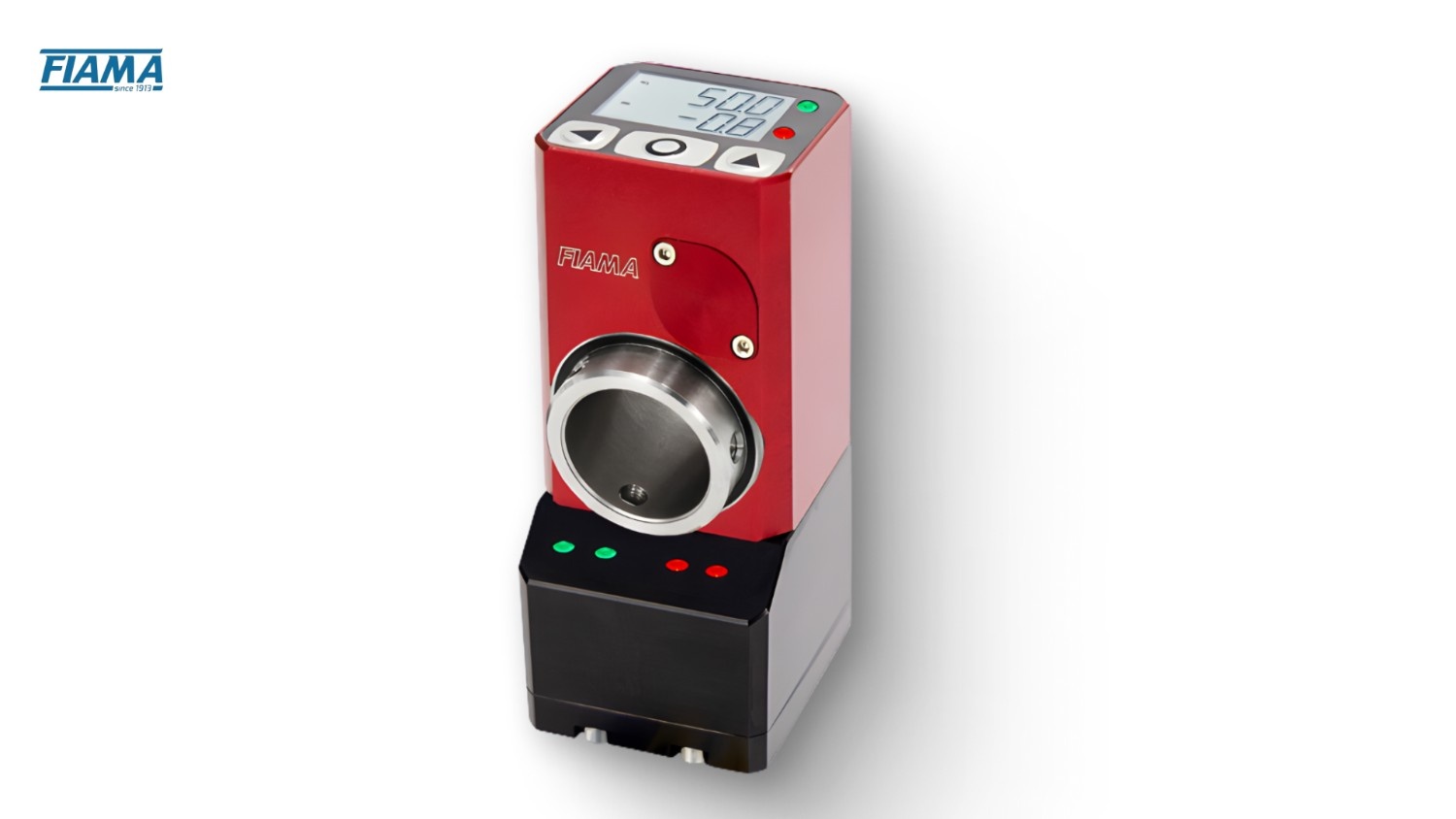
Non-contact indicators use magnetic, inductive, or Hall-effect sensors to detect valve movement. They are highly reliable in harsh, vibration-prone, or wet environments.
Ideal use-case scenario: Harsh environments with washdowns, corrosive chemicals, or high vibration.
Avoid when: Low-cost or simple visual feedback is sufficient.
Fiama’s Programmable Position Indicators with PLC Communication (e.g., EP43NET, EP46NET) provide seamless integration with industrial Ethernet protocols while maintaining precision in valve monitoring.
Digital / Electronic Valve Position Indicators
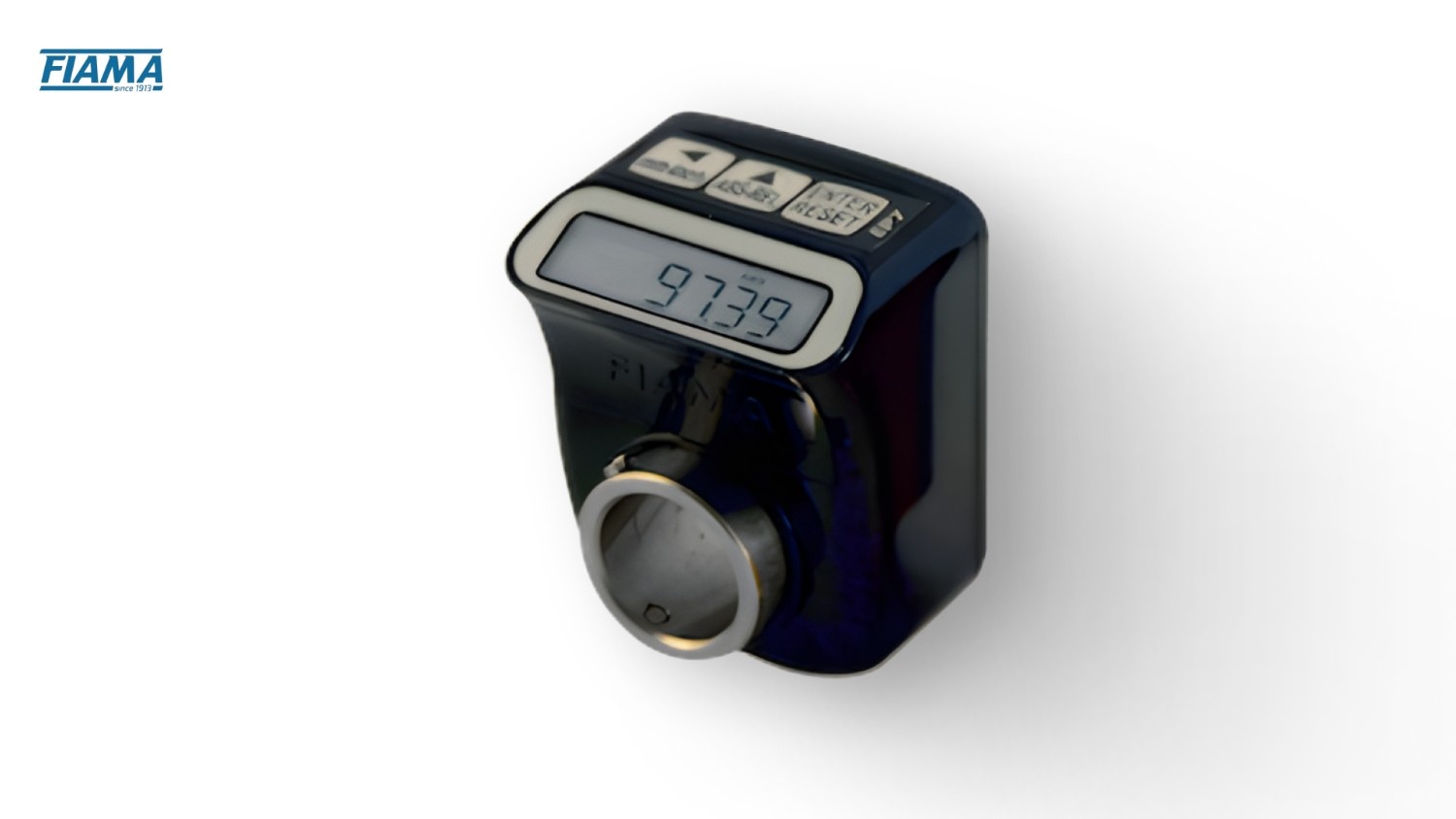
Digital indicators provide continuous monitoring and integrate with advanced automation systems. They support detailed feedback, diagnostics, and remote monitoring.
Ideal use-case scenario: Data-driven plants requiring continuous or multi-position feedback.
Avoid when: Only a simple open/close status is needed.
Fiamas Battery Powered Programmable Position Indicators, such as the EP7 and EP9L, allow both linear and rotary measurements with reliable battery life for industrial environments.
Integrated Valve Monitoring Units
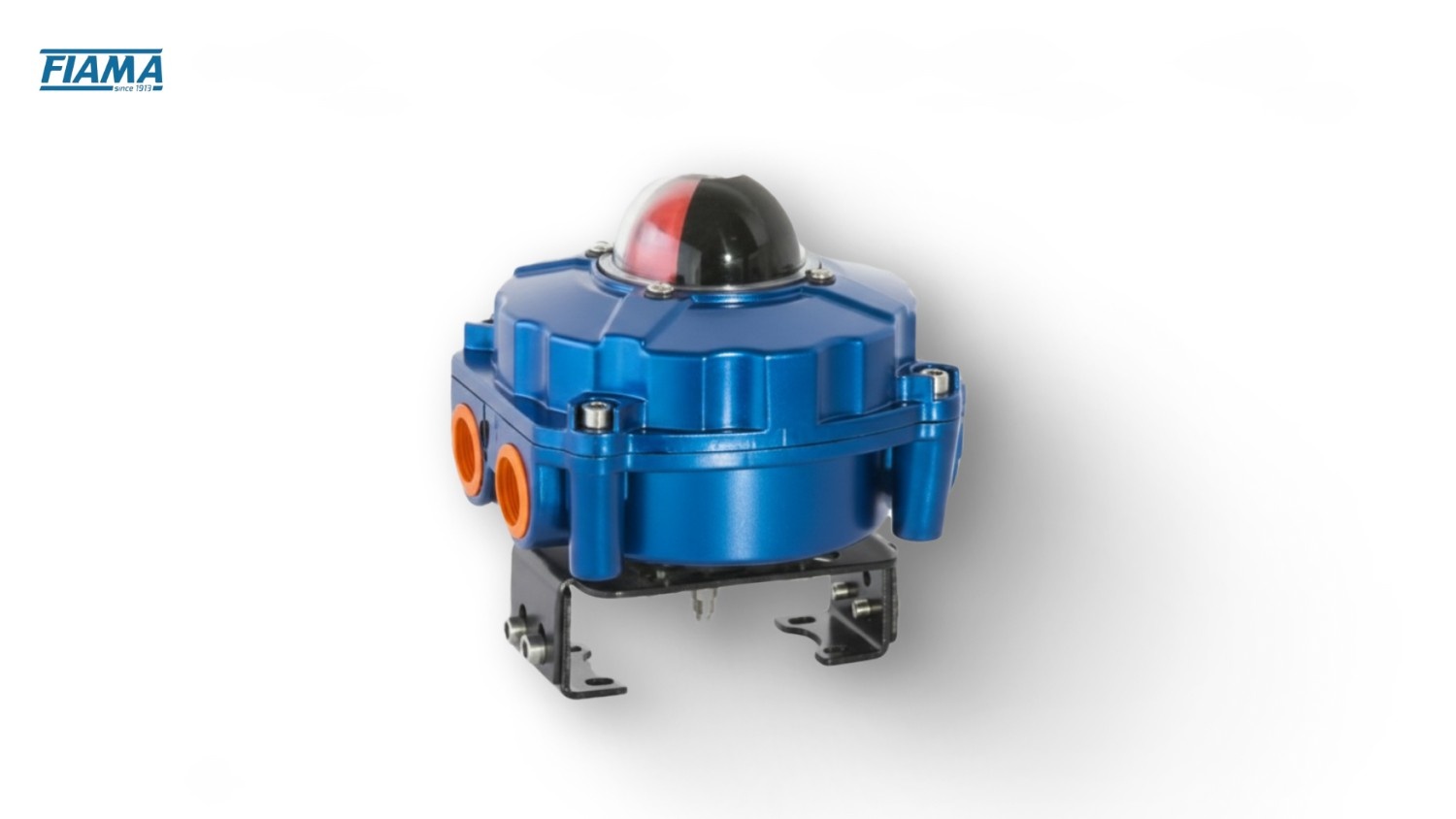
These combine mechanical, sensor, and digital outputs in a single unit, simplifying installation while delivering multi-level feedback.
Ideal use-case scenario: Complex valves in automated plants where multi-output feedback is needed.
Avoid when: Only basic position indication is sufficient.
In the following section, let’s look at how industries utilize these indicators to improve safety and efficiency.
Applications of Valve Position Indicators Across Industries
Valve position indicators are essential wherever precise control of flow, pressure, or media routing is critical. Their applications span multiple industries, helping plants maintain safety, product quality, and operational efficiency.
Food and Beverage Manufacturing: Valves control ingredient transfers, cleaning cycles, and steam supply. Indicators ensure proper positioning to maintain hygiene, prevent contamination, and support consistent batch quality.
Pharmaceutical and Biotech: Accurate valve feedback is crucial for maintaining batch integrity and traceability. Indicators help manage fluids, buffers, and gases safely while ensuring compliance during audits.
Chemical and Petrochemical Plants: Correct valve positions prevent unsafe mixing, overpressure, or chemical spills. Indicators reduce operational risk and support stable process flow across complex lines.
Oil and Gas Operations: Indicators guide valve positions in pipelines, storage tanks, and pressure systems. They help prevent leaks, equipment failures, and unplanned shutdowns, enhancing overall safety.
Water and Wastewater Treatment: Facilities use indicators to manage flow, chemical dosing, and aeration. Clear feedback ensures stable operation and protects against process interruptions or water quality deviations.
Packaging and Material Handling: Air-driven actuators and pneumatic systems rely on valves for timing and synchronization. Indicators support consistent machine operation and reduce misfeeds or line stoppages.
HVAC, Steam, and Utility Systems: Valve position indicators help verify isolation before maintenance or repair, preventing accidental exposure to high-pressure fluids and ensuring worker safety.
In the next section, let’s understand common obstacles that help teams select, maintain, and operate indicators more effectively.
Common Challenges in Using Valve Position Indicators
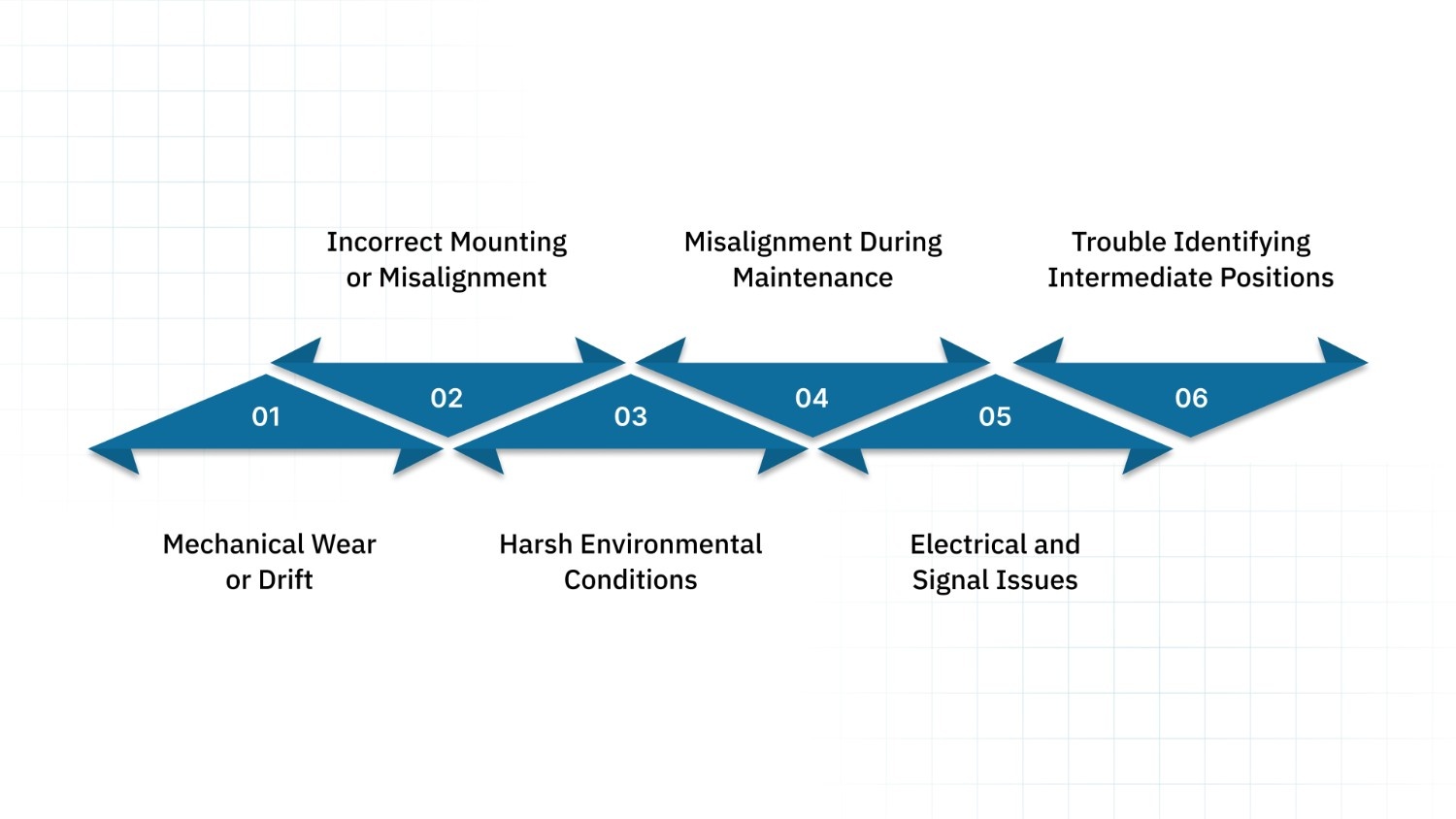
While valve position indicators offer significant benefits, implementing them in industrial systems can be challenging. Understanding these issues helps teams plan effectively and keep operations running smoothly.
Key Challenges:
Mechanical Wear or Drift: Frequent movement can cause mechanical parts to loosen over time, affecting accuracy. High-vibration environments accelerate this wear, so regular inspections are essential.
Incorrect Mounting or Misalignment: If the indicator is not aligned with the valve stem or actuator correctly, the displayed position may be inaccurate. Ensuring proper mounting gives operators accurate feedback every time.
Harsh Environmental Conditions: Indicators exposed to vibration, heat, moisture, or chemicals can degrade faster. Choosing sealed or magnetic types helps maintain reliability in tough conditions.
Misalignment During Maintenance: Incorrect installation or improper linkage adjustments can cause false feedback. Operators may think a valve is open when it is only partially moved. Consistent calibration and maintenance checks reduce this risk.
Electrical and Signal Issues: Loose wiring, switch faults, or inconsistent voltage can interrupt feedback to PLCs. Digital indicators help minimize these issues through more stable sensing.
Difficulty Determining Intermediate Positions: Simple indicators often show only open or closed states. Applications that need intermediate tracking benefit more from smart or encoder-based solutions.
In the following section, let's discuss how to select the indicator that best fits your operational and environmental needs.
How to Select the Right Valve Position Indicator?
Choosing the right indicator requires understanding the valve type, process environment, monitoring needs, and automation level. Careful selection ensures smooth plant operations and minimizes troubleshooting.
Key factors to consider include:
Valve and Actuator Compatibility: Different valve types (ball, butterfly, plug) and actuators (manual, pneumatic, electric) require specific indicator designs. Ensuring mechanical and mounting compatibility prevents long-term alignment issues.
Environmental Conditions: Harsh environments require indicators with strong sealing, corrosion-resistant materials, and non-contact sensors. Washdown areas often perform better with stainless steel or magnetic systems designed to resist moisture and chemicals.
Monitoring Requirements: Determine whether you need local visual feedback, electrical signals, analog/digital output, or diagnostic capabilities. Advanced options support automation and predictive maintenance.
Accuracy and Repeatability: Applications like batching, dosing, or sanitary processing need precise repeatability. Smart indicators or encoder-based feedback often work best.
Ease of Installation and Maintenance: Indicators with modular mounts, simple calibration, or integrated feedback reduce installation time and ongoing maintenance work.
Integration With Control Systems: Compatibility with PLCs, SCADA, or fieldbus networks matters for plants moving toward Industry 4.0 infrastructure. Selecting system-ready indicators ensures smoother connectivity and real-time monitoring.
How Fiama Supports Reliable Valve Position Monitoring?
Fiama delivers engineered feedback solutions for industrial valves with a focus on practical design and application support. With over 100 years of manufacturing experience, Fiama emphasises robust construction, adaptable configurations, and hands-on OEM support.
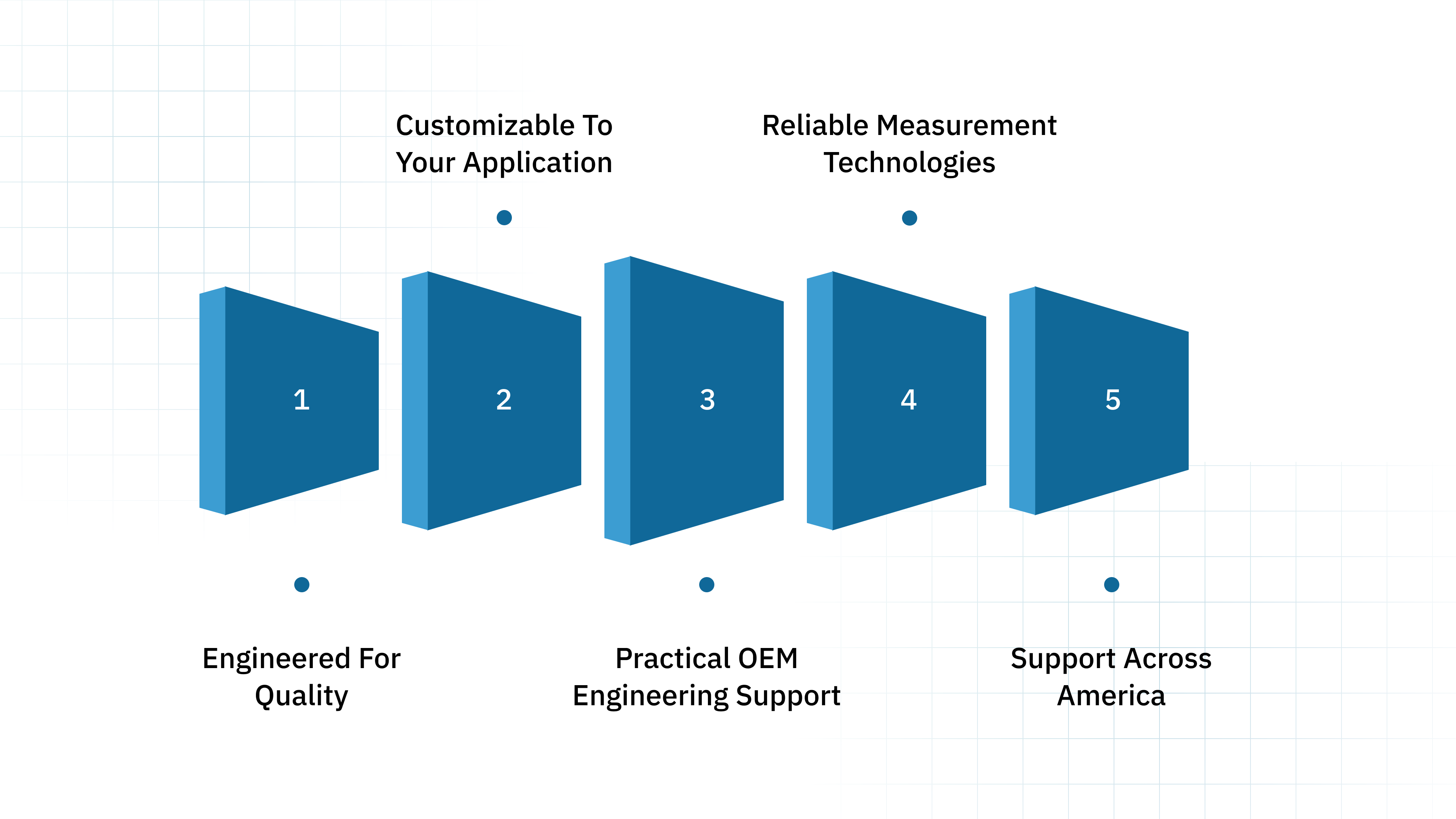
Here’s how we can assist you:
Engineered for Quality: Products are designed and manufactured in Parma, Italy, with metal housings and materials suited for demanding environments. Fiama’s engineering team focuses on accuracy and long service life.
Customizable to Your Application: Fiama offers custom stroke lengths and mounting options to match specific valve designs, actuator types, and process requirements.
Practical OEM Engineering Support: Customers benefit from hands-on guidance for selecting, integrating, and maintaining devices across food, pharma, packaging, metal, semiconductor, and wood processing applications. No quotas or sales pressure, just tailored advice.
Reliable Measurement Technologies: From encoders and potentiometers to magnetic measurement systems, Fiama offers technologies suited for multiple environmental conditions.
Support Across America: Edmar Metric LLC distributes Fiama products across America, providing strong product knowledge and engineering support.
Fiama’s combination of engineering knowledge, product depth, and manufacturing quality helps plants maintain accurate, reliable valve visibility, supporting safer and more predictable production.
Conclusion
Accurate valve position indication helps industrial plants maintain safe, predictable, and efficient operations. Clear feedback supports better uptime, reduces scrap, and prevents unnecessary downtime by showing operators and control systems exactly what a valve is doing.
As industries move toward automated and data-driven systems, reliable indicators play a growing role in maintaining consistency and meeting compliance requirements. Selecting high-quality indicators from trusted manufacturers like Fiama helps plants protect long-term performance.
For teams evaluating valve monitoring solutions or looking to strengthen system reliability, reach out to us today to discuss which indicator options can best support your operational needs.
FAQs
1. In what ways do valve position indicators support industrial automation and remote monitoring?
Valve position indicators give real-time feedback on valve status, allowing automated systems to make accurate adjustments without manual checks. They support remote monitoring by sending reliable open/closed or percentage-position data to control rooms, improving operational visibility, reducing downtime, and enabling faster response in automated workflows.
2. What role do valve position indicators play in maintaining product quality and process consistency?
They ensure valves open or close at the correct time and to the right degree, keeping flow rates, pressures, and temperatures stable. This consistency helps maintain batch quality, reduces variability, and minimizes process deviations that can affect product performance, safety, or regulatory compliance.
3. How do visual and electronic valve position indicators differ in industrial use?
Visual indicators show valve status through mechanical markers or colour bands, offering quick on-site inspection. Electronic indicators transmit digital signals to control systems, enabling remote monitoring, automation, and integration with SCADA or PLCs. Visual types suit simpler setups, while electronic versions fit advanced, data-driven operations.
4. How do valve position indicators help ensure compliance with industrial safety standards?
They provide accurate position feedback that prevents accidental overflows, pressure build-up, or unsafe flow conditions. By supporting automated shutdowns, alarms, and interlocks, they help facilities meet safety regulations, reduce operator error, and maintain required documentation for audits and industry certifications.
5. What problems can occur in an industrial plant if valve positions are not accurately indicated?
Incorrect valve status can lead to flow disruptions, contamination, pressure imbalances, equipment damage, product loss, and safety hazards. Operators may make wrong decisions due to inaccurate feedback, causing process instability, higher downtime, and potential environmental or compliance violations.