When equipment movement is hard to track, small errors turn into bigger issues. A manual adjustment that’s slightly off can slow changeovers, disrupt throughput, raise scrap, or introduce safety risks. For many plant heads and operations teams, these issues consume time on the floor and affect day-to-day production targets.
This is where a position indicator device becomes useful. It provides operators and maintenance teams with clear, real-time visibility into machine settings, keeping adjustments accurate and repeatable. With the global position sensor market expected to reach USD 15.84 billion by 2032, these tools are increasingly becoming essential for teams aiming to improve control and maintain consistency across shifts.
In this guide, we’ll learn the core purpose of position indicator devices, the types used across industrial equipment, the role of modern technology, and what to check before selecting one for your line.
Key Takeaways:
Position indicator devices provide real-time feedback on machine components, ensuring accurate, repeatable adjustments and helping you reduce operator error.
They speed up changeovers, support automation, and enable closed-loop control for consistent, efficient production.
Modern devices allow remote monitoring and predictive maintenance, allowing you to detect issues early and maintain steady operations.
They improve safety, support quality and compliance requirements, and help ensure reliable performance across diverse industrial applications.
What Are Position Indicator Devices?
Position indicator devices are instruments that provide real-time feedback on the physical position of a machine component or control element. They are used in a wide range of industrial applications to monitor movement, rotations, and mechanical status.
These devices often integrate directly into systems like valve assemblies, linear actuators, or machine tools, providing visual or digital feedback on position status. By translating mechanical motion into readable outputs, these devices help you reduce human error, enhance safety, and maintain process stability.
Key Components of Position Indicator Devices
A position indicator device consists of components that capture movement, convert it into measurable signals, and display the information for monitoring or control.
Key components include:
Sensing Element: Detects linear or rotary motion. Examples include potentiometers, magnetic encoders, or draw-wire systems.
Transmission Mechanism: Transfers motion from the equipment to the sensing element, such as gears, flexible shafts, or couplings.
Display/Output Interface: Provides feedback via mechanical dials, digital screens, or electronic signals to PLCs or control systems.
Mounting/Enclosure: Protects internal components from dust, moisture, and mechanical damage, ensuring reliability in industrial environments.
Understanding these components will help you choose the right device for your operational needs and environment. Next, let's discuss the core reason why these devices are used in industrial systems.
What is the Purpose of Using a Position Indicator Device?
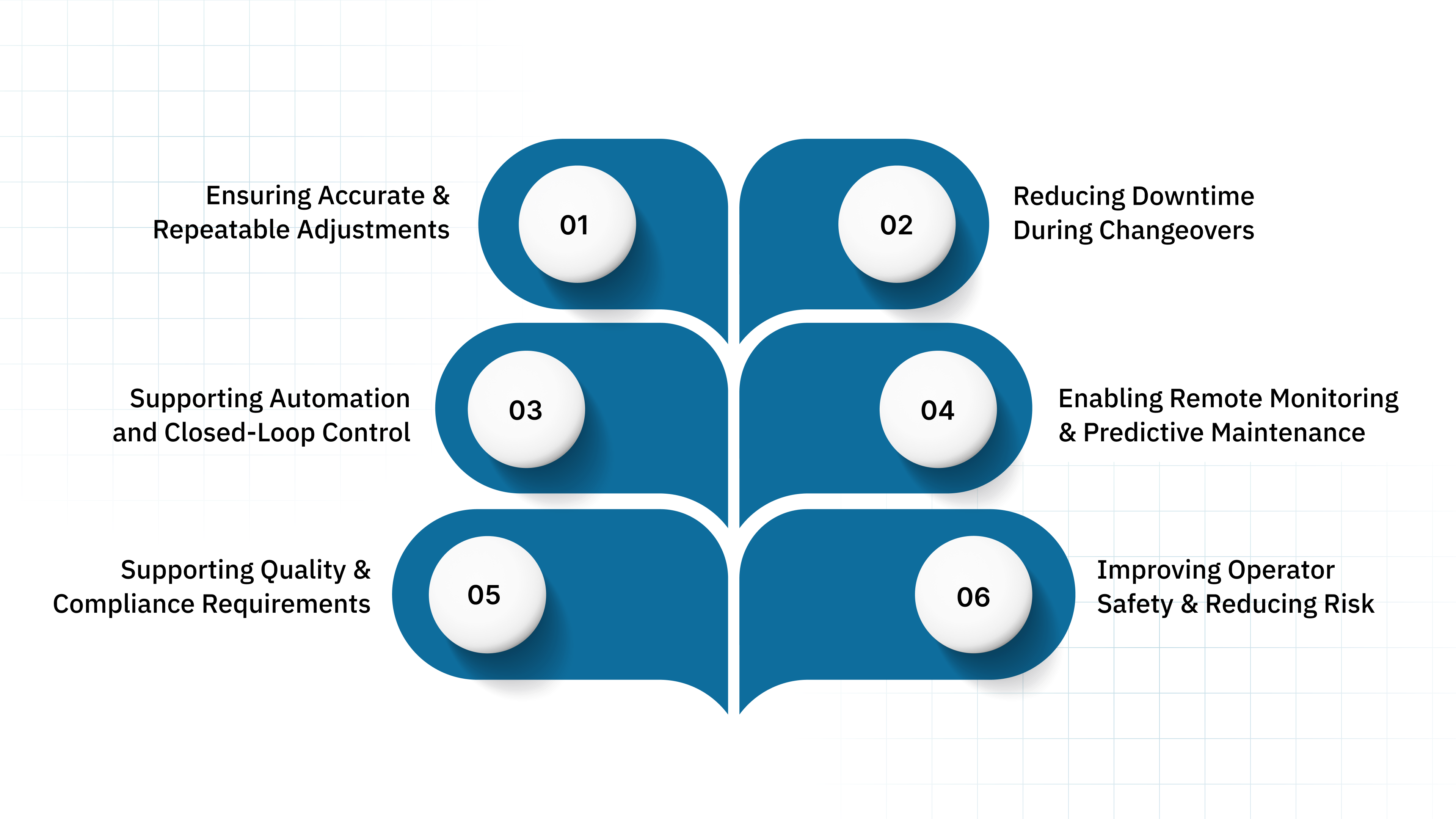
Position indicators serve multiple critical purposes, directly impacting equipment performance, operational efficiency, and safety.
Some of the key purposes include:
Ensuring Accurate and Repeatable Adjustments
Position indicators make it easier for operators to return to exact machine positions across shifts, formats, and product runs. This is essential for applications where even slight deviations can impact quality or throughput.
Consistent Reference Points: Provide a fixed value for each setup so operators don’t rely on guesswork or unverified markings. Helps maintain stable quality across batches.
Reduced Human Variation: Minimizes differences between operators by giving a measurable, reliable position for each adjustment.
Supports Multi-format Production: Helps teams switch between product sizes, tooling positions, or spindle settings without creating misalignments that slow down the next cycle.
A reliable position readout strengthens repeatability, supporting higher-quality output without over-relying on operator skill.
Reducing Downtime During Changeovers
When machines need frequent repositioning, such as on packaging, woodworking, or processing lines, position indicators speed up each adjustment and reduce troubleshooting time.
Faster Setup Steps: Operators can move directly to the correct value instead of stopping, checking, and re-checking.
Less Trial-and-Error: Eliminates the back-and-forth adjustments that usually delay the start of production runs.
Smoother Shift Transitions: Makes handovers faster because incoming operators immediately see the correct reference values.
Shorter changeovers help maintain steady throughput, especially in plants running diverse product SKUs or frequent tooling changes.
Supporting Automation and Closed-Loop Control
In semi- or fully automated equipment, electronic position indicators or encoders provide feedback that helps control systems make precise adjustments
Provides Real-time Position Feedback: Enables PLCs and controllers to continuously track actual vs expected position, improving process reliability.
Improved Actuation Accuracy: Supports servo or motor-driven systems by confirming that shafts, slides, or actuators have moved to the correct point.
Scalable for Future Automation: Plants planning upgrades can integrate these devices as part of broader digital or servo-driven systems.
As automation grows, accurate position data becomes essential for stable output and reduced variation.
Enabling Remote Monitoring and Predictive Maintenance
When position indicators send digital outputs to a control platform, technicians can monitor equipment health and catch developing issues early.
Early Misalignment Detection: Identifies abnormal movement, slippage, or drift before they result in downtime.
Visibility Without Manual Checks: Technicians can track machine behavior from a central interface rather than inspecting each station physically.
Better Maintenance Scheduling: Patterns in movement or adjustment frequency help teams plan interventions without disrupting production.
Remote visibility supports predictable operations and helps avoid sudden stoppages that can impact lead time reliability.
Supporting Quality and Compliance Requirements
Industries like food, pharma, and high-precision assembly need documented, repeatable adjustments to meet quality or regulatory standards.
Helps Maintain Consistent Output Conditions: Accurate positioning reduces variation that may affect product dimensions, sealing integrity, or alignment quality.
Supports Inspection and Audit Readiness: Clear, traceable position values make it easier to demonstrate consistency to auditors or quality teams.
Strengthens Process Reliability: Stable, repeatable positioning improves batch-to-batch reliability without increasing manual oversight.
Reliable position indication promotes consistent production behavior, supporting both internal standards and regulatory expectations.
Improving Operator Safety and Reducing Risk
Knowing exactly where a moving part is reduces the need for manual inspection or unsafe proximity to running mechanisms.
Less Physical Contact with Moving Parts: Operators verify positions through a display instead of reaching into tight or hazardous spaces.
Clear Limits During Adjustments: Shows when a component is approaching travel limits, preventing damage or unsafe force loads.
Reduced Setup Mistakes: Clear values reduce the risk of incorrect adjustments that could cause jams or unsafe machine behavior.
Position indicators help operators maintain safe distances while ensuring the machine is configured correctly before startup.
Overall, position indicators don’t just measure; they actively enable efficiency, reliability, and safe operations. In the next section, let's explore the different types of position indicators available and how each meets specific industrial needs.
Types of Position Indicators
Different types of position indicators help you track machine positions depending on design, precision needs, and adjustment frequency. Below are the most common categories used in industrial equipment.
Mechanical Position Indicators
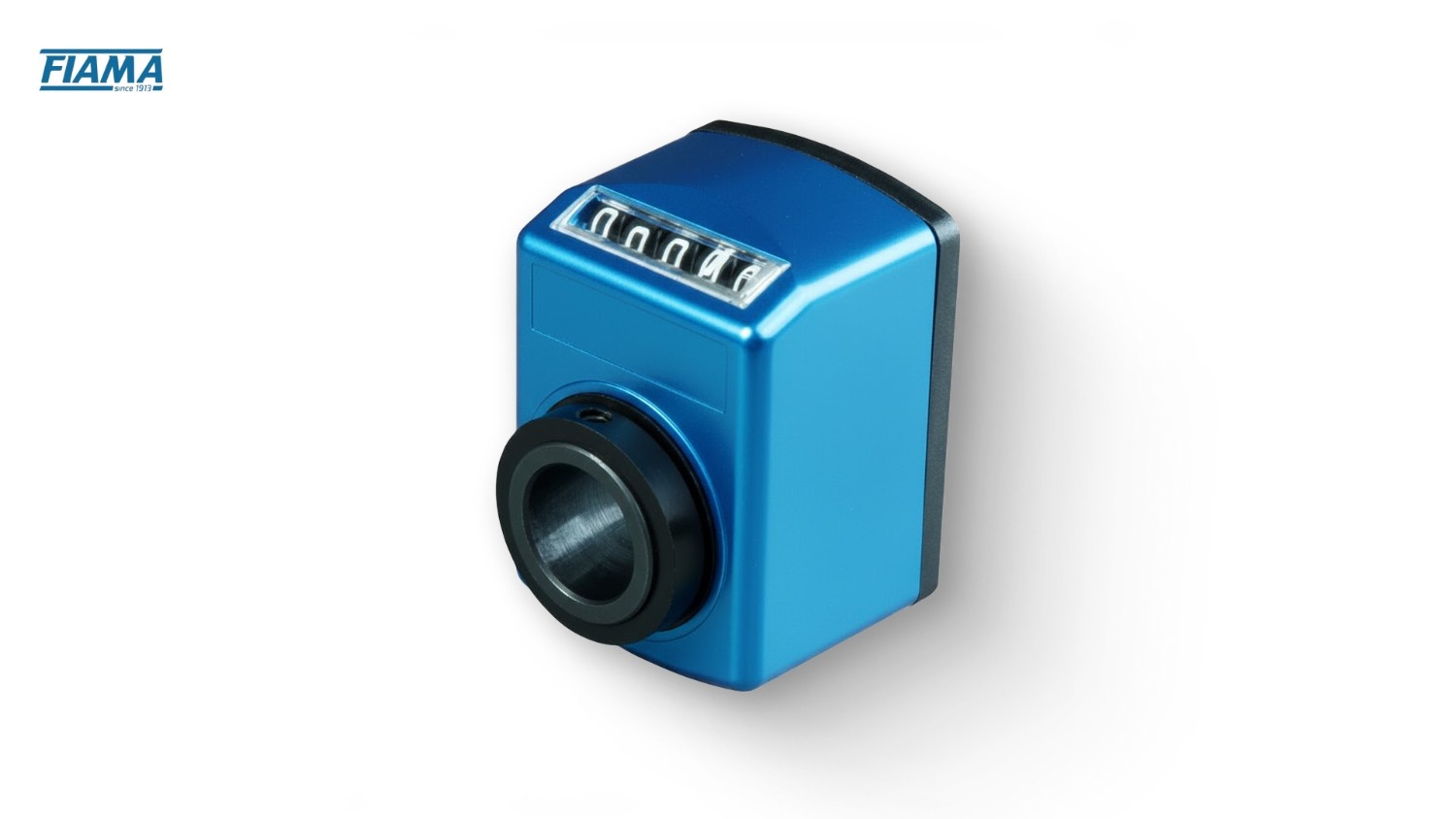
Mechanical position indicators use a direct mechanical connection to show the position of a shaft or spindle. They typically include a rotating shaft input and a gear-driven counter or dial.
Suitable for manual machines where adjustments are needed, but high automation is not required.
Provide visual numeric readouts without the need for power or electronics.
Ideal for woodworking setups, packaging line adjustments, and metalworking machines.
Mechanical indicators help ensure repeatable setup, reduce operator guesswork, and support consistent quality in manual operations.
Digital / Electronic Position Indicators
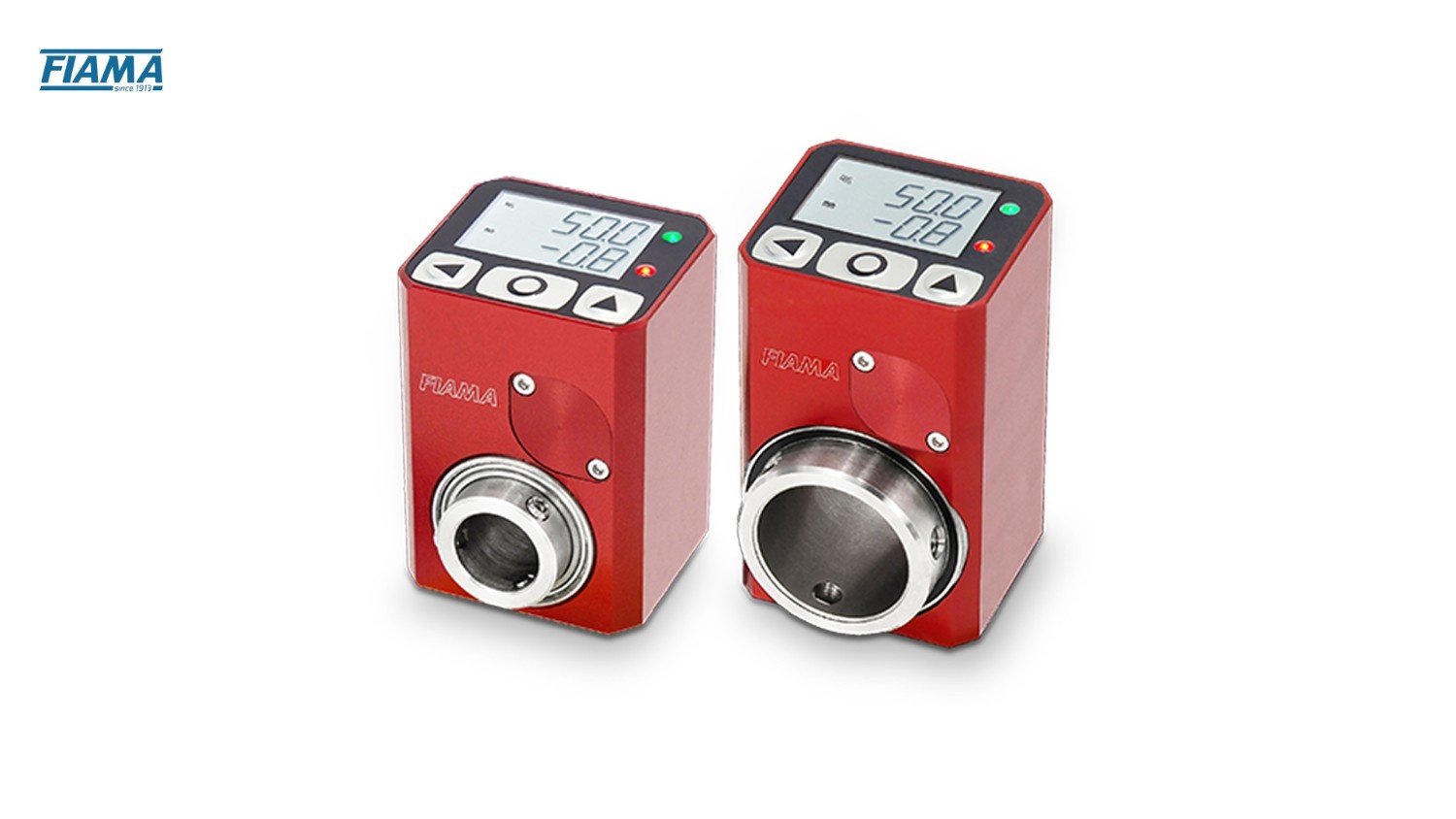
Digital position indicators provide an electronic display showing values in millimetres, inches, or degrees, supporting both absolute and incremental readings.
Provide precise visibility into machine adjustments.
Offer fine resolution, repeatability, and programmable settings.
Can switch between units and are often battery-powered for flexible deployment.
Digital indicators help reduce setup variation, speed up changeovers, and improve consistency in operations with frequent adjustments. Fiama offers Programmable Position Indicators that work with PLC Communication / Ethernet and provide excellent battery life.
Rotary Encoders (Optical, Magnetic, Incremental, Absolute)
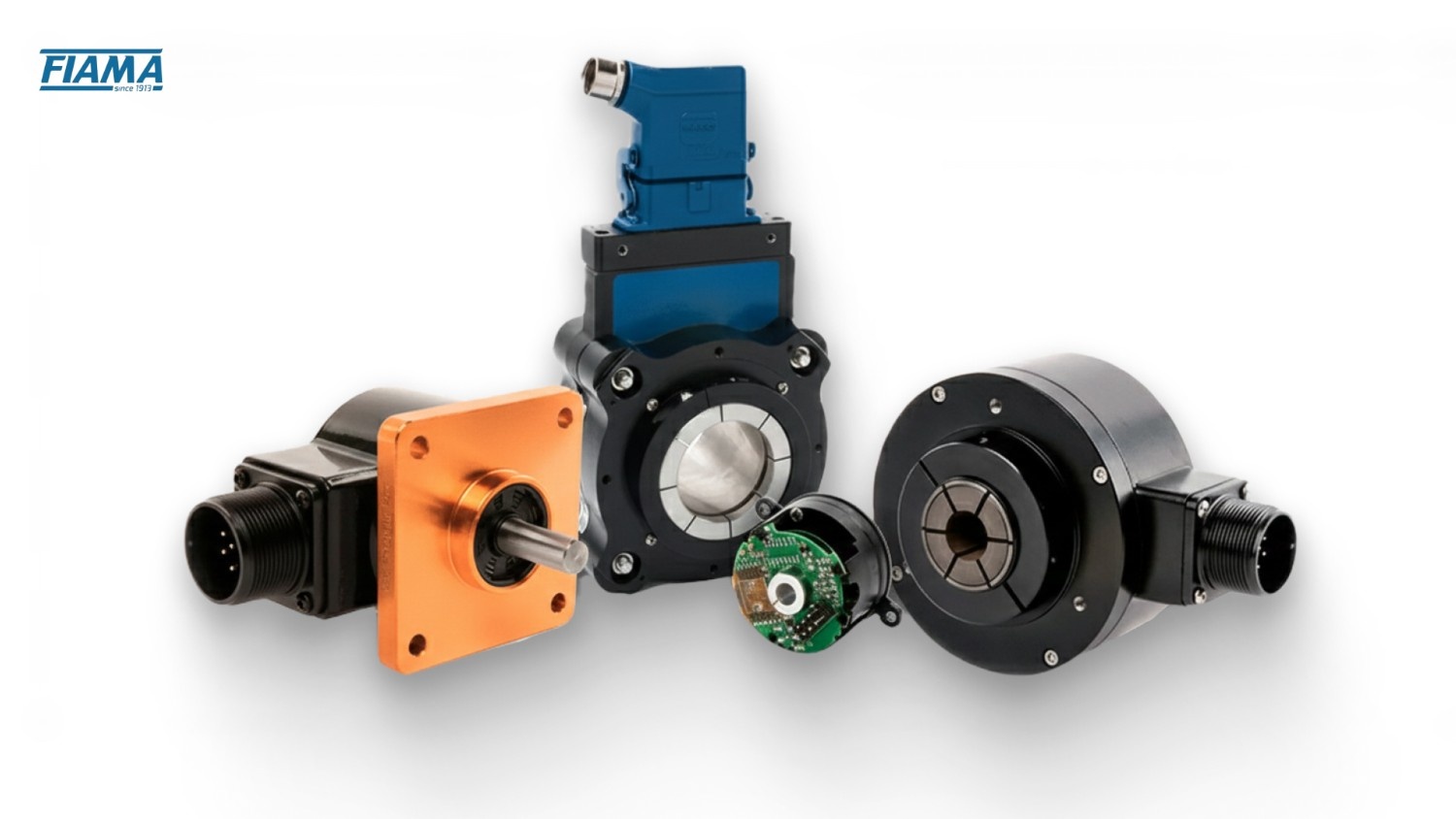
Rotary encoders convert rotational movement into electrical signals for real-time position measurement. They come in multiple sensing technologies:
Optical encoders for very high resolution.
Magnetic encoders for durability in dusty or vibration-heavy environments.
Incremental encoders for tracking relative movement.
Absolute encoders for maintaining position even after a power cycle.
Encoders are commonly used in automated equipment, servo systems, CNC machines, robotics, and high-precision assembly lines. They improve accuracy, increase yield, and support tighter process stability.
Linear Position Indicators
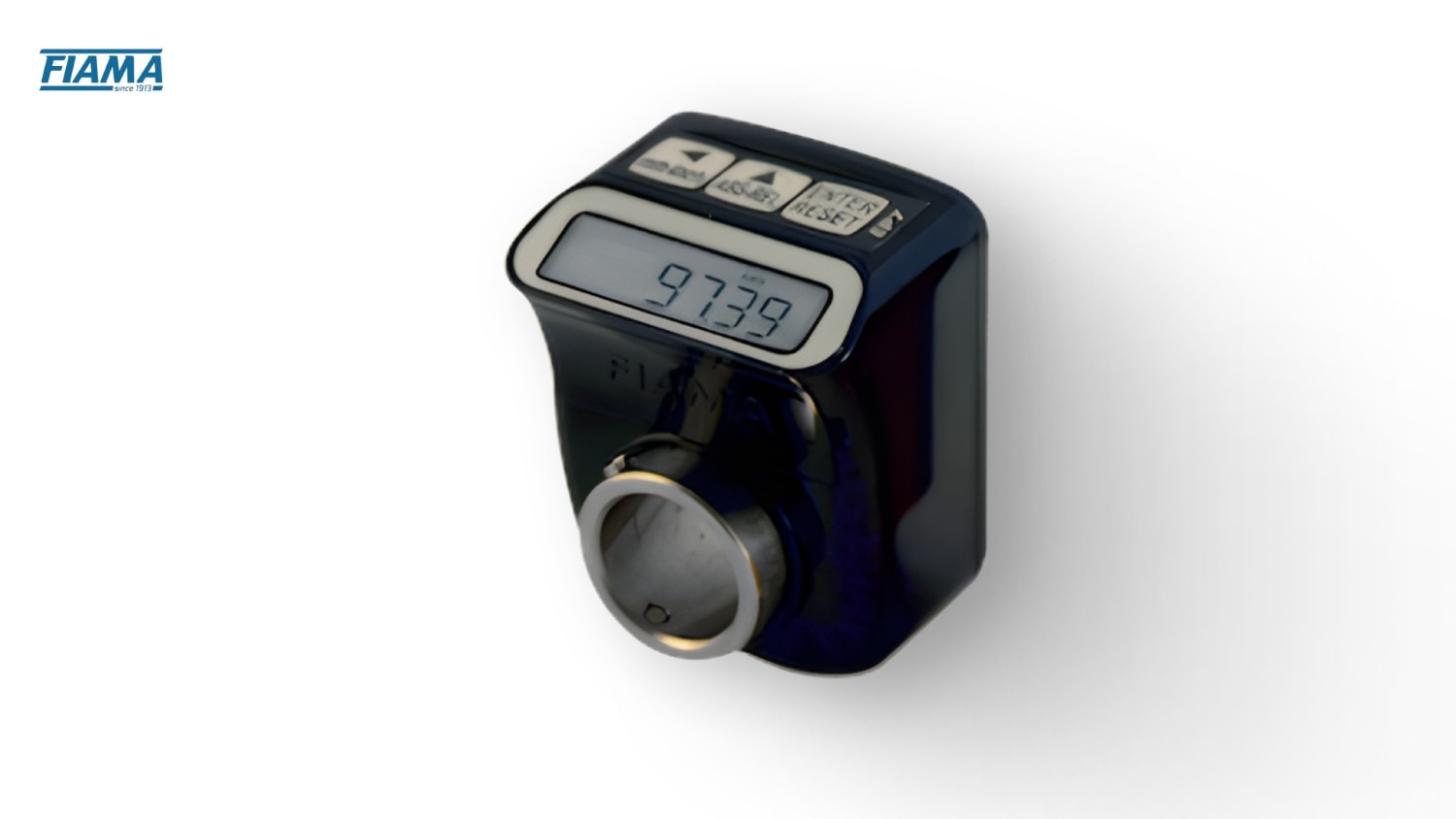
Linear indicators measure displacement in a straight line rather than rotation. They include designs such as rack-and-pinion systems, magnetic linear scales, and potentiometer-based measuring rods.
Provide precise measurements of slides, guides, and moving arms.
Ensure consistent travel distances in material handling, lift tables, and tool positioning.
Enable repeatable setups for high-volume or multi-product lines.
Linear indicators help maintain product quality, reduce setup errors, and support predictable throughput in processes requiring linear motion control. Fiama offers Linear Position Indicators with diameters ranging from 20 mm - 25 mm for precise linear displacement monitoring.
Displacement Sensors (LVDT, Capacitive, Inductive, Hall-Effect)
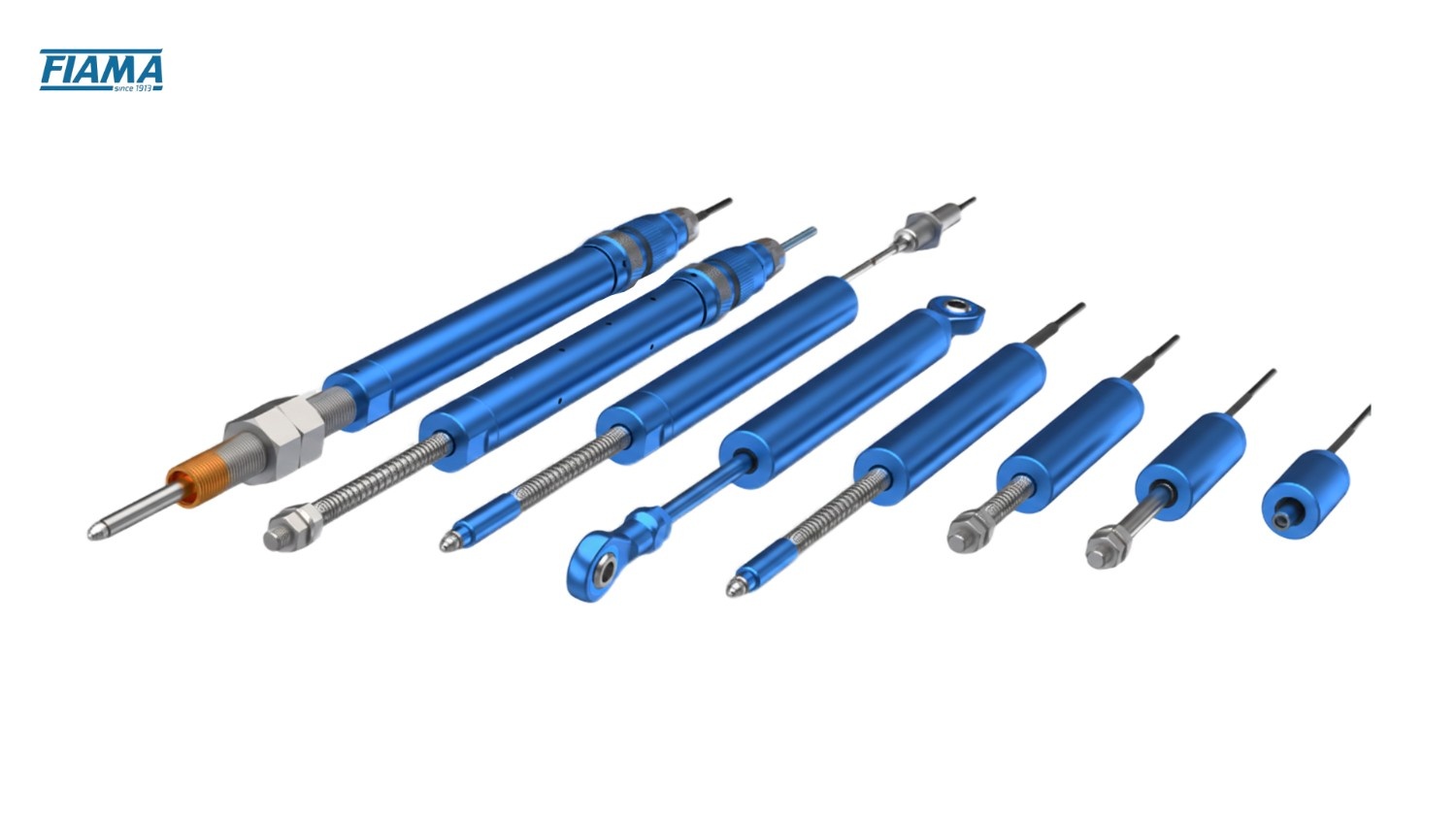
Displacement sensors are used when non-contact or extremely high-precision measurement is required. Common types include:
LVDTs (Linear Variable Differential Transformers) for high accuracy and smooth measurement.
Capacitive sensors for small displacement changes and clean environments.
Inductive sensors for robust industrial applications with metal targets.
Hall-effect sensors for magnetic-based measurement with long service life.
These sensors are widely used in industries like semiconductor manufacturing, precision assembly, and material testing, where wear or contamination could affect performance. They ensure stable yield, minimize mechanical wear, and improve predictive maintenance capabilities.
Magnetic Measurement Systems (Magnetic Bands + Readers)
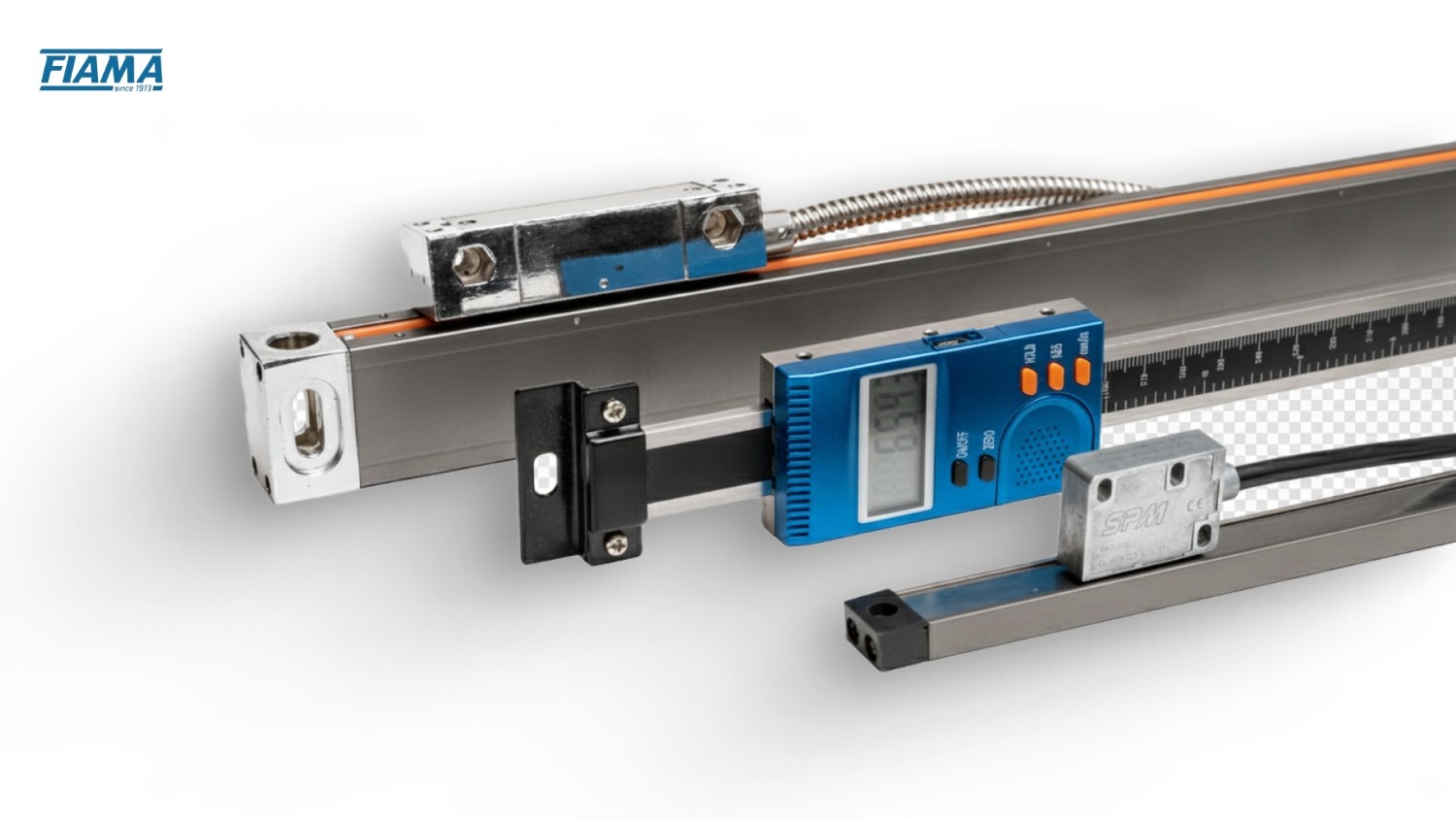
Magnetic systems use encoded magnetic strips and corresponding reader heads to capture position over long distances.
Provide reliable feedback on large machines or conveyor systems.
Resist dust, vibration, and other industrial contaminants.
Suitable for packaging equipment, gantry systems, woodworking lines, and material-handling machinery.
Magnetic systems deliver precision over long travel distances while maintaining durability and cost-effectiveness.
Draw-Wire / String Potentiometer Indicators
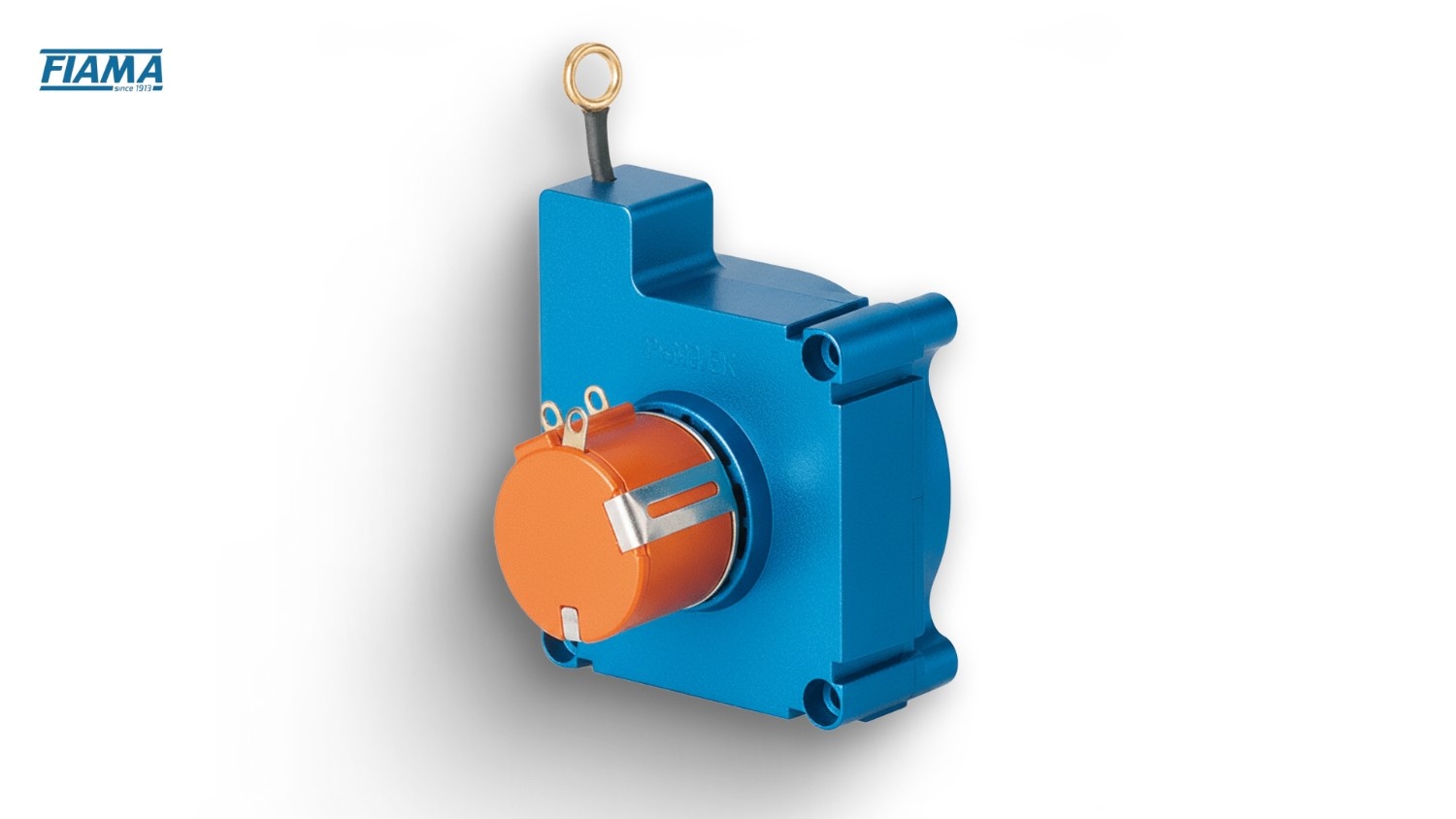
Draw-wire systems use a retractable cable connected to a spring-loaded drum and a sensing element.
Measure linear displacement over long strokes where space is limited.
Common in lifting equipment, material-handling systems, and large assemblies.
Provide accurate readings in areas where rigid sensors cannot be mounted.
Draw-wire indicators help maintain reliable measurement, improve setup repeatability, and enable precision in large or hard-to-access machines.
Each type provides unique advantages based on accuracy requirements, environmental conditions, and integration with existing systems. Next, let's discuss how modern technologies are transforming these devices.
How Modern Technologies Are Transforming Position Indicators?
Position indicator devices have evolved significantly, adding new capabilities that address modern industrial challenges.
Key transformations include:
Digital Integration: Modern indicators now communicate directly with PLCs, SCADA systems, or IoT platforms, enabling real-time monitoring and data logging.
Wireless Monitoring: Some devices offer wireless connectivity, reducing installation complexity and enabling predictive maintenance from centralized control rooms.
Enhanced Accuracy: Advances in encoder technology and sensor design improve measurement precision, reducing errors in critical processes.
Data Analytics: Collected position data can feed analytics systems to detect trends, predict component failure, and optimize production schedules.
Compact and Flexible Designs: Modern indicators are smaller and easier to integrate into existing equipment, with modular designs supporting various industrial setups.
These innovations help plant managers and engineers make informed operational decisions and optimize equipment performance. Next, let's discuss key factors involved in choosing the right position indicator.
How to Select the Right Position Indicator Device?
Selecting the right position indicator requires careful evaluation of your equipment, environment, and operational goals. Key factors to consider include:
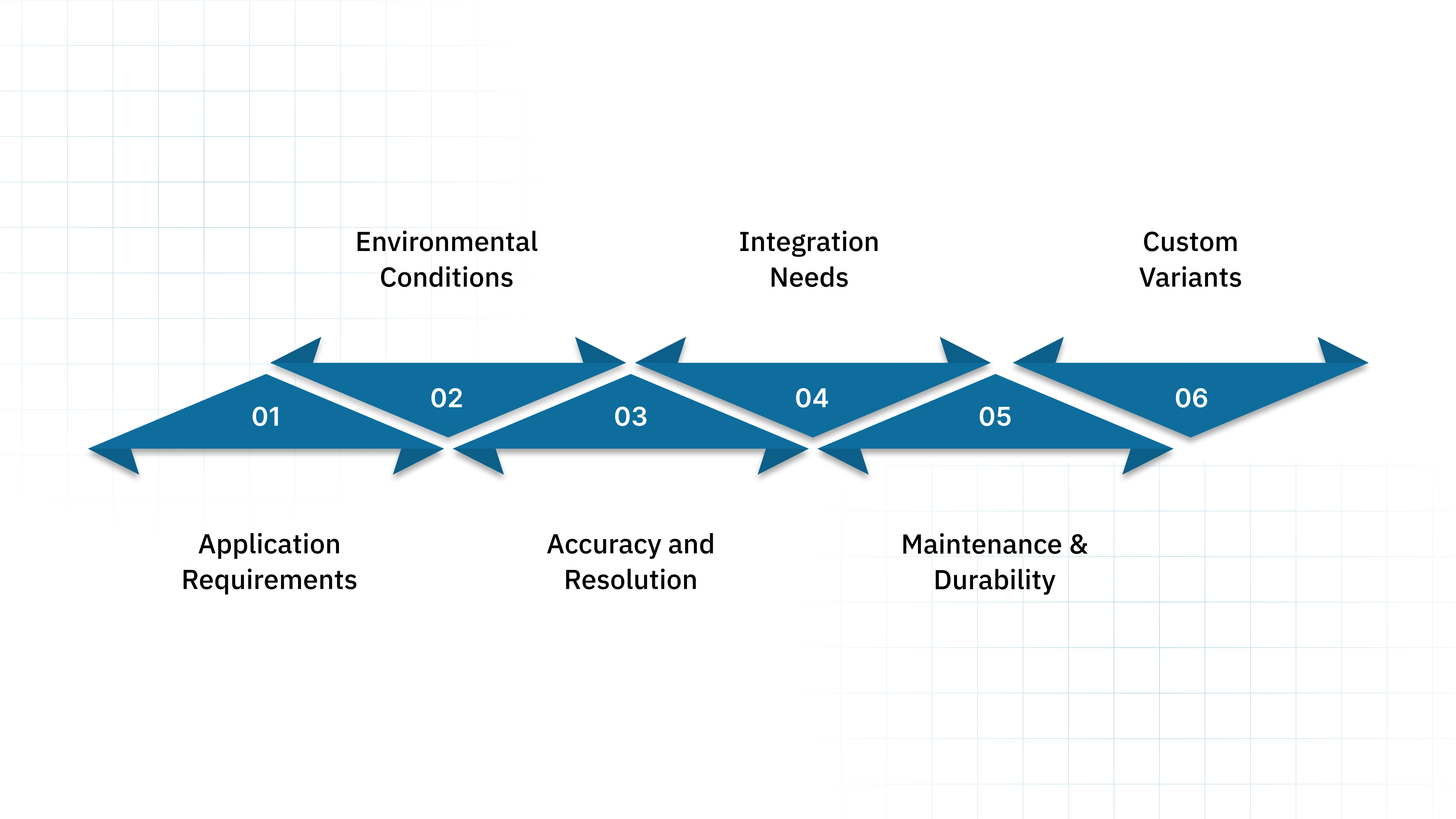
Application Requirements: Identify whether the movement is rotational or linear, and check its range and speed. This helps the device deliver accurate readings for your specific process.
Environmental Conditions: Assess temperature, humidity, vibration, and exposure to dust, chemicals, or moisture. Devices designed for harsh conditions stay reliable and reduce your maintenance needs.
Accuracy and Resolution: Determine the precision level you need. High-accuracy indicators are essential when slight misalignment or positioning errors can affect product quality or cause equipment wear.
Integration Needs: Check if the device works with your existing control systems, PLCs, or SCADA setups. Seamless integration lets you monitor remotely and log data for predictive maintenance.
Maintenance and Durability: Choose devices with robust construction and low maintenance requirements. Durable indicators help you reduce downtime and lower the total cost of ownership over time.
Custom Variants: Some applications need tailored solutions to fit unique equipment dimensions or performance needs. Fiama offers custom-designed indicators to tackle specific operational challenges.
Evaluating these factors ensures the device supports operational KPIs such as yield, lead time stability, and cost per unit. In the next section, let's explore the operational challenges associated with the position indicator.
Common Issues When Position Indicators Are Missing or Incorrect
Without accurate position monitoring, industrial operations face multiple challenges:
Setup Errors and Inconsistent Adjustments: When operators lack accurate position feedback, their manual adjustments often vary, which increases scrap, rework and results in inconsistent product quality.
Extended Downtime During Changeovers: When machines lack a clear position reference, setups and format changes slow down, boosting downtime and reducing throughput.
Reduced Yield and Throughput: In precision processes like packaging, machining, or woodworking, positioning errors directly cause defective products, lowering yield and production efficiency.
Challenges in Automation and Monitoring: Without reliable position data, integrating machines with PLCs, SCADA systems, or remote monitoring becomes difficult, which limits process control and predictive maintenance.
Unpredictable Maintenance Needs: Missing or inaccurate position information can hide wear, misalignment, and mechanical issues, leading to unexpected breakdowns and unplanned maintenance.
By addressing these gaps, organizations can significantly improve reliability, safety, and operational efficiency.
How Fiama Supports Reliable Monitoring and Control?
Fiama offers industrial-grade position indicators specifically engineered for modern manufacturing environments. Their devices are distinguished by robust construction, adaptable configurations, and direct support from OEM engineers.
Here’s how we can help you:
Expert OEM Engineering Support: FIAMA's degreed engineers provide practical guidance for selecting and implementing devices that match your operational requirements. This hands-on support helps reduce setup time and improve machine changeovers.
High-Quality Italian Manufacturing: Devices manufactured in Parma, Italy, with over 100 years of design experience, ensuring durability and reliability.
Customizable Stroke Lengths: Devices can be tailored with custom stroke lengths to fit specialized equipment or unique process requirements, ensuring seamless integration into your operations.
Rugged Metal Housings: FIAMA indicators feature durable metal housings that withstand industrial conditions, protecting against dust, moisture, and vibration for long-term performance.
Integration Capabilities: Modern FIAMA indicators support remote monitoring and digital integration, enabling predictive maintenance and process optimization.
Maintain Safety and Compliance: Provide accurate positioning to align with safety protocols and regulatory requirements.
Through these offerings, Fiama helps industrial operations achieve measurable improvements in productivity, safety, and process control, while supporting long-term operational KPIs.
Conclusion
Position indicator devices are essential tools for modern industrial operations. They provide reliable, precise feedback on equipment position, enabling safer, more consistent, and more efficient processes. By supporting predictive maintenance, remote monitoring, and operational visibility, they directly contribute to measurable KPIs like reduced downtime, improved yield, and stable throughput.
As automation and digitalization advance, the role of position indicators continues to evolve, integrating with smart systems to deliver actionable insights in real time. For industrial leaders looking to optimize equipment performance, working with experienced suppliers like Fiama ensures access to high-quality, customized solutions that support long-term operational efficiency.
To explore how Fiama can support your operations with advanced position indicator solutions, contact us today.
FAQs
How often should position indicator devices be calibrated?
Calibration frequency depends on device usage, operating conditions, and manufacturer guidelines. Generally, industrial position indicators should be calibrated at least annually, or more often in high-precision or harsh environments, to ensure accurate readings and maintain reliable machine performance.
Can position indicator devices integrate with digital control systems?
Yes, many modern position indicator devices support integration with digital control systems, including PLCs, SCADA, and CNC systems. This allows real-time monitoring, automated adjustments, and data logging, improving operational efficiency and enabling seamless communication within smart manufacturing or automated processes.
How do position indicators help in machine setup and maintenance?
Position indicators simplify machine setup by providing precise location readings, reducing alignment errors. During maintenance, they help detect deviations, wear, or misalignment early, allowing timely corrective actions and minimizing downtime, ensuring machinery operates efficiently and safely.
What are the typical error margins in position indicator readings?
Error margins vary with device type and precision level. Mechanical indicators typically have ±0.5–1 mm, while digital or high-precision devices can achieve ±0.01 mm. Factors like temperature, vibration, and wear may influence accuracy, so choosing the right indicator for the application is essential.
In which industries are position indicator devices most commonly applied?
Position indicators are widely used in manufacturing, aerospace, automotive, robotics, energy, and material handling industries. They are essential wherever precise machine alignment, motion tracking, or position monitoring is required for safety, quality control, and efficient operations.