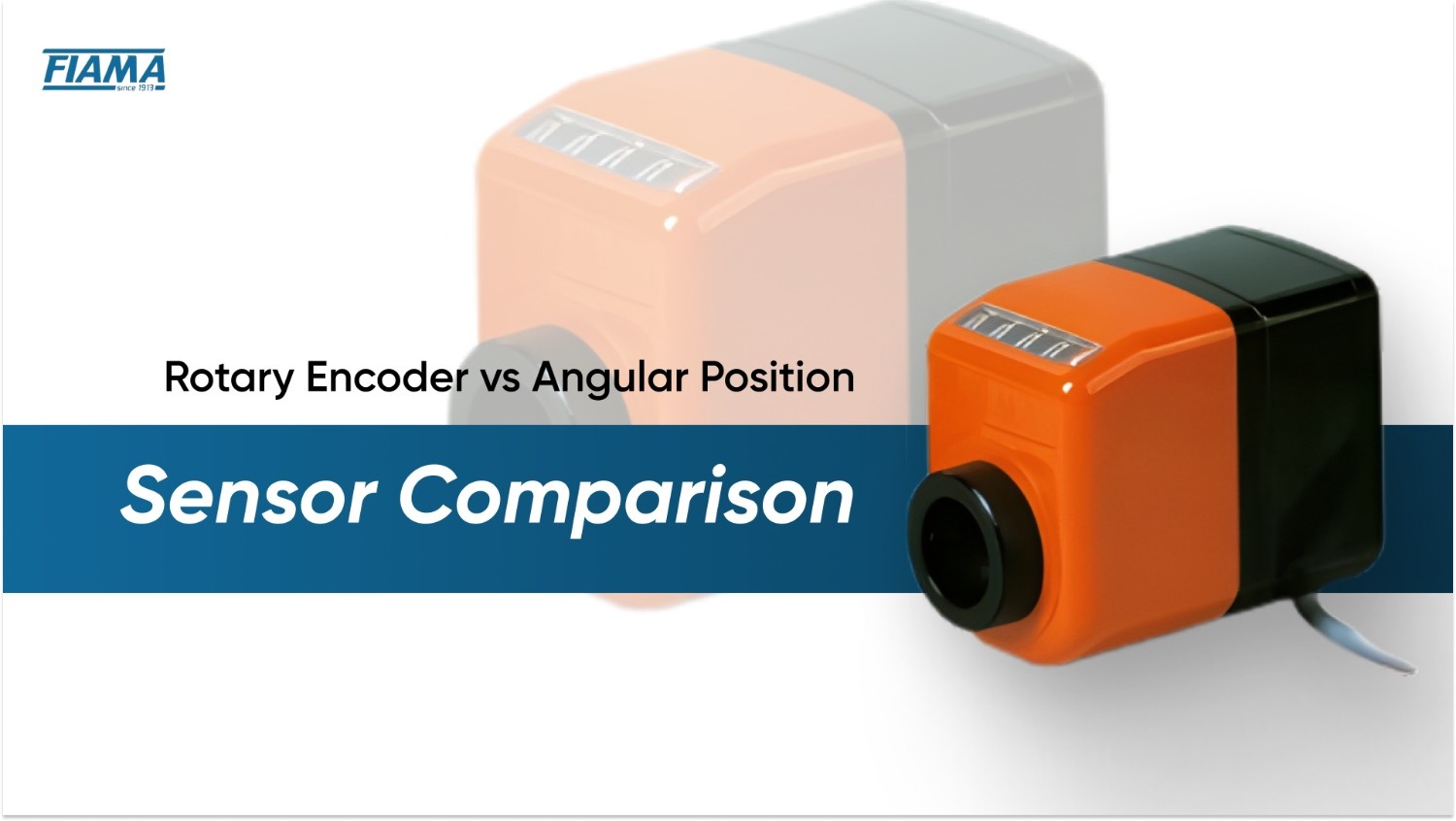
In industrial automation, robotics, and motion-control systems, even a small error in rotational measurement can disrupt production schedules, increase scrap, and lower throughput. Engineers and plant managers often face costly downtime or inconsistent performance when position measurement devices fail to deliver the precision required. Using the wrong sensor leads to repeated adjustments, higher maintenance, and unexpected equipment wear.
Rotary encoders and angular position sensors both measure rotational movement, yet each comes with distinct trade-offs in accuracy, durability, signal output, and environmental performance. Understanding these differences helps operations leaders and engineers reduce scrap rates, maintain consistent yield, and lower downtime.
This shift is reflected in the rising demand for these technologies, with the angular position sensor market expected to surpass USD 1,754.84 million by 2031. Choosing wisely lets teams optimize performance and keep production cycles smooth without raising long-term costs.
This guide provides a practical comparison of these technologies, helping engineers and operations leaders make informed decisions based on real-world application requirements, environmental considerations, and long-term reliability.
Key Highlights:
Rotary encoders and angular position sensors both measure rotation but track motion differently, output data in unique ways, and handle environmental challenges in distinct ways.
Rotary encoders excel at high-speed, real-time feedback, while angular position sensors deliver stable absolute readings with minimal maintenance.
Differences in measurement principle, signal type, resolution, and mounting impact reliability, performance, and ease of integration.
Selecting the right sensor depends on speed, precision, environment, and application needs, ensuring consistent production and reduced downtime.
Understanding the Basics: What Each Sensor Actually Measures
A clear understanding of what each sensor measures forms the foundation for evaluating its suitability. While both devices track rotational motion, the underlying principles and output methods differ.
What is a Rotary Encoder?
A rotary encoder is an electromechanical device that converts the angular position or motion of a shaft (or axle) into an electrical output signal, either analog or digital.
Rotary encoders come in two main forms:
Absolute encoders, which output a unique code for each angular position, so the system always “knows” the exact shaft angle (even after power loss).
Incremental encoders, which generate pulses to indicate movement relative to a starting point, are useful when you need position changes, velocity or direction rather than absolute angle.
In production lines, encoders help reduce downtime by enabling precise motor control and early detection of mechanical faults.
What is an Angular Position Sensor?
Angular position sensors, also known as rotary potentiometers or magnetic angle sensors, measure the absolute angle of a shaft or component relative to a reference point. These sensors often rely on resistive, capacitive, or magnetic principles, providing continuous position feedback.
Unlike incremental encoders, angular position sensors provide direct absolute readings and resist power interruptions or system resets. They can improve yield consistency and support throughput stability, particularly in applications sensitive to precise angular alignment.
Understanding these fundamentals sets the stage for evaluating functional differences, reliability, and application suitability, which are crucial to optimizing equipment performance and minimizing operational risks.
Next, let's explore the key functional differences that influence performance and integration.
Core Functional Differences
When you choose between rotary encoders and angular position sensors, understanding their core functional differences is key. These differences directly affect performance, integration, reliability, and how suitable each sensor is for specific industrial applications.
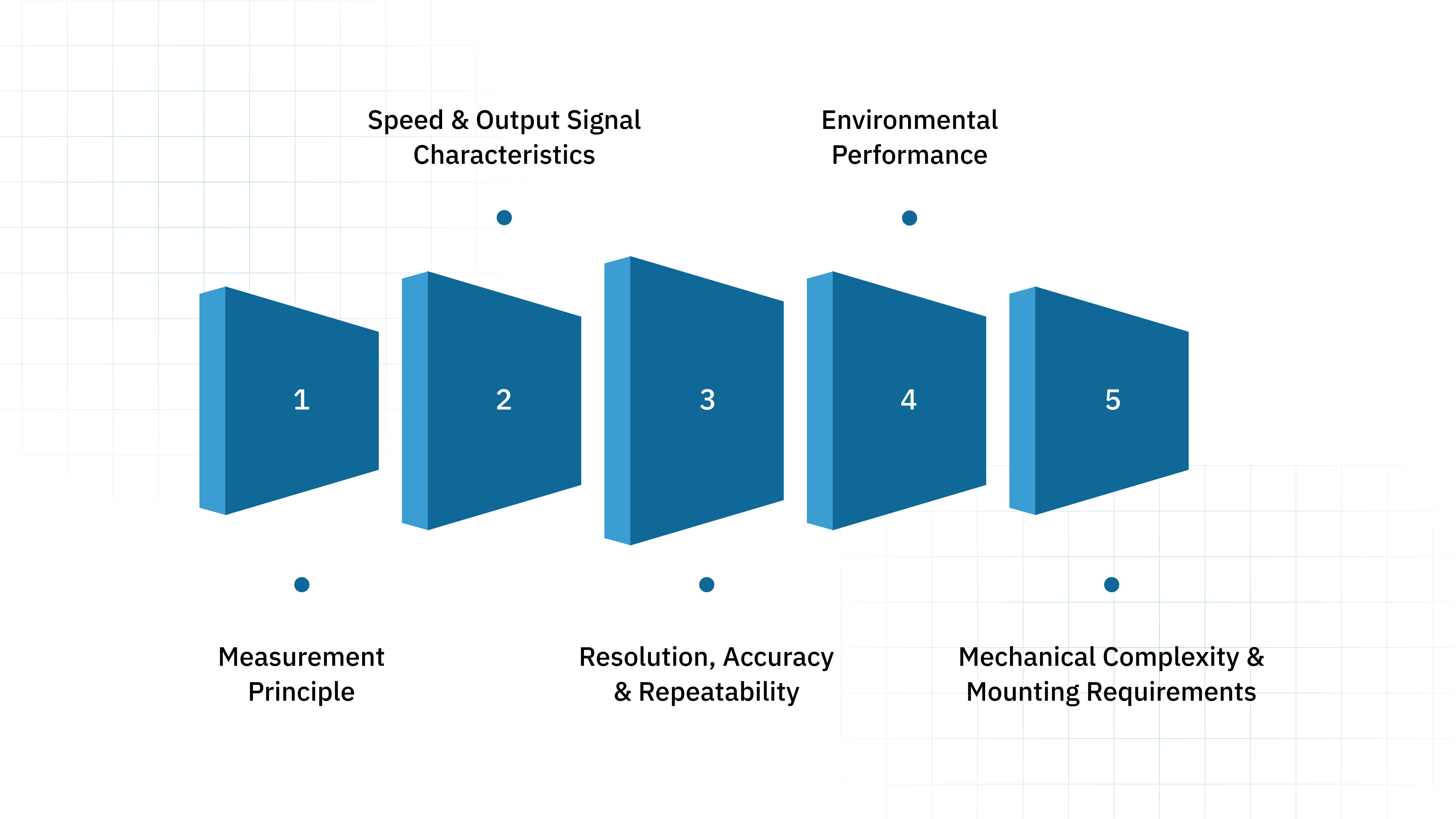
Below, we’ll break down the key aspects to help engineers make informed decisions.
Measurement Principle
The measurement principle defines how each sensor converts mechanical rotation into readable data. It impacts accuracy, reliability, and suitability for specific applications.
Rotary Encoders: Use optical or magnetic disks that generate pulses or codes as the shaft rotates. Incremental encoders count pulses to track relative movement, while absolute encoders assign a unique code to each position for precise monitoring.
Angular Position Sensors: Rely on magnetic, inductive, or capacitive principles to detect shaft angle. These sensors directly measure angular displacement, offering flexibility in harsh or constrained environments where optical methods may be impractical.
The measurement principle determines whether a device excels in high-speed precision or stable, reliable position tracking under industrial stresses.
Speed and Output Signal Characteristics
Speed and output signal define how quickly a sensor responds to movement and the type of data it provides, directly affecting system throughput and process stability.
Rotary Encoders: Generate digital pulses or coded outputs at each increment of rotation. They excel at providing high-speed, precise information on position, direction, and velocity, which makes them ideal for motion control and automated systems.
Angular Position Sensors: Output may be analog (sine/cosine) or processed digital signals. These sensors are optimized for robustness and can maintain reliable signals in environments with vibration, electromagnetic interference, or mechanical stress.
Reviewing speed and output helps you select the sensor that meets your application needs, balancing quick response with stable, reliable operation.
Resolution, Accuracy & Repeatability
Resolution, accuracy, and repeatability determine how finely a sensor can detect motion, how closely it measures true position, and how reliably it repeats measurements. These factors influence scrap rates, yield, and lead time consistency.
Rotary Encoders: Offer high-resolution outputs and excellent repeatability. Absolute encoders maintain position data across power cycles, ensuring consistent performance in precision applications such as CNC machines or robotic arms.
Angular Position Sensors: Provide sufficient accuracy for most industrial uses while emphasizing reliability. Even if their maximum resolution is lower than optical encoders, repeatability stays consistent under tough conditions.
Choosing between fine resolution and robust durability depends on whether precision or environmental resilience is the priority.
Environmental Performance
Industrial environments often expose sensors to dust, moisture, temperature swings, vibration, and chemicals.
Rotary Encoders: Optical designs are highly sensitive to contaminants and vibrations, potentially requiring protective housings or regular maintenance. Magnetic encoders improve tolerance but may still need clean conditions for peak accuracy.
Angular Position Sensors: Magnetic, inductive, and resolver-based sensors are naturally robust, operating reliably even with dust, oil, heat, vibration, or EMI. This makes them ideal for harsh industrial settings.
Assessing environmental performance ensures your sensor choice supports operational reliability and keeps maintenance costs under control.
Mechanical Complexity & Mounting Requirements
Mechanical complexity and mounting requirements affect installation time, integration effort, and the potential for errors that can reduce system reliability.
Rotary Encoders: Require precise alignment of the disk and sensor head. Mounting limits and coupling requirements can make installation tricky, especially in tight or vibration-prone spaces.
Angular Position Sensors: They usually offer simpler mounting and fewer fragile parts. Many are non-contact or robustly sealed, reducing installation challenges and extending maintenance intervals.
Mechanical design choices influence deployment ease and ongoing maintenance, impacting overall efficiency and cost per unit.
In the following section, let’s evaluate total cost, reliability, and long-term maintenance needs.
Cost, Reliability & Maintenance Breakdown
Selecting the right sensor isn’t just about performance; long-term costs, reliability, and maintenance play a crucial role in operational efficiency. Evaluating the total cost of ownership and maintenance needs helps you choose the best sensor for long-term industrial operations.
Total Cost of Ownership
Total cost of ownership includes the initial purchase, installation, ongoing maintenance, and downtime over the sensor’s lifetime. A sensor that seems inexpensive upfront can cost more later if it needs frequent servicing or struggles in harsh environments.
Rotary Encoders: While basic incremental encoders are generally cost-effective, high-resolution absolute encoders can carry higher upfront costs. Installing them may require precise alignment and calibration, adding to initial expenditure.
Angular Position Sensors: Robust magnetic, inductive, or resolver-based sensors may have higher initial purchase prices but often require less frequent maintenance and are less prone to environmental failure, reducing long-term operational expenses.
Making the right choice ensures you achieve long-term value without hidden expenses affecting throughput or maintenance budgets.
Reliability in Long-Term Operation
Reliable performance over time is essential for minimizing disruptions and maintaining consistent production metrics. Sensors that fail or drift can affect uptime, scrap rates, and overall operational efficiency.
Rotary Encoders: Optical encoders provide high precision in clean environments but may degrade under dust, oil, vibration, or extreme temperatures. Absolute encoders maintain position after power cycles, improving operational reliability in controlled conditions.
Angular Position Sensors: Magnetic, inductive, or resolver-based sensors excel in harsh industrial settings, delivering consistent performance with minimal degradation over time, even in high-vibration or contaminated environments.
Selecting a sensor type that aligns with environmental and operational conditions reduces downtime risk and improves long-term reliability.
Maintenance Requirements
Maintenance affects both operational cost and uptime. Sensors that are easier to maintain reduce the frequency of unplanned stoppages and simplify preventive maintenance schedules.
Rotary Encoders: Optical encoders may require cleaning, recalibration, or realignment in dirty or high-vibration settings. Regular checks can help maintain accuracy, but add to the maintenance workload.
Angular Position Sensors: Non-optical robust sensors generally need minimal upkeep due to sealed construction and environmental tolerance, supporting more consistent operations with fewer interruptions.
Minimizing maintenance frees engineering resources to focus on more crucial tasks, directly supporting plant efficiency and cost-per-unit targets.
In the next section, let's look at where each sensor excels across different industrial applications.
Application-Wise Comparison: Where Each Technology Performs Best
Choosing the right sensor depends on where and how it will be used. Both technologies excel in different scenarios, and understanding their optimal use cases can help reduce downtime, improve throughput, and maintain consistent product quality.
The table below summarizes the ideal applications for rotary encoders versus angular position sensors in common industrial settings:
Application | Rotary Encoders | Angular Position Sensors |
High-Speed Motor Control | Excellent for fast, dynamic feedback in robotics, conveyors, and packaging lines. Supports precise speed and position tracking. | Suitable for slower-moving motors where absolute position matters more than high-speed response. |
CNC & Precision Machinery | Ideal for incremental movements, real-time monitoring, and repeatable positioning during machining operations. | Best for systems needing absolute position reference across power cycles or multi-turn operations. |
Automated Assembly Lines | Tracks the relative movement of parts, ensuring timely process sequencing and throughput. | Provides reliable absolute position feedback, particularly for complex multi-turn assemblies. |
Robotics & Motion Control Systems | Supports rapid, real-time positional adjustments and high-frequency movement feedback. | Ensures stable, repeatable angular positioning for precision tasks requiring minimal drift. |
Aerospace & EV Motor Applications | Useful where fast rotational tracking is required, but may need environmental protection. | Favoured for long-term, absolute position accuracy with minimal maintenance. |
Rotary encoders are best when speed, real-time feedback, and dynamic control are the priority. Angular position sensors are preferred where absolute accuracy, environmental resilience, and long-term reliability matter most.
Next, let's discuss the strengths and limitations of each technology to help guide informed choices.
Pros and Cons of Rotary Encoder vs Angular Position Sensor: Which is Best?
Knowing each sensor type’s strengths and limitations helps engineers choose the right solution. The table below provides a detailed comparison of rotary encoders and angular position sensors:
Sensor Type | Pros | Cons |
Rotary Encoder | - Provides high-speed measurement and accurate real-time feedback, enabling precise control in dynamic systems. - Available in incremental and absolute variants, offering flexibility depending on position tracking needs. - Supports complex motion control applications, improving throughput and reducing process errors. | - Sensitive to dust, vibration, and environmental factors, especially for optical encoders, which can affect reliability. - Requires careful alignment during installation to avoid measurement errors. - Incremental encoders may experience long-term drift, potentially impacting production accuracy. |
Angular Position Sensor | - Provides stable absolute position readings over multiple rotations, ensuring consistent accuracy even after power cycles. - Minimal maintenance required, with robust performance in harsh environments like dust, moisture, and vibration. - Easier integration due to simpler mounting and fewer moving parts, reducing installation time and potential downtime. | - Slower response compared to rotary encoders, making them less suited for ultra-fast dynamic applications. - Higher upfront cost, offset by reduced maintenance and longer operational life. - Not ideal for applications requiring rapid pulse feedback or high-frequency motion tracking. |
The optimal choice depends on application speed, environmental challenges, maintenance strategy, and long-term reliability.
How Fiama Helps You Choose the Right Position Measurement Solution?
Fiama combines over 100 years of design and manufacturing expertise with a deep understanding of industrial applications. Their team of degreed engineers provides technical guidance, application support, and tailored sensor solutions, ensuring systems operate reliably and efficiently.
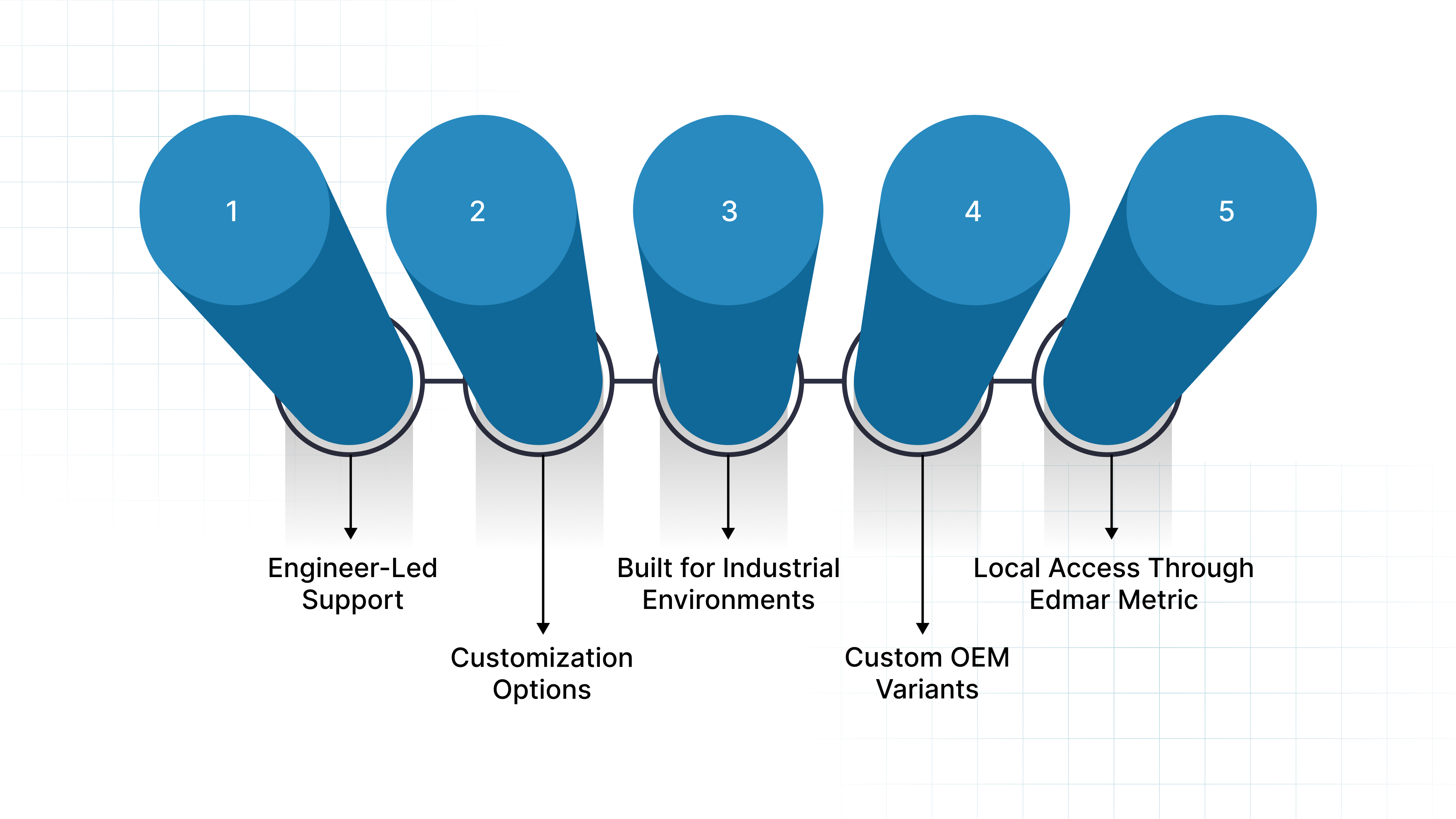
Here’s how we can support you:
Engineer-Led Support: Fiama’s team of degreed engineers helps match sensors to shaft sizes, mounting limits, and signal needs. This reduces trial-and-error during integration and prevents redesigns or alignment issues later in operation.
Customization Options: Because our instruments are made in‑house in Parma, Italy, under strict quality and UNI-EN-ISO 9001:2008 processes, we can offer custom variants to match your unique operational and environmental constraints.
Built for Industrial Environments: Many Fiama devices use metal housings and sealed mechanical assemblies suited for food, wood, packaging, and metalworking equipment. This helps plants avoid premature wear and reduces the need for external protective hardware.
Custom OEM Variants Options like custom stroke lengths, non-standard shaft dimensions, and special flanges allow Fiama solutions to fit existing machine envelopes. OEMs and retrofit teams can integrate sensors without altering the machine frame or extending downtime.
Local Access Through Edmar Metric: As Fiama’s importer for the Americas, Edmar Metric provides faster application support and simpler procurement. This helps teams standardize components across multiple machines without long international lead times.
Partnering with Fiama helps procurement managers, plant heads, and engineers make informed decisions that improve uptime, reduce maintenance, and enhance overall process stability.
Conclusion
Rotary encoders and angular position sensors both provide critical rotational feedback but differ in resolution, accuracy, speed, environmental tolerance, and maintenance needs. Rotary encoders are ideal for high-speed, high-resolution applications, whereas angular position sensors excel in robust, absolute-position monitoring with minimal maintenance.
Selecting the right sensor depends on evaluating operational KPIs, environmental challenges, mechanical integration, and long-term reliability. Fiama’s engineering expertise and tailored solutions can guide your selection, ensuring optimal system performance and measurable operational benefits.
For guidance on choosing the right position measurement technology, reach out to us today and utilize Fiama’s decades of experience in supporting industrial operations.
FAQs
1. What is the fundamental difference between a rotary encoder and an angular position sensor?
A rotary encoder converts rotational motion into electrical signals to track position or speed, often digitally. An angular position sensor measures the absolute angle of a shaft or object, providing direct analog or digital feedback, without necessarily producing incremental pulses.
2. What technologies are commonly used in rotary encoders and angular position sensors?
Rotary encoders often use optical, magnetic, or capacitive technologies. Angular position sensors typically rely on Hall-effect, magnetoresistive, or potentiometric methods. Both types use these technologies to detect rotation or angular displacement and convert it into measurable electrical signals for control systems.
3. How do rotary encoders handle power loss in terms of position tracking?
Incremental rotary encoders lose position data during power loss, requiring a reference point on restart. Absolute encoders retain the exact position at all times, even without power, using multi-turn or single-turn memory mechanisms for precise tracking upon system recovery.
4. How does the physical design differ between rotary encoders and angular position sensors?
Rotary encoders usually have a compact cylindrical design with a rotating disk or magnetic element and electronic output circuitry. Angular position sensors may be larger or flat, often integrated with Hall-effect or potentiometer elements, designed to measure absolute angles rather than producing pulses.
5. Can you use a rotary encoder for linear position measurement or only angular?
Rotary encoders are primarily for angular motion, but they can measure linear position when paired with mechanical linkages like belts, lead screws, or racks, converting linear movement into rotation for precise displacement tracking in linear applications.