Accurate length measurement is a crucial requirement across manufacturing, converting lines, textile processes, packaging systems, and industrial automation. Even a slight deviation in measurement can lead to rework, material waste and downtime; all of which affect cost per unit and daily production efficiency. Ensuring reliable length measurement is no longer just a quality concern; it directly impacts throughput, efficiency, and the bottom line.
Rotary encoders play a central role in bringing precision and real-time feedback to any length measurement setup. The demand for these devices is growing rapidly, with the rotary encoder market expected to reach around USD 7.03 billion by 2035, expanding at a CAGR of 8.87%.
As industries push toward tighter tolerances, automated control, and industry-driven monitoring, encoders help plants stabilize throughput, support predictive maintenance, and reduce operator dependency. In this guide, we’ll walk you through how rotary encoders work, the types used for length measurement, the components involved, accuracy considerations, common issues and selection criteria.
Key Highlights:
Rotary encoders convert rotational motion into electrical signals, allowing precise, real-time length measurement in industrial processes.
Encoder type, wheel stability, signal processing, alignment, and regular calibration directly impact accuracy and reduce errors.
Various encoders, incremental, absolute, optical, magnetic, capacitive, and draw-wire, fit different materials, speeds, and environments.
Common challenges, signal noise, misalignment, wear, and environmental factors, can be managed with proper setup and regular maintenance.
What are Rotary Encoders and Why Are They Used in Length Measurement?
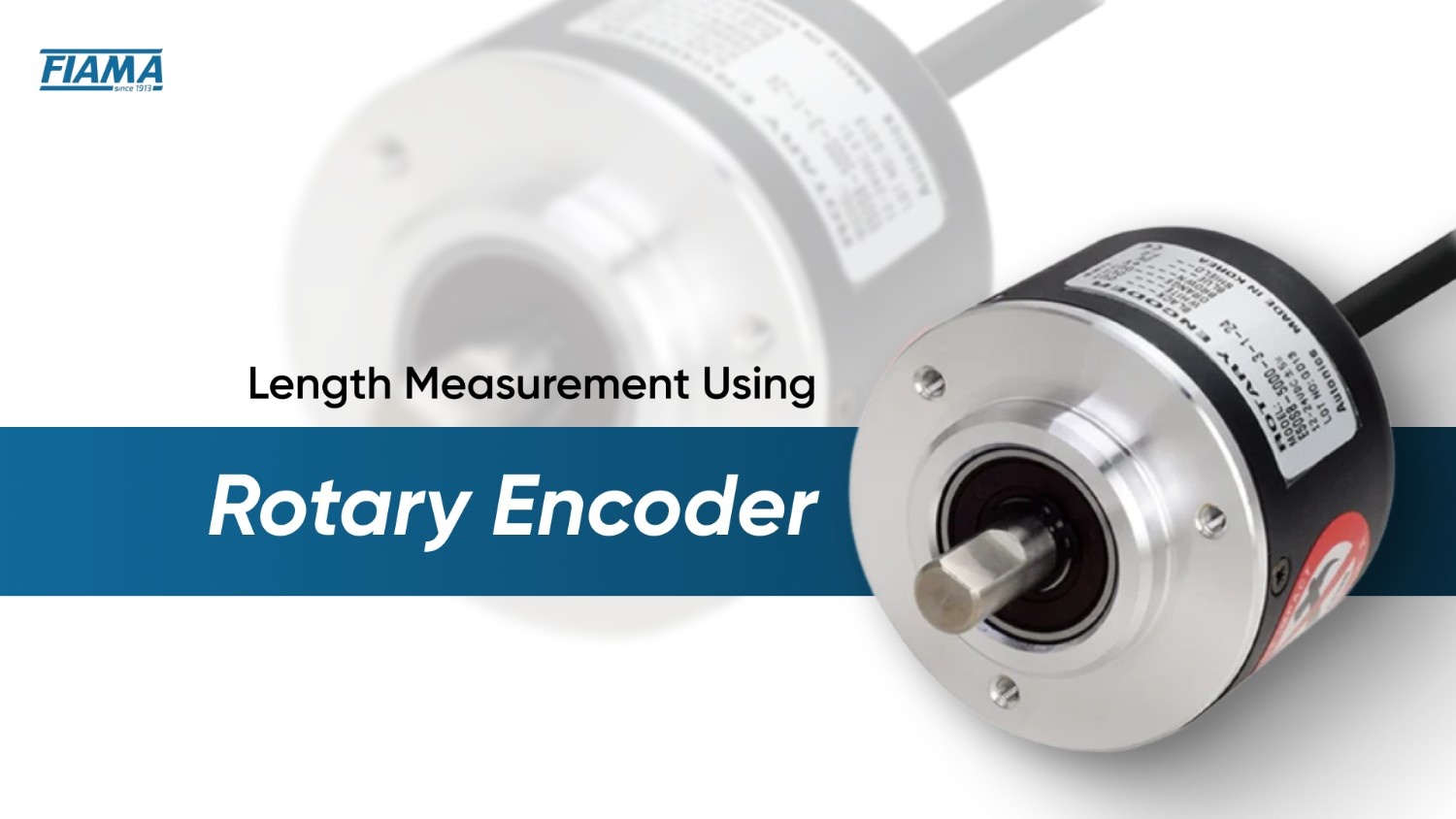
Rotary encoders are electromechanical devices that translate the rotation of a shaft into digital signals, typically pulses. A control system interprets these pulses to monitor motion, speed, or position.
Here’s why rotary encoders are used in length measurement:
Accurate linear tracking: By translating rotational motion into measurable signals, rotary encoders track material length in real-time. For example, they ensure precise fabric feed in textile machines or accurate film cutting in packaging lines, reducing scrap and improving throughput.
Seamless automation integration: Encoders continuously send data to automated equipment, supporting precision adjustments. This stabilizes lead times and ensures consistent product quality across production cycles.
Versatility across applications: Suitable for various shaft types, materials, and rotational speeds, they are used in industries from industrial automation to material handling and converting operations.
Data-driven operational support: Encoders provide essential insights for predictive maintenance, machine performance monitoring, and process optimization, enabling plant managers and engineers to reduce downtime and enhance equipment uptime.
Error reduction and process reliability: High-quality encoders minimize cumulative measurement errors from slippage, mechanical backlash, or speed variations, ensuring consistent product length and reducing costly rework.
Rotary encoders are, therefore, not just measurement tools; they are key enablers of efficiency, precision, and reliability in modern manufacturing processes.
Key Components Involved in Rotary Encoder-Based Length Measurement
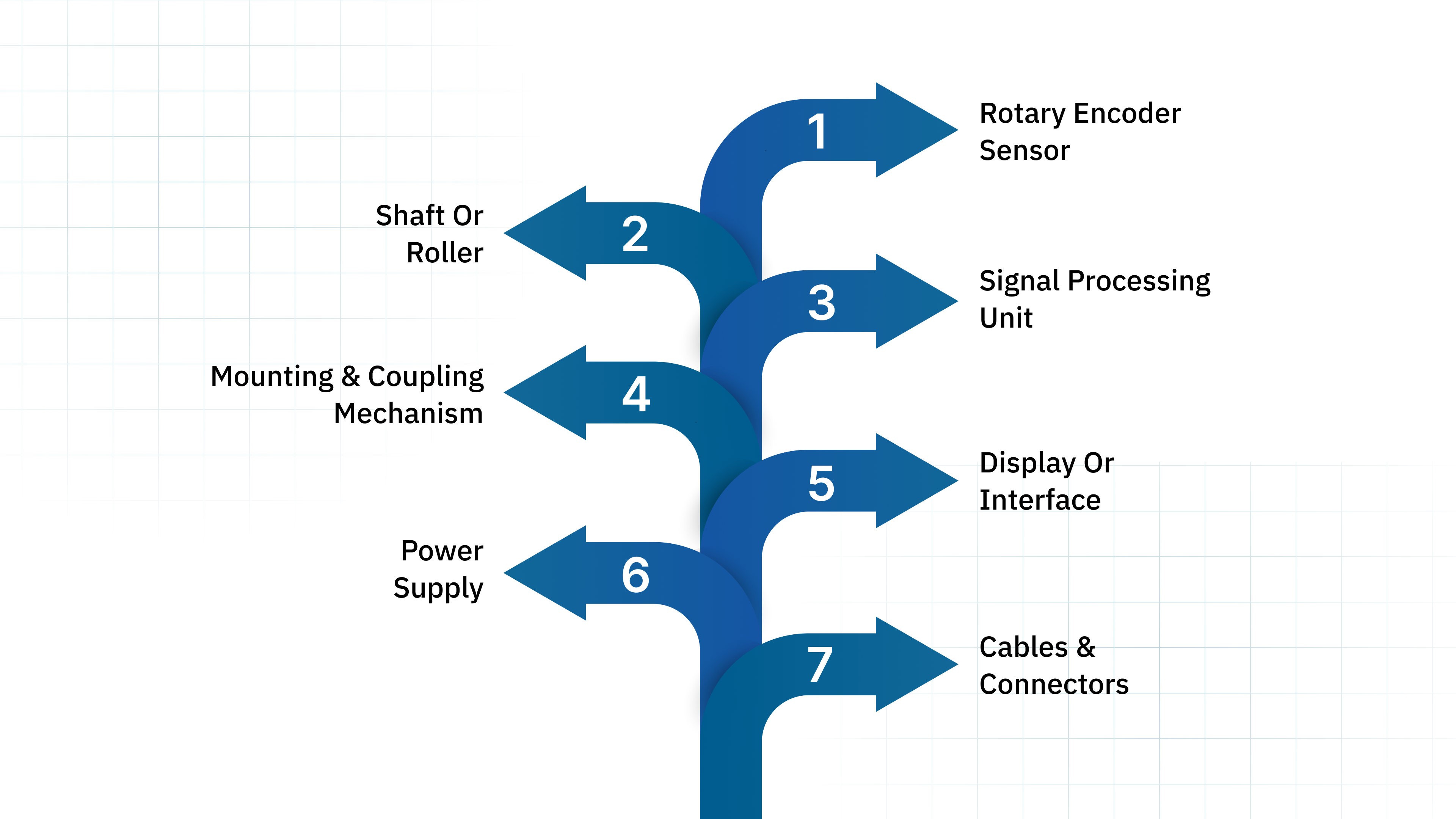
A rotary encoder-based length measurement system relies on several mechanical and electrical components working together. Each component plays a crucial role in ensuring precise readings, stable signal transmission, and reliable integration with industrial systems.
Below are the most common components that shape how your length measurement system performs.
Rotary Encoder Sensor
The rotary encoder itself serves as the core component. It converts the mechanical rotation of a shaft or roller into an electrical signal. Depending on the type—incremental or absolute, it provides either relative movement or precise positional data, forming the basis for accurate length measurement.
Shaft or Roller
The shaft or roller acts as the mechanical element that the encoder monitors. In length measurement, the material or product moves over the roller or shaft, which the system tracks. The roller’s diameter and stability directly influence the accuracy of length calculation, so choosing the right material and performing regular maintenance remains important.
Signal Processing Unit
The signal processing unit interprets the electrical signals generated by the encoder. It conditions, filters, and converts these signals into meaningful measurements. Modern units may also provide real-time data output compatible with industrial automation systems.
Mounting and Coupling Mechanism
Precise alignment remains essential for accurate readings. Mounting brackets, couplings, and bearings ensure the encoder shaft rotates in sync with the roller or motor, minimizing mechanical slippage or misalignment that could distort measurement.
Display or Interface
While some systems send data directly to a PLC or computer, many feature a display or interface for immediate visualization. This component lets operators monitor the measured length, set thresholds, and troubleshoot issues without disrupting production.
Power Supply
A stable and reliable power source remains crucial for consistent encoder operation. Voltage or current variations may disrupt signal integrity and reduce measurement accuracy. Industrial-grade power supplies often maintain uninterrupted performance.
Cables and Connectors
High-quality cabling and connectors ensure signals are transmitted without interference or loss. Shielded cables and secure connectors protect sensitive measurements from electrical noise commonly found in industrial environments.
Knowing how each component works helps operators troubleshoot efficiently and optimize system performance.
How Rotary Encoders Measure Length: Step-by-Step Working
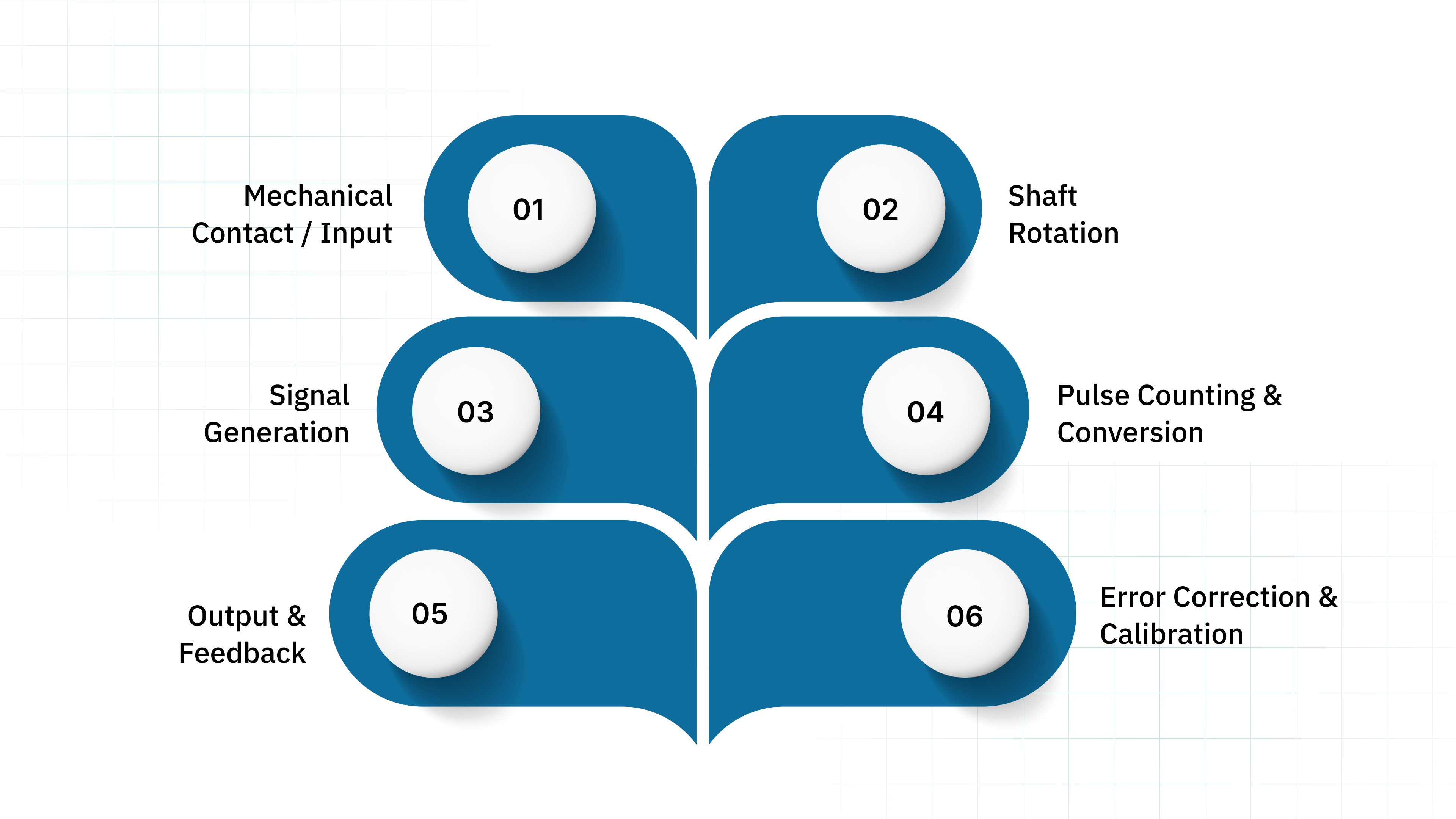
Rotary encoders convert rotational motion into electrical signals that can be translated into linear length. Understanding each step helps ensure accurate measurement and reliable operation.
Here’s a step-by-step view of how the process works.
Mechanical Contact / Input
The system starts with a measuring wheel or shaft that moves with the material. The wheel rolls along the surface or couples to a rotating shaft, translating the material’s linear movement into rotation. Proper contact and alignment remain crucial to prevent slippage and maintain measurement accuracy.
Shaft Rotation
As the wheel or shaft turns, it drives the encoder’s internal shaft. This rotation serves as the key input for generating digital signals representing motion. The encoder’s disk or magnetic/mechanical sensor translates this physical rotation into electrical activity.
Signal Generation
Inside the encoder, sensors produce signals depending on the type of encoder:
Incremental encoders create pulses on A/B channels (with an optional Z index pulse per revolution).
Absolute encoders generate a unique digital code for every angular position.
These signals form the raw data needed for distance calculation.
Pulse Counting & Conversion
The control system counts the pulses and converts them into linear distance using the wheel’s circumference and the encoder’s pulses-per-revolution (PPR). For example, each pulse represents a small increment of material movement, and adding these pulses gives the total measured length.
Output & Feedback
The system sends the calculated linear distance to a display, PLC, or control system. This enables real-time monitoring, quality control, and automated actions, such as triggering a cut at the desired length. The feedback loop keeps the process within tolerance.
Error Correction & Calibration
Even the most precise systems need occasional adjustments, as calibration corrects for wheel wear, slippage, or mechanical misalignment. Regular maintenance and calibration ensure continued accuracy during long production runs and under varying environmental conditions.
The process remains fast, continuous, and reliable across different operating speeds.
Key Factors Affecting Length Measurement Accuracy
Achieving precise length measurement with rotary encoders depends on multiple factors. Understanding these can help you minimize errors and maintain consistent performance:
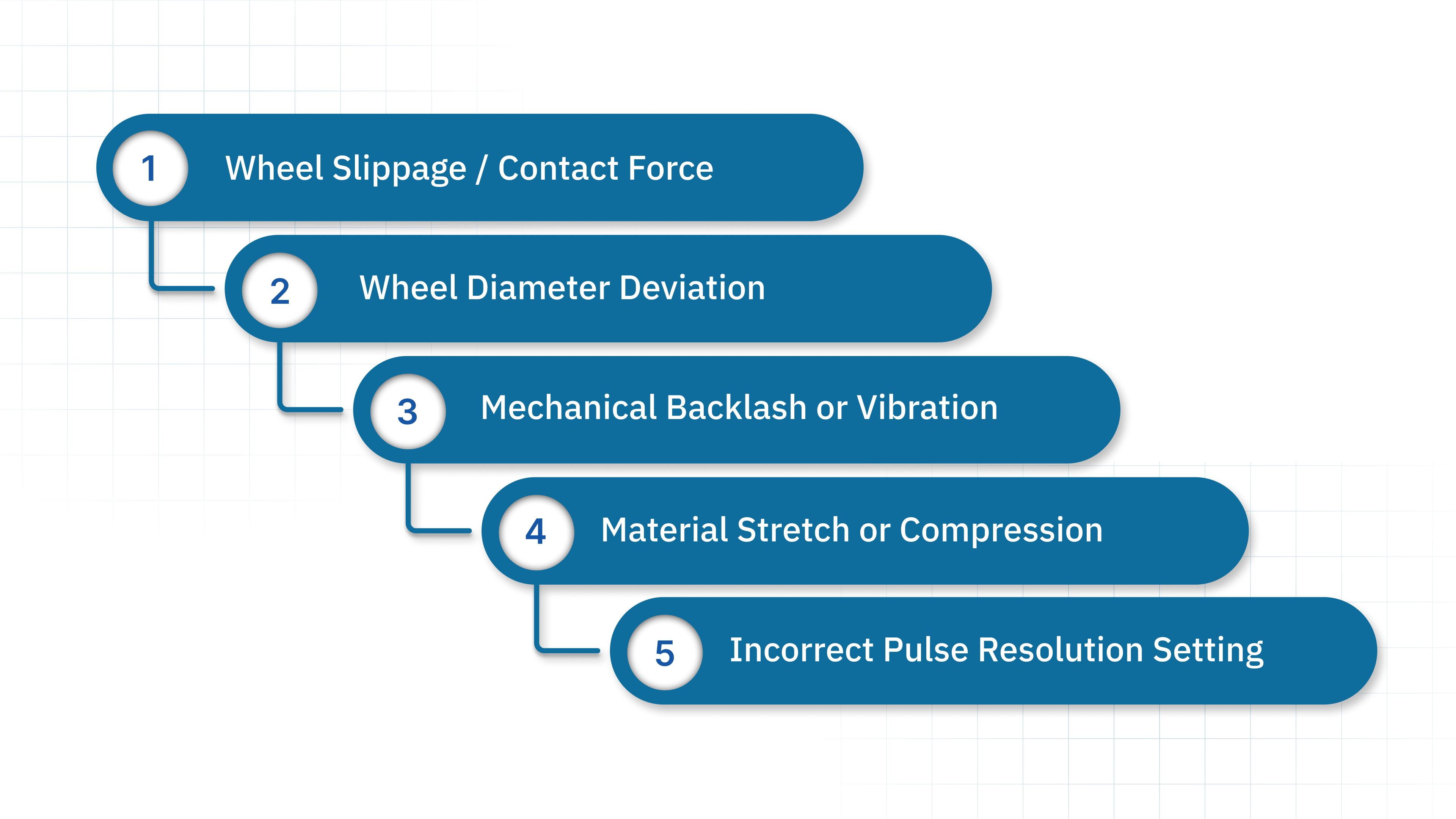
Below are the most common factors that the team should monitor:
Wheel Slippage / Contact Force: If the measuring wheel fails to maintain consistent contact with the material, slippage occurs. This directly affects pulse counting, leading to inaccurate length readings.
Wheel Diameter Deviation: Even a slight variation in wheel diameter causes length calculation drift. Wear, contamination, or manufacturing tolerance issues can produce cumulative errors.
Mechanical Backlash or Vibration: Loose mounting, unstable brackets, or improper coupling can generate false pulses. Consistent vibration leads to irregular movement, affecting accuracy.
Material Stretch or Compression: Plastic film, textile, rubber, and soft materials can stretch or compress under tension, distorting length measurement unless the system accounts for tension behavior.
Incorrect Pulse Resolution Setting: If pulses per revolution (PPR) don’t match the application’s required resolution, measurements become coarse. High-speed lines often require higher resolution for stability.
Types of Rotary Encoders Used for Length Measurement
Rotary encoders vary in design, output, and performance levels. The right choice depends on speed, required resolution, environment, and material behavior.
Here are the primary categories used in length measurement applications:
Incremental Rotary Encoders
Incremental encoders are the most common choice for length measurement in industrial processes. They generate pulses as the shaft rotates, allowing systems to track position and movement in real time.
Key Features:
Pulse Output: Provides a continuous stream of pulses that can be counted to determine distance traveled, ideal for monitoring relative movement.
Cost-Effective: Offers a practical solution for many industrial applications without compromising essential accuracy.
Versatile Integration: Easily integrated with PLCs and motion controllers for automated feedback systems.
Ideal Use-Case Scenario: Suitable for high-speed conveyor or converting lines where relative length tracking is sufficient.
Avoid When: Absolute positioning after power loss is critical; complementary sensors or homing routines are required.
Absolute Rotary Encoders
Absolute encoders provide a unique digital code for every shaft position, ensuring that the exact position is always known, even after a power loss. They are preferred in applications demanding high reliability and precision.
Key Features:
Position Retention: Maintains accurate position data without requiring a homing sequence after power interruptions.
High Resolution: Provides precise measurements for applications where minimal deviation can impact yield or product quality.
Integration with Automation: Easily connects to modern control systems, supporting Industry monitoring and data analytics.
Ideal Use-Case Scenario: Critical processes such as automated packaging lines or textile production requiring uninterrupted measurement.
Avoid When: Cost-sensitive applications do not justify higher precision and complexity.
Optical Rotary Encoders
Optical encoders detect rotation through light interruption patterns on a coded disk. They offer high accuracy and are widely used in applications requiring precise length measurement.
Key Features:
High Resolution: Capable of detecting very small shaft rotations, leading to precise length calculations.
Low Signal Noise: Light-based detection minimizes electrical interference, ensuring stable readings even in electrically noisy environments.
Versatile Applications: Suitable for material handling, converting lines, and packaging machinery where precision is critical.
Ideal Use-Case Scenario: Applications requiring fine-resolution length measurements in clean environments.
Avoid When: Dust, oil, or moisture levels could interfere with optical detection.
Magnetic Rotary Encoders
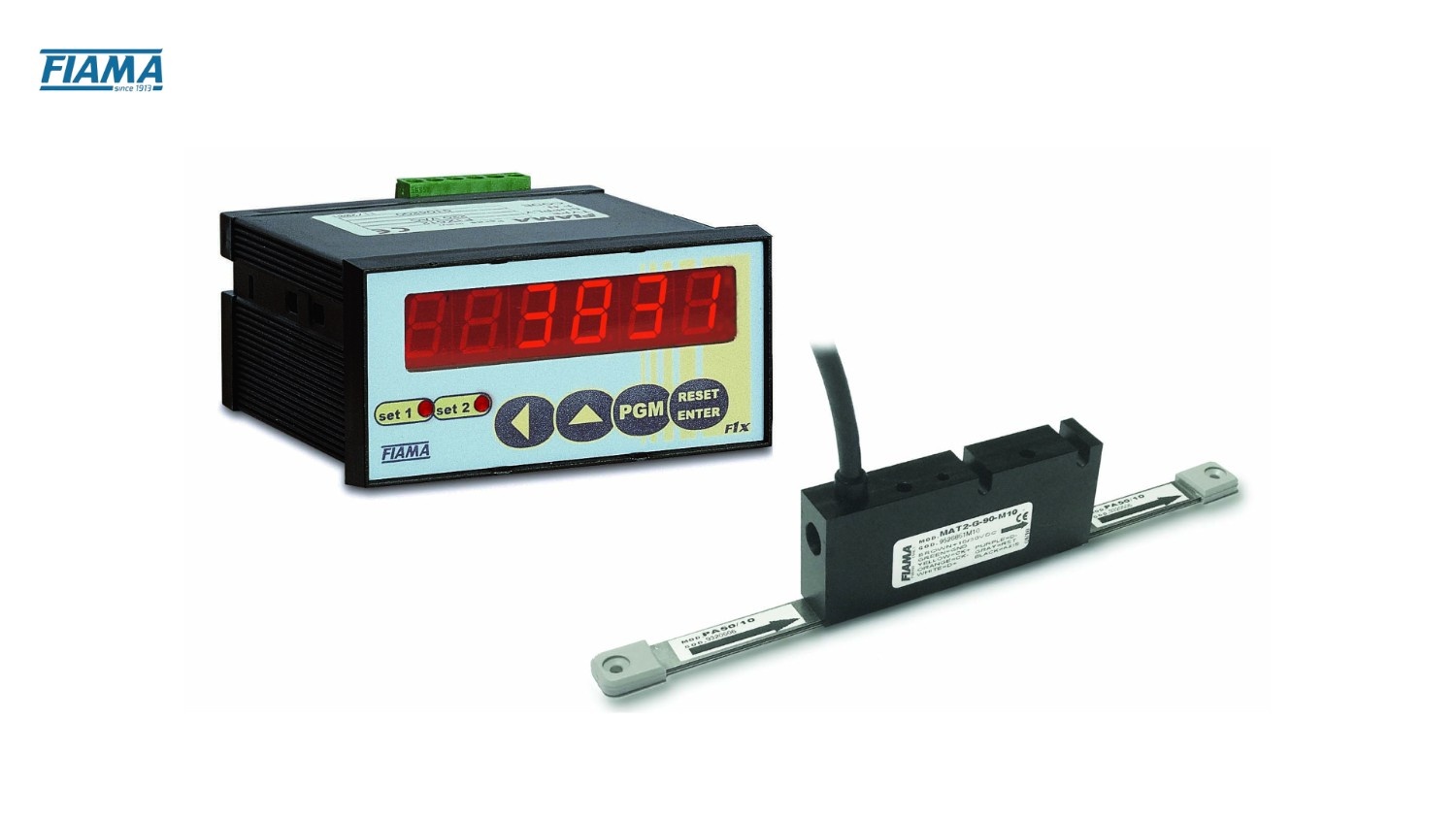
Magnetic encoders use magnetic fields to detect rotation, offering reliable performance in harsh or dusty environments.
Key Features:
Environmental Robustness: Performs reliably in dusty, oily, or wet conditions where optical encoders may fail.
Durable Construction: Limited moving parts reduce wear and maintenance needs.
Flexible Installation: Can accommodate axial or radial mounting, adapting to diverse machine layouts.
For example, Fiama MT (incremental magnetic encoder) and MAT (absolute magnetic encoder) series are designed for contamination resistance and linear measuring lengths up to 0 - 50 meters.
Ideal Use-Case Scenario: Metal processing, packaging, or food lines where environmental factors may affect optical sensors.
Avoid When: Ultra-high resolution is required in extremely precise applications.
Capacitive Rotary Encoders
Capacitive encoders detect rotation based on changes in capacitance between plates, offering a contactless solution for length measurement. They are effective in applications requiring low maintenance and high reliability.
Key Features:
Contactless Measurement: Reduces mechanical wear, extending operational life and minimizing maintenance requirements.
Stable Signal: Provides consistent readings even in the presence of vibration or mechanical stress.
Flexible Mounting: Compact design allows easy installation in challenging machine layouts or tight spaces.
Ideal Use-Case Scenario: Continuous processing lines where low maintenance is critical.
Avoid When: High-speed rotation exceeds the encoder’s response limits.
Draw-Wire Encoders
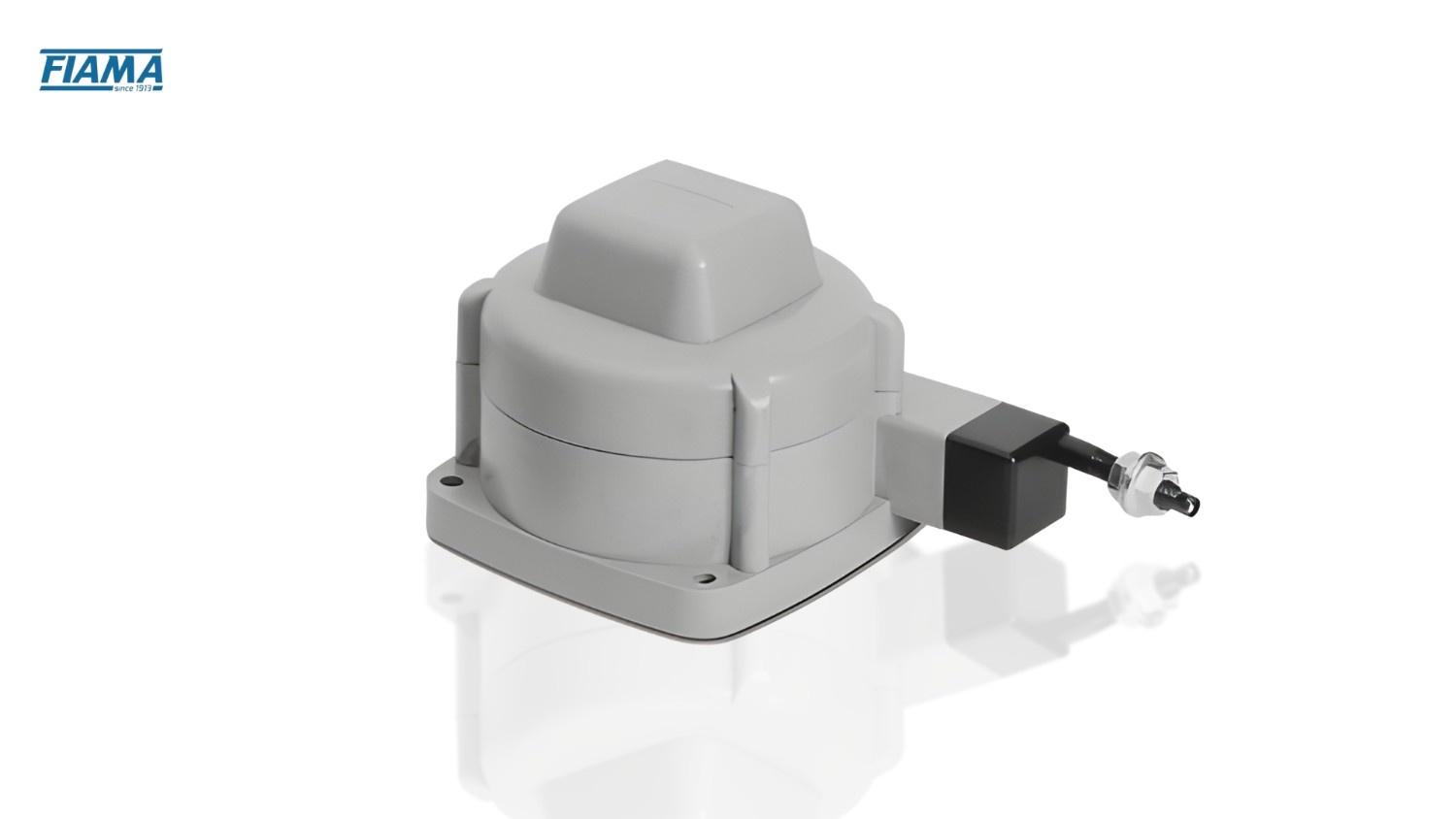
Draw-wire encoders convert linear motion into rotational motion by using a retractable wire attached to a spring-loaded spool. They are ideal for applications where direct shaft rotation measurement is not feasible.
Key Features:
Direct Linear Measurement: Converts linear displacement into encoder pulses without complex mechanical linkages.
Long Travel Capability: Can measure extended lengths without compromising accuracy.
Flexible Mounting: Easy to integrate into applications with limited space or unusual geometries.
Fiama offers multiple draw-wire models: PF50/900, PF1000/2000, PFA2000/4200, PFA3000/12000, EF500/900, EF1000/3000, EFA4000/12000 and data-logger variant PF80, covering strokes from 50 mm up to 12,000 mm and multiple output options (potentiometer, 0–10 V, 4–20 mA, and encoder outputs).
Ideal Use-Case Scenario: Material testing setups, long conveyor runs, or machinery with linear displacement.
Avoid When: Compact rotary shaft measurement is sufficient.
Each type of rotary encoder brings unique strengths. Understanding these differences helps you select the best solution, ensures reliable data, reduces downtime, and supports operational KPIs such as yield, throughput, and scrap reduction.
Common Issues in Rotary Encoder-Based Length Measurement
Length measurement systems face common challenges during installation and operation. Recognizing these issues helps maintenance teams troubleshoot faster and maintain reliable measurement performance.
Signal Noise and Interference: Electrical noise from motors or nearby equipment can distort encoder signals, leading to inaccurate length readings. Proper shielding and grounding help reduce these effects.
Mechanical Misalignment: Shaft misalignment or loose couplings can cause slip or backlash, impacting measurement precision. Regular alignment checks and secure mounting are essential.
Wear and Tear: Bearings, gears, or flexible couplings may degrade over time, introducing errors. Scheduled maintenance and inspection can minimize unexpected downtime.
Environmental Factors: Dust, moisture, or temperature fluctuations can affect encoder performance. Choosing encoders rated for specific environmental conditions helps maintain reliability.
Calibration Drift: Over time, encoders may deviate from their calibrated baseline, affecting length accuracy. Routine recalibration ensures consistent results.
Incorrect Encoder Selection: Using an encoder with an inappropriate resolution, type, or feedback method can limit measurement accuracy. Selecting the right encoder for the application is vital.
How Fiama Encoder Solutions Simplify Length Measurement?
Fiama designs and manufactures high-quality encoders, mechanical components, measurement systems, and support tooling built for industrial environments. Their equipment helps reduce measurement drift, maintain stability, and simplify integration for OEMs and plant teams.
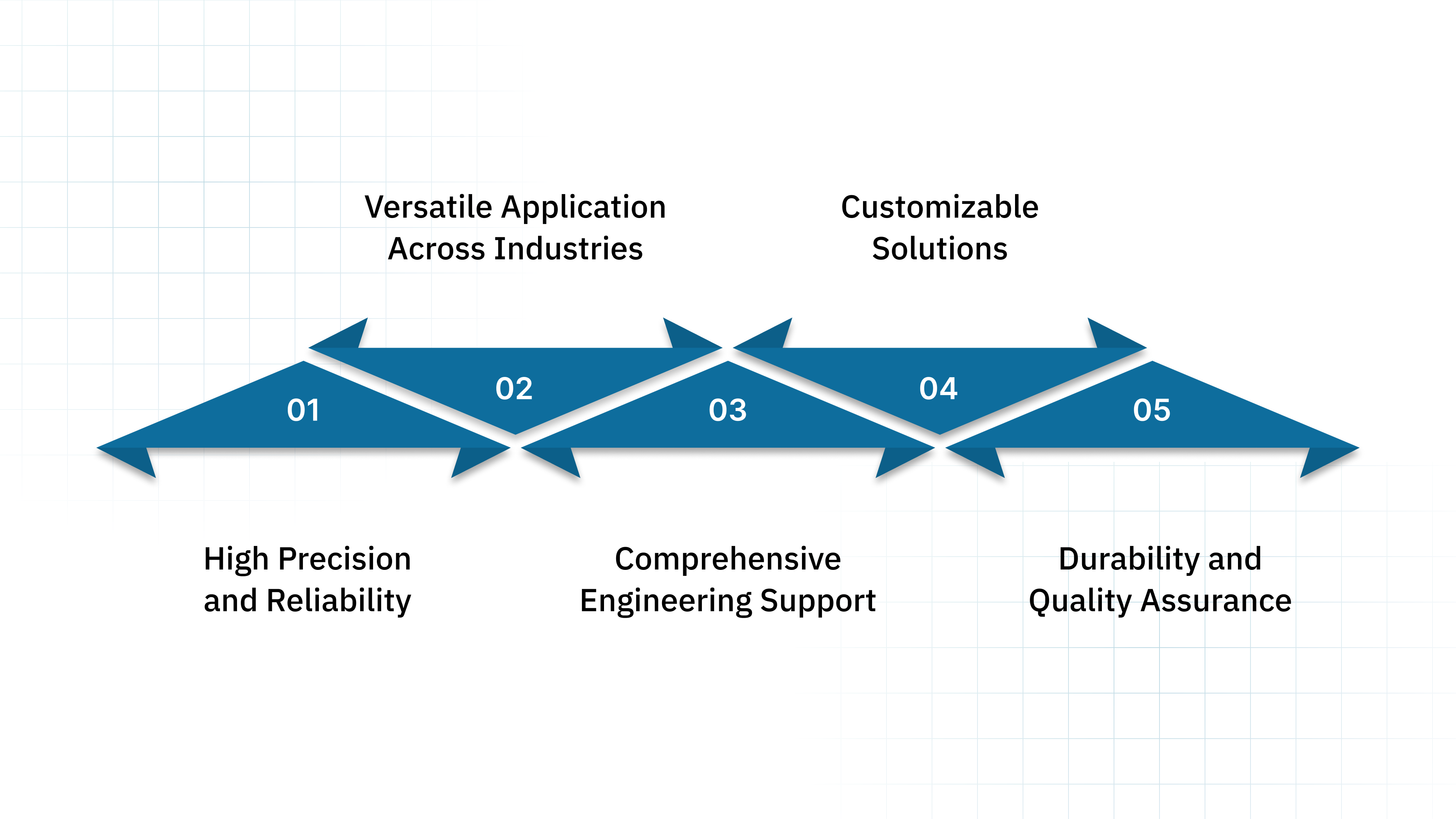
Here’s how Fiama supports different length measurement needs:
Robust Metal Housings: Fiama encoders feature durable aluminum or stainless-steel construction, making them resilient to vibration, temperature variations, and contamination commonly encountered in industrial environments. This ensures stable operation and reduces unplanned maintenance.
Custom Stroke Lengths: For applications with unique line speeds or material dimensions, Fiama provides customizable encoder stroke lengths. This flexibility helps teams match measurement systems precisely to their equipment, improving setup efficiency and operational consistency.
Practical OEM Engineering Support: FIAMA’s team of degreed engineers offers hands-on guidance for selecting, installing, and calibrating encoders. Their support helps plant teams minimize setup errors, reduce scrap, and maintain production flow across diverse industrial applications.
Customizable Solutions for Specific Needs: With in-house design and manufacturing in Parma, Italy, Fiama can provide custom variants tailored to unique industrial requirements. This ensures that specialized measurement challenges, such as fast line speeds or variable material types, are met with precision solutions.
Durability and Quality Assurance: All Fiama products adhere to strict quality standards and carry ISO 9001:2008 certification. Their robust design and material selection make them resilient to environmental factors such as vibration, temperature changes, and contamination, which are common in industrial settings.
By utilizing expert partners like Fiama, manufacturers can simplify implementation, reduce errors, and improve operational reliability.
Conclusion
Reliable length measurement plays a central role in keeping production stable, reducing scrap, and ensuring consistent product quality. Rotary encoders help convert motion into precise feedback that manufacturing systems depend on every day. When teams understand how encoders work, how to select them, and how to avoid common issues, they achieve better uptime, more predictable throughput, and lower operational risk.
Choosing the right encoder and integrating it properly ensures accurate measurement performance across different materials and line speeds. Partnering with specialists like FIAMA brings added value through engineered encoder solutions, mechanical precision, and strong technical support.
If you'd like guidance on selecting or integrating encoder systems for your machinery, feel free to contact us today.
FAQs
Can rotary encoders measure both forward and reverse movements?
Yes, rotary encoders can detect both forward and reverse movements. Incremental encoders generate phase-shifted signals that indicate direction, while absolute encoders provide position data that inherently reflects movement direction, making them suitable for applications requiring bi-directional tracking.
How do you interface a rotary encoder with a microcontroller for length measurement?
To interface a rotary encoder with a microcontroller, connect the encoder’s output signals (A, B, and optionally Z) to digital input pins. Use the microcontroller’s interrupt or polling functions to count pulses and determine direction, then calculate the measured length based on wheel diameter or encoder resolution.
What surface materials work well for measuring wheels with encoders?
Smooth, non-slippery surfaces like rubber, polyurethane, or lightly textured materials work best for measuring wheels. These surfaces provide consistent traction, preventing slippage and ensuring accurate rotation-to-length translation when using encoders for precise measurement.
Can rotary encoders be used for indefinite length measurement without a fixed scale?
Yes, incremental rotary encoders can track indefinite lengths without a fixed scale by continuously counting pulses as the wheel rotates. Absolute encoders are less common for this, as they provide fixed positional data, but incremental systems are ideal for applications needing ongoing, unlimited measurements.
How do you reset or zero the measurement in a digital encoder-based system?
To reset a digital encoder system, send a software command or press a hardware button to set the current count to zero. This defines a new reference point, allowing subsequent measurements to be recorded relative to the reset position for accurate length tracking.